 Alternative Energy HQ solar power for homes, wind energy, and bio fuel issues
hannafordman asked: Toronto-based Pond Biofuels has a pilot project that pumps smokestack emissions from St. Marys Cement plant and feeds algae that are grown in large tanks. The algae is then harvested, dried and burned in the plant’s kiln to displace the burning of petroleum coke. It’s a first of its kind in North America, possibly the world. This video …
Read More »Search Results for: fuel emissions
RNG-Fueled Fleets in California Mark Five Years of Carbon-Free Outcomes

RNG Remains the Most Immediate, Cost-Effective Way to Decarbonize Heavy-Duty Transportation Washington, DC – Last calendar year marked the fifth consecutive year that commercial fleets in the State of California fueled by bio-CNG (renewable natural gas, or RNG) achieved a carbon-negative transportation outcome, according to a report released today by The Transport Project (TTP) and RNG Coalition alongside partner California Renewable Transportation Alliance (CRTA). Lowest carbon intensity fuel: -194 Renewable …
Read More »Fueling the Future: Unlocking Low-Cost Green Hydrogen
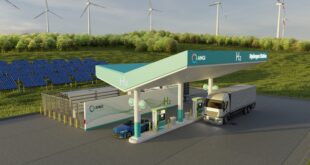
Current methods used to process hydrogen into a usable fuel are cost-prohibitive, but several new innovations are promising to open the door to cost-competitive green hydrogen. Hydrogen is well positioned to be the fuel of the future. However, a commercially viable transition to green hydrogen – the environmentally friendly version of the fuel – seems perpetually 10-15 years away. While …
Read More »Merging Net Zero With Zero Waste: One solution to biofuel feedstock shortage
The international biofuels industry has found an unlikely ally in the waste management sector. A heightened global urgency to reduce greenhouse gas emissions (GHGs) is incentivizing renewable fuels production like never before, but the International Energy Agency (IEA) recently warned of an impending feedstock shortage for biodiesel, renewable diesel and biojet (aviation fuel) production, estimated to last through 2027 if …
Read More »Hydrogen Fuel Cell Refueling
ANGI ENERGY SYSTEMS TEAMS UP WITH HYDROGEN FUEL CELL ELECTRIC TRUCK PIONEER NIKOLA CORPORATION IN STRATEGIC COLLABORATION ANGI Energy Systems (ANGI) will supply Nikola’s state-of-the-art hydrogen fueling dispensers to be installed and commissioned across the U.S. ANGI is driving the future of compressed and renewable natural gas, and hydrogen-powered transport with a portfolio of new refueling technologies and infrastructure With …
Read More »B20 Biofuel

Robison to Offer Customers B20 BioFuel to Save Money and the Environment The Leading home comfort company is a leader in sustainable energy PORT CHESTER – August 29, 2023– As the home heating season begins, Robison is offering its customers a new, cleaner form of heating oil that will help the environment and save them money. “Robison is proud to …
Read More ȣ300K BEIS GRANT WIN FOR WASTE-TO-HYDROGEN FUEL PIONEERS

Manchester, 19 May 2022 – A gasification pioneer aims to seal the UK’s low-carbon future after winning a Government grant worth nearly £300,000 to develop waste-to-hydrogen production technology, innovation funding specialist Catax can reveal. Compact Syngas Solutions (CSS), based in Deeside, Wales, has secured £299,886 from the Department for Business, Energy and Industrial Strategy (BEIS) with the help of Catax. The funding comes from the Low Carbon …
Read More »Propane Offers Decarbonization Solution to Producers for Record-Level Emissions

New study underscores the need to transition to clean energy sources like propane as soon as possible. WASHINGTON (July 2021) — The Propane Education & Research Council (PERC) emphasizes the need to accelerate decarbonization today with clean energy sources like propane. A new study from the National Oceanic and Atmospheric Administration (NOAA) found atmospheric levels of carbon dioxide peaked …
Read More »SoCalGas to Test Technology that Could Transform Hydrogen Distribution and Enable Rapid Expansion of Hydrogen Fueling Stations
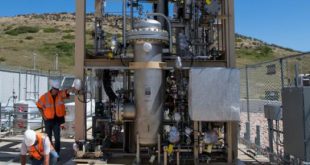
New device separates hydrogen from natural gas when the two gases are blended in pipelines Dec 16, 2020 With clean hydrogen gaining recognition worldwide as the carbon-free fuel capable of making a significant contribution to addressing climate change, Southern California Gas Co. (SoCalGas) today announced it will field test a new technology that can simultaneously separate and compress hydrogen from a blend …
Read More »Update on Biofuels: Where Are We?

The development of biofuels has plenty of research and success behind it, which is good news for the transportation industry as well as the health of the planet. Transportation is a major contributor to climate change, accounting for 29% of total anthropogenic greenhouse gas (GHG) emissions in the U.S. as of 2017, according to the Environmental Protection Agency (EPA). That …
Read More »Public Natural Gas Fueling Station
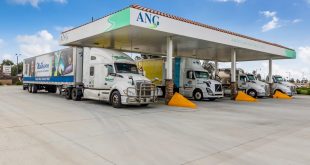
American Natural Gas (ANG) officially breaks ground at their public natural gas fueling station in Modesto, California. This Natural Gas fueling station will be number 61 for industry leader, ANG. This fueling station will be an extension of their prominent infrastructure nationwide, enhancing ANG’s ability to create a healthier environment through alternative fuels. This natural gas fueling station is made …
Read More »Clean Trucks Powered By Renewable Fuel
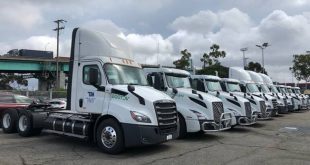
Over 100 Clean Trucks Powered By Renewable Fuel Now Operate At The Ports Of Long Beach And Los Angeles NEWPORT BEACH, Calif. – October 29, 2019 –Meeting the challenge to clean up some of the most polluted air in the country, Southern California has hit a new milestone with over 100 trucks outfitted with the cleanest ultra low-NOx engines available now …
Read More »Taxes on polluting fuels are too low to encourage a shift to low-carbon alternatives, says OECD
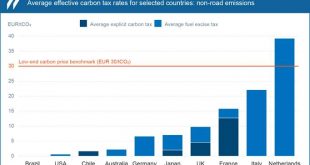
Taxing polluting sources of energy is an effective way to curb emissions that harm the planet and human health, and the income generated can be used to ease the low-carbon transition for vulnerable households. Yet 70% of energy-related CO2 emissions from advanced and emerging economies are entirely untaxed, offering little incentive to move to cleaner energy, according to a new OECD …
Read More »How Automation Can Fuel Energy Savings

Despite public concern about automation and its role in the workforce, its benefits have been well documented. Along with lower operating costs, more efficient output, and greater worker safety, it can also improve energy efficiency. Automation has proven to be a great asset to world threats like climate change and diminishing resources. At the very least, automated machines distribute energy …
Read More »Fuel Cell Bus

ZF Equips Fuel Cell Bus with Electric Drive System First application of ZF’s AxTrax AVE electric portal axle in a fuel cell configuration by ADL ZF delivers a system solution for optimal performance New prototype bus performs impressively during field testing Friedrichshafen/Larbert, Scotland. The British bus manufacturer Alexander Dennis Ltd. (ADL) is expanding its product line, adding a double-decker model …
Read More »Off-Grid Primary Power Fuel Cell

GenCell Energy Unveils World’s First Affordable Off-Grid Primary Power Fuel Cell Solution to Replace Diesel Generators GenCell A5 overcomes the OPEX barrier of rural telecom power, saving operators up to $250M across 1,000 towers over a 10-year period compared to diesel generators GenCell A5 offers ultra-reliable power at a running cost of just $0.50 per kWh GenCell A5 is first fuel …
Read More »Hydrogen Fuel Cells Q&A
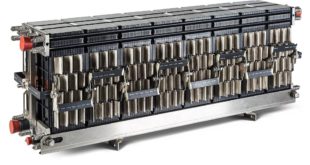
Q&A with GenCell CEO, Rami Reshef Hydrogen based fuel cell technology seems to be a hot topic at the moment, especially in the automotive market, what are your thoughts on this? It’s true that the automotive industry sees great potential in fuel cells. No doubt this is the result of growing consumer concern for the environmental effect …
Read More »Perry Should Focus on Clean Energy to Grow U.S. Economy and Cut Emissions

WASHINGTON (JANUARY 19, 2017)– Today, the U.S. Senate Committee on Energy and Natural Resources will hold a hearing on the nomination of Gov. Rick Perry to be the Secretary of Energy. Following is a statement from Jennifer Layke, global director, Energy Program, World Resources Institute: “In pursuing the nation’s top energy post, Rick Perry carries a responsibility to act on the …
Read More »State Celebrates National Hydrogen and Fuel Cell Day
California Leads the Way for Advanced Transportation Vehicles California celebrates National Hydrogen and Fuel Cell Day today on the cusp of a transportation revolution that will lead to cleaner air and fewer greenhouse gas emissions as more drivers turn to zero-emission vehicles. The U.S. Senate has declared Thursday, Oct. 8, 2015, National Hydrogen and Fuel Cell Day, referencing hydrogen’s …
Read More »Affordable and Ultra-Clean Fuel Cells
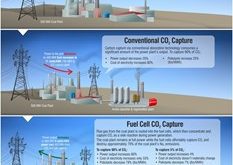
— Ability to capture up to 90 percent of carbon emissions with a scalable solution — Performance milestones reached for coal and natural gas power plant carbon capture — Cost per ton of carbon captured below U.S. Department of Energy target of $40/ton — Added benefit includes destroying smog-producing nitrogen oxide (NOx) DANBURY, Conn., March 5, 2015 (GLOBE NEWSWIRE) — …
Read More »