March 9, 2011
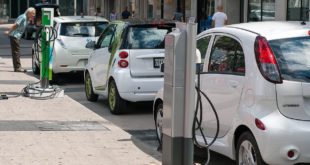
EV Charging Stations Open In Chicago
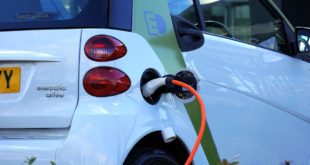
DBT, the No. 1 charging station manufacturer in Europe, opened a new U.S. subsidiary in Chicago this January: DBT USA. With more than 6,000 units installed in more than 20 countries to date, DBT is the world’s leading provider of electric vehicle (EV) charging stations. DBT USA business operations are already underway in Chicago, and U.S. assembly operations are planned to begin later this year.
DBT USA provides turnkey charging infrastructure hardware and software, as well as integration services for every EV charging application, including fleet, public, and in-home. In addition to providing Level I, Level II and Level III DC quick chargers, DBT USA has also secured strategic partnerships to offer a full range of sustainable charging infrastructure. Agreements with AllCell Technologies (www.allcelltech.com) and Sun Phocus Technologies (www.sunphocus.com) allow DBT to offer solar-powered turnkey on-grid and off-grid solutions. Under the agreements, AllCell will provide lithium-ion battery packs protected by AllCell’s revolutionary passive thermal management system, while Sun Phocus will provide solar panels utilizing cutting-edge holographic planar concentrating (HPC) technology.
The integrated offering is a good match for the U.S. market, according to Herve Borgoltz, president of DBT.
“The U.S. electric vehicle market is entering an exciting period of growth, and we are looking forward to helping consumers and businesses make the most of their investments in e-mobility. We are confident that our long history of innovative EV charging combined with our exciting new partnerships will allow us to provide our customers with exceptional value,” Borgoltz says.
With the combination of charging stations, solar-generation, and energy storage, DBT USA’s customers will be able to design customized systems based on vehicle use, budget, location, and sustainability goals. DBT USA customers will be able to choose from three solutions:
1. 100% Renewable: all electricity is solar-generated and stored locally, off-grid
2. Net Zero: solar energy fed into grid matches vehicle electricity use
3. E-mobility Optimization: on-grid without renewable generation
DBT’s 6,000 installed stations are the direct result of the company’s long history of innovation and collaboration. After its founding in 1990, DBT began as a leader in electric equipment design and manufacturing, producing energy supply units and transformers. In the early 1990s, European government electric mobility pilot programs provided a unique opportunity for the company to collaborate with car manufacturers, utilities, municipalities and other fleet owners to design cutting-edge EV charging infrastructure. As a result of that work, DBT developed unparalleled experience, insight and technical expertise in EV charging. Every charging station DBT has ever installed is still in operation, providing a testament to the durability of even the earliest products.
———————————
What do you think? Would you use a charging station for your car? Thinking about getting an electric car for your use? Comment below and let everyone know your thoughts on using electric cars to get off the petroleum addiction.
Filed under Battery Tech, Hybrid, Press Releases by newenergy
November 24, 2010
Do-It-Yourself Electric Car Motor Conversion
Electric car motor conversion is the ultimate solution for more people due to the permanent rising of gas prices. For families who possess more than just one car, gas expenses are really a great deal. The bad thing is that sending your car to some professionals for conversion to be an EV (Electric Vehicle) car costs almost $5000. The most practical alternative is to purchase a DIY kit and do the motor conversion all by yourself.
Converting your motor into an electric car motor is not as difficult as many people think. What you need is a good place to work and a simple and easy guide to walk you through the process of conversion. Once you have those things, you can start your conversion at your own time without having to pay an expensive service charge.
The principle of converting an engine into that of an electric car involves replacing the combustion engine with electric motor and taking out all other components, like the radiator, the gas tank, as well as the fuel line. There would be enough space to install some battery racks to hold a series of lead batteries that will supply the needed power for the electric car to run on. The driver can also control the acceleration or the speed an electric car; a variable resistor is installed between the main electric motor and the batteries to give variance to the speed, depending on the push of the driver’s foot.
Practically, before doing anything, think of the possible solutions to cut on fuel expenses every day. There are some elements to be added to the fuel so that your engine can burn them easily and will cut the use of more fuel to keep your car running. However, if nothing else fails, consider the electric car motor conversion to be the ultimate alternative.
Filed under Uncategorized by newenergy
A lot of car enthusiasts are considering doing their own electric vehicle (EV) retrofitting. Due to high gasoline prices and environmental issues, many people are seriously considering getting an electric car for their daily commute. For the time being, a new EV from the manufacturer is still relatively expensive and not very practical. One practical alternative is to do an electric car retrofitting project from your home garage. How can anyone convert their gasoline driven car to run purely on electricity? This article will highlight the science of a DIY electric car modification.
The idea of a homemade electric vehicle is to remove the internal combustion engine and replace it with a DC electric motor. When you remove the engine, you also get rid of the exhaust pipe, gas tank, radiator and fuel distribution lines. All the addition space created will be used to store battery packs. The electric motor is then attached to the existing transmission to propel the car forward. To supply power to the motor, you will need a minimum of 20 units deep cycle batteries. To save cost, you can source for second hand or reconditioned batteries. On a full charge, the EV will travel approximately 150 miles. The actual mileage will depend on the weight of the car, the driving condition, the speed of the car and also the condition of the batteries.
For someone who is not familiar with automotive components, doing an electric vehicle retrofitting on your own may not be advisable. In this case, you can send your car to a professional mechanic to be converted. To be prudent, you should at least have some basic understanding on the science of an electric car. This is to protect you from being charge for unnecessary parts of work done in the workshop. To acquire this knowledge, you can purchase electric motor conversion guides from the internet.
Filed under Uncategorized by newenergy
November 4, 2009
Hot Rod Electric Racing Motorcycle
Want a screaming fast motorcycle that is green too? Does that sound like a contradiction? Well not anymore. Thanks to the entrepreneur behind the world’s first zero-emissions motorcycle race is back with a limited-edition competition-caliber electric superbike we’ll see on the track next year.
The Mavizen TTX02 unveiled Tuesday in Las Vegas marries top-shelf components and racy styling with a lithium-ion battery pack and two electric motors in a package Mavizen says can do 130 mph. Azhar Hussain built it to provide a ready-made machine that anyone can ride in the 2010 TTXGP, the second running of the green grand prix he launched this year.
“It’s a competitive platform to start developing and tweaking,” Azhar Hussain said. “This is about giving everybody access to the best tools so they can go racing and have a stab at making history.”
From Mavizen:
The Mavizen TTX02 is the world’s first production electric supersport bike. With a number of world first feature combined with the proven chassis from a world class manufacturer and drive train from the Isle of Man TT winning Agni bike; the TTX02 is a limited opportunity to procure a platform for development and racing across the entire TTXGP road racing programme. The TTX02 chassis is FIM homologated for racing and ships with a valid VIN number for registration in your local jurisdiction.
* First motorsport vehicle in the world to ship with integrated IP connectivity
* Core operating system is open source Linux
* USB based system bus allows virtually unlimited number of peripherals to extend the capabilities of the machine with plug’n’play
* Remote factory support package available
* Swappable drive train and batteries at trackside. Common chassis for multiple racing series.
* Multiple configurations available depending on the racing series.
* Built on a homologated, world class chassis
* Drive train developed from the TTXGP Isle of Man 2009 Champion
* Strictly limited numbers.
Filed under Electric Cars by newenergy
October 21, 2008
Electric Vehicle Kits: Build Your Own Electric Car
With rising fuel costs, more and more people and are looking for alternatives. One such alternative that is gaining popularity, especially with the do-it yourself types, are the electric vehicle kits. Anyone familiar with automobiles can now use these kits to convert traditional gas powered vehicles to one powered by electric current.
However, converting a traditional Gas powered vehicle into an electric vehicle can be a very daunting task. Only those who are the very mechanically minded should try this. To convert the vehicle will require extensive modifications to nearly all-mechanical parts of the car. Everything from the engine to the radiator, heater and air-conditioning, to the gauges on the panel. On top of that, the electric cars have to be recharged on a regular basis, which means having to purchase or use the services of recharging station. Solar power could be another potential source of power for the electric vehicle.
Can any car be converted into an electric vehicle?
Unfortunately, the answer is no. Not all cars can be converted into an electric vehicle. However, and the most common electric vehicle kit seems to be the Chevy S-10 pick up kit. For examples to follow just do a search online for Chevy S-10 pickup Electric conversions. Other cars that are good candidates for conversion are the Chevy Geo, especially from 1989 to 1999. These cars are good potential candidates for an electric vehicle kit conversion. Cars similar to the Chevy Geo Metro, such as the Chevy Sprint, Pontiac Firefly and the Suzuki Swift are also ideal for conversions too.
Filed under Alternative Energy by newenergy
September 7, 2008
Canadian Electric Car Company Frustrated
The increasing price of petroleum fuel and the increasing threat of global warming had consumers thinking about purchasing green vehicles such as hybrid vehicles and electric vehicles produced by small car companies like ZAP. In Canada, the Zenn electric car is a good choice for consumers looking to own an electric car for their urban traveling needs. Unfortunately though, even with the Zenn electric car already available in the United States, it is still not permitted for use in any Canadian province.
Ian Clifford, Chief Executive Officer of the Zenn Motor Company, is exasperated with the fact that even with approval from Transport Canada, provinces are still not deciding whether to approve the sale of the Zenn car. “Your biggest carbon footprint as an individual is probably the car you drive,” said Clifford in an interview with The Canadian Press. Clifford is pointing out that legislations should be passed that would allow consumers to have the chance to do their own part in cleaning the environment.
Clifford even went as far as saying: “Every time I go to the gas station, I want to choke,” he said, his voice full of frustration.” According to the CEO, he started thinking about creating an electric vehicle after being stuck in traffic in Toronto in his SUV.
Currently, the Zenn electric car is being sold between US$ 12,000 and $15,000. It has been approved for sale and use in 45 out of 50 States. Today, these 45 States are the primary destinations of the Zenn car. The Zenn, which stands for zero emission and no noise, does not have a retail price in Canadian dollar as the company still awaits approval. This is despite the fact that it has been given the National Safety Mark by Transport Canada.
According to The Canadian Press, British Columbia is said to be planning to approve the sale and use of the Zenn electric car by next year. For now though, a lot of people are exasperated with the slow actions by the people involved in the approval of the electric car. “It’s an absurdity, to be honest, that we cannot sell this in Canada. We are a Canadian company and this just adds insult to injury, if you will,” said Clifford.
The Zenn car has been given a lot of positive reviews. Al Cornier, the executive director of Electric Mobility Canada, had this to say about the Zenn car: “It’s the end of cheap oil. As the price of oil goes through the roof, this makes more and more sense.”
The Zenn electric car is sure to help Canadian motorists save up on their gas consumption. The vehicle also uses auto parts like antenna Canada which can be found on online stores.
Filed under Alternative Energy by newenergy
September 6, 2008
World Leaders Bring Back Electric Cars
The fate of electric cars seems to be sparking still and not completely gone. This is primarily because soon enough, electric cars would again be on the streets and roads. Well, not exactly for every day use and for ownership, but at least, they would be used by world leaders of leading industrialized countries and democracies. Maybe there is hope, after all.
These leaders would include those who lead countries like the United States, Russia, Britain, France, Japan, Germany, Canada, as well as Italy. They would be using the electric cars during the G8 Summit. This summit would be held this summer, July 15th to the 17th in St. Petersburg, Russia. GEM electric vehicles would be the ones to be used by these country leaders. And in part of such a big event, the government of Russia under the supervision of their president, Vladimir Putin, took part of the budget to purchase thirty GEM electric vehicles which could take in four passengers inside its cabin – these vehicles are also called as e4. They also made sure that each of the vehicles is personalized. They would be putting the participating country’s official logo as well as flag on the GEM electric vehicle.
GEM and e4 vehicles are created Global Electric Motors, LLC. Rick Kasper is its president and chief operating officer. He states, “GEM electric vehicles will offer the participating leaders with an environmentally-friendly transportation option while attending the G8 summit. It is an honor for GEM to be participating in this important international event for the second time.” Indeed, the first time GEM took part in such a grand event was back in 2004 during that year’s G8 Summit which was held in Sea Island, Georgia.
What is good about GEM electric vehicles is that it has zero emissions. It also is clean and provides a ride that is quiet and very efficient. It also is affordable compared to using the usual kinds of vehicles.
These vehicles could certainly preserve the environment. On the other hand, regular vehicles could also help clean up the air as long as all the parts are in good condition. Auto Parts Discount offers quality and affordable Mercedes Benz parts such as Mercedes Benz wheels and lights for all owners.
Hybrid Cars Video Channel
Filed under Alternative Energy by newenergy
August 29, 2008
All-Electric Car From GM May Hit US Showrooms by 2010
General Motors is currently working on the production of the Chevrolet Volt so that the vehicle would be ready by the year 2010. The Volt is an all-electric car which will be the answer of the world’s largest car manufacturer to the growing demand for cleaner cars. Reuters reported that GM is already working on plans to produce a working prototype by the end of this year. Bob Lutz, the product chief and Vice Chairman for GM, said that the car maker has already set a target for production of the Chevrolet Volt in 2010.
The soon to be mass produced electric car will be based on the concept vehicle that General Motors unveiled in January of this year. While the auto maker has already set a target for the production of the vehicle, there are still some problems in the design that they need to work on. Lutz said that they are more corned about whether lithium-ion batteries can be developed while keeping the cost of production down so as to make it affordable for car buyers. Another concern that Lutz pointed out is whether these lithium-ion batteries can power a vehicle safely. The car maker is already taking steps to address the said issues. General Motors will take an unusual step with regards to the development process of the Volt – they will open the development process to the media.
More on All-Electric Car From GM May Hit US Showrooms by 2010
Filed under Alternative Energy by newenergy
August 27, 2008
Zap and Lotus to Create Most Advanced Electric Car
The quest to develop an automobile which will reduce and possibly eliminate the dependence of the entire human race on petroleum fuel for automotive fuel has led to a partnership between companies. These working partnerships allow companies to have bigger funding and share expertise.
One such partnership is that between ZAP and Lotus Engineering. The partnership is aiming to develop the most advanced electric car in history. Currently, ZAP is already offering electric cars for American car buyers. These vehicles run on electricity and needs only to be plugged into a common household socket to be recharged and store up some juice.
While these electric vehicles are of great advantage to the environment and fuel cost, their range is not enough to make extended trips. This is one issue that the partnership will be looking into in their quest to produce the most advanced electric car in the entire history of the automotive industry.
Recently, both parties have been having talks at the headquarters of ZAP located in Santa Rosa, California. Lotus Engineering personalities who attended these talks includes the company’s chief executive officer Albert Lam. Project Manager Steven Woolley and West Coast Operations Manager Rexford Park are also part of the dialogues between ZAP and Lotus. The talks between ZAP and Lotus is expected to bring to light more developments in the development and production of electric cars. These developments are expected to be announced by ZAP Chief Executive Officer Steve Schneider.
For the present, Schneider has this to say: “This was an important meeting because ZAP and Lotus Engineering are working to bring new technologies to bear that could change the auto industry forever. With Lotus Engineering’s capabilities, and ZAP’s vision and entrepreneurship, we are building a world-class team to tackle this important endeavor.â€
Currently, ZAP’s offering includes the electric vehicle Xebra. It was first introduced to the market in May of 2006. The three-wheeled vehicle is classified as a motorcycle but it has both a sedan and a pickup configuration. While it uses a battery pack and an electric motor, it does not use the regenerative braking system used commonly by hybrid electric cars. The said feature captures the energy produced during braking.
While the Xebra does not posses the said feature, its battery pack can power the vehicle for approximately forty miles on low speed driving. The same battery pack can also give the Xebra a top speed of 40 miles per hour. While these attributes already standout, the partnership between Lotus and ZAP aims to develop an electric car that is far more advanced than the Xebra.
On the other hand, Lotus has been known for designing and developing some of the most notable cars in history. This collaboration with ZAP is seen by Lotus as a step for them to become one of the frontrunners in the development of green cars. Chief Executive Officer Albert Lam has this to say: “The venture with ZAP is a dream come true because we are creating the most advanced electric vehicles in history. Lotus Engineering is very happy to be associated with ZAP in bringing this vehicle to market. The technology is ready for electric vehicles so they don’t have to be slow, they can have a long range, and they can be exciting to look at.â€
Aside from developing high performance vehicles, Lotus is also known for creating aesthetically pleasing cars. With the company’s expertise, one can expect an environment friendly and good-looking car to come out of this partnership. If the partnership comes up with the most advanced electric car in history it is, of course, safe to say that it will be far more environment friendly than vehicles equipped with flowmaster exhaust components.
Filed under Alternative Energy by newenergy
August 16, 2008
A Practical Electric Car
We all know that hybrid cars still need gasoline to be completely dependable. Electric cars on the other hand, suffer from short range and require significant amounts of time to recharge their batteries. So what’s the answer? It’s really quite simple, a “modulized” electric car.
Picture yourself driving across the country in an electric car. After 200 miles staring at pavement, your battery gauge is nearing the recharge mark. It is time to pull off the interstate and find a fuel station. Fortunately, like most exit ramps, a gas station is right in the area. You pull in the driveway and roll right past the gas pumps. Instead, you continue up to an empty spot on a large rack where hundreds of identical depleted car batteries are sitting. You push a button on the dash and three seconds later your battery is disconnected and unloaded from your car. It automatically locks into the rack and begins recharging. The small auxiliary battery in your car is now powering the entire vehicle. You back out and then drive to a fully charged battery in the next rack. The batteries are constructed in a “V-shaped” fashion. You misjudge the drive-up alignment by over three feet, but the battery still slides into your engine compartment and locks safely into place. Once again you are fully charged and ready to role. The entire evolution takes half the time needed to pump a tank of gasoline. You wave to the guy who pulled off the interstate directly in front of you while he continues fueling his SUV. You will be miles down the road before he gets back on the highway.
How can the above scenario become reality? What if each new electric vehicle automatically came with two full size batteries? One is always in the car and a second in a charging rack anywhere in the country. If all the batteries were standardized to fit every type of vehicle, we could simply interchange them as needed with any other charged battery out there. Fuel stations could have racks upon racks of batteries being charged as they are swapped out. If we had 200 million cars on the road, there would be 400 million batteries to keep them moving. We could pay a nominal recharge fee to the fuel stations each time we took one.
Currently most of our electrical energy comes from burning coal. Fortunately the US happens to have enormous quantities under its soil. Power plants are currently using this resource along with cleaner burning technologies. It would not be practical to expect a “coal-burning car” to utilize coal cleanly, but a large power plant could. Converting this black energy to run electric vehicles would certainly help improve the environment and get us completely off imported oil. We could also install solar panels all over the exterior of these electric cars to help use a little of that, “green” free energy from the sun. Every little bit helps and it would have an immediate positive impact on our wallets. Just think, when your car is sitting in the driveway all day, it’s actually gaining fuel.
Obviously the logistics surrounding the batteries will need to be worked out. For example, it may be necessary to create a rule where a car owner cannot pick up a charged battery unless a depleted one is dropped off first, thereby keeping the stockpile of batteries up. Since the overwhelming majority of vehicles in this country are actually sitting stationary at any given time, the small percentage currently on the road will have an ample number of charged batteries for immediate use. Another issue may be in keeping batteries strategically placed around the country. We could give the oil companies something to do by moving them where needed.
The real trick behind all of this isn’t a car that practically changes the battery for you. Most auto engineers can probably design one in a matter of days. The trick is making a car that’s as convenient for us as gas-burning vehicles are today. It’s a statistical fact that we as consumers like things easy, so let’s keep that in mind while building the next generation of vehicles.
All right big three, I’ve given you the idea, now run with it before those countries on the far side of the planet scoop you for the second century in a row!
Filed under Alternative Energy by newenergy
July 25, 2008
Electric Cars in Demand
Â
The environmental hazards have created awareness among the people and to save the earth every one is contributing in some or the other way. A metro like Delhi has taken the initiative of saving nature.
 More people are opting for eco-friendly cars now. Alternative fuels like CNG and LPG has changed basic transportation in the Capital and close to 10% of private cars run on it  and now it is the time for the electric car to make its presence. Electric cars are not only affordable but also environmental-friendly. An electric car spends upto only 40 paisa per kilometer. Another good thing about this car is, it is easy and simple to drive. The only demerit it has is the low speed and short traveling range but the manufacturers are also working on that issue.
The government is also taking steps to popularize the electric vehicles as an emission free transport solution to tackle rising pollution and congestion. As an initiative, the government has scrapped the excise duty on electric cars. Presently, an electric car prices start from Rs 3.28 lakh and which will be now cheaper by Rs 35,000.
 The electric car will pick up its sales very fast as the fuel prices will go high very soon. To make these vehicles more acceptable, specially to de-congest the national capital which has the highest number of vehicles in India, electric vehicle companies are also approaching the adjoining Haryana and Uttar Pradesh state governments to extend similar benefits for all such vehicles. Presently Maini REVA is the sole player in this segment but now there are more companies who are planning to roll out electric cars. Ajanta- the Indian clock makers also plans to roll out electric car that will be cheaper than Tata Nano.
Wave Power Video Channel
Filed under Alternative Energy by newenergy
July 24, 2008
USPS Explores Options for ‘Green’ Mail Trucks
The U.S. Postal Service plans to identify new, more environmentally friendly vehicle technologies that are less dependent on petroleum-based fuel sources to replace the 195,000 neighborhood delivery vehicles of its total 220,000 vehicles, the world’s largest civilian fleet. Today’s announcement came during a ceremony in which General Motors presented a Chevrolet Equinox Fuel Cell electric vehicle to the Postal Service for testing in a mail-delivery environment.
“We are looking for a vehicle that operates from a fuel source that reduces—or eliminates—our dependence on petroleum products, that is good for the environment, good for our customers and good for the Postal Service,†said Walter O’Tormey, vice president, Engineering, as he accepted the keys to the Equinox Fuel Cell that will be tested in Irvine, CA.
Moving forward with non-petroleum fueled vehicles is more important to the Postal Service than ever, O’Tormey said, since a one-cent increase in a gallon of fuel adds $8 million annually to Postal Service expenses. Fuel costs last year were $1.7 billion and are expected to increase this year by $600 million.
“The Postal Service has been an invaluable partner, and they put our fuel cell vehicles through some tough, daily workouts,†said Mary Beth Stanek, director of energy and environmental policy & commercialization at General Motors. “We are gaining valuable insight on how these vehicles perform in demanding, real-world situations. By participating in Project Driveway, the Postal Service also is demonstrating the need to develop a hydrogen infrastructure to support fueling these vehicles.â€
More on USPS Explores Options for ‘Green’ Mail Trucks
Filed under Press Releases by newenergy
July 19, 2008
Zap Releases X Crossover Electric Car Concept Drawings
ZAP, an electric car pioneer, earlier unveiled the concept drawings of its X Crossover SUV on its website. The images are also highlighted in the April 2007 issue of Popular Science in the article titled ‘Who killed the gas guzzler?’ where you can also find an interview with Steve Schneider, the ZAP CEO.
The ZAP-X compact crossover SUV images highlight the technology, styling and the potent performance that the company wanted to integrate into the vehicle. The concept will feature all-wheel drive complemented with in-hub electric motors and other performance parts. The vehicle is capable of producing an astounding 644 horsepower and an impressive top speed of 155mph. The performance is achieved by combining a lightweight aluminum chassis, refined battery management system and a new proficient drive system. Basically, the goal of the vehicle is to achieve 350-mile range with a swift recharging time of ten minutes.
ZAP and Lotus Engineering will begin the first phase of an engineering project to use the British consultancy’s APX or Aluminum Performance Crossover as a basis for designing the X-concept electric all-wheel drive crossover high performance vehicle for ZAP in the American market.
Steve Schneider, the CEO of ZAP, was earlier quoted saying: “Lotus Engineering’s APX technology demonstrator vehicle is a perfect fit for our plans to introduce a full product portfolio of electric cars. Due to the initial design by Lotus, our cost and time to production will be significantly reduced. We believe that the ZAP-X will become the most advanced, most practical and most appealing flagship electric vehicle to date and will revolutionize the industry providing the driver with the enjoyment of a sports car and the practicality of an SUV.”
More on Zap Releases X Crossover Electric Car Concept Drawings
Filed under Alternative Energy by newenergy
July 13, 2008
Gm to Unveil All-electric Car by 2010
General Motors Corp has set a target for production of an all-electric car in 2010. The information was divulged by Bob Lutz, GM’s product chief and Vice Chairman.
Lutz said the major uncertainty facing the Chevrolet Volt, a concept vehicle GM unveiled in January, was whether lithium-ion batteries can be developed to power it economically and safely. “A running Volt prototype is expected by the end of 2007. GM would take the unusual step of opening much of its development process to the media,†he explains.
“We have set an internal target of production in 2010. Whether we can make that or not, this is still kind of an unpredictable program for us,” Lutz told reporters on the sidelines of the Geneva auto show. He added, “We’re sort of outside our comfort zone.”
The automaker detailed its plans for the all-electric Volt at the North American Auto Show. GM is aiming for Volt to be able to run on pure electric power for 40 miles. This means that a commuter could be able to get through a day without the use of gasoline. However, GM did not disclose the production timeline of the said all-electric vehicle. Critics and rivals have expressed their doubts as to whether the automaker would produce the Chevrolet Volt or might just rely on the popularity of its concept car. “Competitors who write this off as a PR exercise are going to be brutally surprised,” Lutz said.
Electric cars like the Chevrolet Volt have drawn considerable attention and support from environmental groups from the United States. These groups perceive the cars’ potentials in curbing foreign oil dependence and limiting greenhouse gas emissions.
Lutz said GM’s initial work had shown that the production version of the Volt would have to shed some of the bold styling cues of the concept, including the extreme front placement of the wheels. These styling follows the auto trend these days that is aimed at producing bolder and more efficient designs.
Nowadays, most of the automakers are acknowledging change as its growth factor. Even the most simple auto parts like Volvo control arms and other accessories are now designed with tough competition on the mind. “I know we cannot make the production car look like the concept,” Lutz said. “The whole shape of the car is going to have to be a little more traditional.” Lutz also said there was still a chance that the concept could prove unworkable. “I would say there is still a 10 percent chance this will fail,” he added.
Separately, Lutz said that the automaker’s 11-percent increase in America’s retail sales in February suggested that GM was starting to find traction with new products after a wrenching restructuring that cut over 34,000 factory jobs. “One swallow does not a summer make, but I think it’s turning,” he said.
Filed under Alternative Energy by newenergy
July 8, 2008
Build Your Own Electric Car
The Basics Of How You Can Build Your Own Electric Car
With the cost of gas these days, some consumers have decided that having and operating an electric vehicle will be more effective and cheaper in the long run. If you decide to build your own electric vehicle, there are whole lot of resources available to assist you understand and work through the process of changing a gas vehicle to an electric vehicle.
If you have a long commute everyday, an electric vehicle might not be your best choice, since on average, electric vehicles can run from 30-70 miles each day. This is totally dependant on the driving conditions, the weight of the vehicle and the battery quality. Also consider how you will be recharging the batteries. If you live in an apartment complex with no garage, it may be impossible to charge the car’s batteries every night.
Important Considerations
Filed under Alternative Energy by newenergy