July 27, 2011
Electric Car Documentary
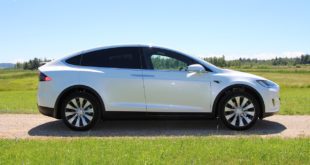
Mike Koenigs is a successful Internet Marketer and video entrepreneur. He bought a Tesla electric car with his money earned from his successful business. In the video he shows what buying a Tesla has meant to him and how he aims to get his life off the grid. “Life With Tesla” Check it out and comment bellow as to what you think about this documentary.
“Life With Tesla” – Tesla Electric Car
Filed under Electric Cars by newenergy
April 14, 2011
Sneak Preview of New Electric Car Movie
Revenge Of The Electric Car
In 2006, thousands of electric cars were destroyed by the companies that built them. Today, less than five years later, the electric car is back…with a vengeance. Revenge of the Electric Car, a new film by Director Chris Paine, takes you behind the closed doors of Nissan, GM, and the Silicon Valley start-up Tesla Motors, documenting the high-stakes race to be the first to bring electric vehicles to the masses. It’s not just the next generation of green cars that’s on the line. It’s the future of the automobile itself.
www.revengeoftheelectriccar.com
Filed under Electric Cars by newenergy
April 9, 2011
The Benefits of Electric Cars
The increasing concern about the state of the environment has seen gas-guzzling automobiles become a target of much dispute. It’s no secret that the carbon-emissions being pumped into the environment every second by diesel-driven cars is having a major detrimental effect, which is why solutions like electric cars are becoming more popular.
Electric cars offer transport driven by an alternative fuel source – electricity. Carrying an on board battery pack which can be recharged as needed, electric cars make way for convenient ‘re-fueling’. You can charge up the batteries of an electric car both at service stations or at home, meaning preparing for long journeys doesn’t need to factor in a visit to the petrol station since you can charge up before leaving.
They compare admirably with petrol vehicles, with several aspects of electric cars being far cheaper than their less efficient counterparts. Since you can charge your electric car at home, the benefits from not having to pay for fuel are instantaneous. Over time, this can offset what you have to pay for the car itself as, frequently, electric cars are a little more expensive than petrol ones.
However, the current main reason for the electric car’s popularity is its eco-friendliness. The energy efficiency of the electric car excels above gasoline vehicles, which are well known to pump carbon emissions into the environment from their tail pipes. To begin with, electric cars do not even have a tail pipe. Although they still create some emissions that are bad for the environment, as well as increase the need for electricity generation, the comparison between the two types of car is very significantly in the electric car’s favour.
We all try to do our bit for the environment these days and, if you’re thinking it’s time to get a new car, an electric car could be a very worthy investment, both economically and ecologically. What’s more, if you’re unsure about taking the plunge, there are plenty of hybrid car insurance available that combine the efficiency of electricity with gasoline driving in a way that allows the two to complement one another with ease. The gasoline is used when cars are driving at certain speeds and electricity when idle or moving slowly.
Electric cars are a fantastic way to help reduce carbon emissions and there are many well-designed models too, so if you’re searching for a new car, consider an electric one for excellent environmental efficiency.
Filed under Electric Cars by newenergy
March 23, 2011
Electric Cars and the Kindness of Strangers
Guest blog by Cara Miale
March 23, 2011
As if we don’t have enough phobias already, now there is range anxiety, a malady brought on by the electric car. But it’s okay; there is a cure, or rather an app for that.
Studies indicate that many electric car drivers – and those considering joining the ranks – suffer the fear of running out of power and being stranded with a dead battery. A little planning ahead could take the pressure off; there are an estimated 1,400 vehicle charging stations in the United States today and the number is growing. Even though most people drive less than the 100 miles a day allowed by many EV’s, range anxiety remains a logistical – and largely psychological – impediment to widespread electric vehicle adoption by consumers. One 2010 study showed range anxiety even caused EV drivers to modify their driving behaviors, decreasing the travel range and limiting most trips to no more than 25 miles.
Several companies have stepped up to ease the pain. The navigation system in the new electric Ford Focus finds electrical charging stations nearby and can help the driver conserve power by suggesting turning off the A/C or taking a more leisurely route. Google Maps, in partnership with the U.S. Department of Energy’s National Renewable Energy Laboratory (NREL) recently added electric vehicle charging stations to its popular platform, allowing users to search for and pinpoint more than 600 charging stations.
PlugShare, a new free app from Xatori, goes one step further with a personal touch: users can find home charging stations close by, and even list their own as a safe-haven for range-anxious drivers. PlugShare works with iPhone, iPad and iPod Touch, and you don’t need an EV or a special outlet to join. Accounts are customizable; those who wish to share can list their name, number and address as well as what types of energy they have available and where to find it (like the garage). The integrated app uses handy icons to identify private and public standard outlets, EV plugs and charging stations. With just a few clicks, you can identify the nearest charging station, call or text the person who listed it, and get directions. PlugShare hopes to launch a study of the app’s impact on the environment so users can celebrate the positive impact they’re making, not unlike other resource-sharing models like Denver B-cycle (members can track their miles ridden, calories burned, carbon off-set and money saved – and compare their stats to other members of the B-cycle community).
PlugShare’s website even encourages those without EVs to join the community: “Sooner or later an EV owner may ask to charge at your outlet, and you’ll be able to talk to a real person (not a dealer or a salesman) to find out if an EV is right for you!”
With President Obama’s goal to have one million electric vehicles on the road by 2015, community-building applications like PlugShare may bring the unintended benefits: more folks who get to know their neighbors. And, it could mean the end of the EV car salesman as we know him.
Cara Miale is a freelance writer in Denver.
Article source: www.RealEnergyWriters.com
Filed under Electric Cars by newenergy
March 1, 2011
Car Travels 3,107 Miles On $15 Worth Of Electricity
Imagine traveling the entirety of Australia in a lightweight vehicle that occasionally uses a kite for propulsion. A kite! Normally, trips across the rugged terrain are done in heavy duty vehicles with an abundance of spare parts and gasoline. Dirk Gion and Stefan Simmerer had a different plan.
The Wind Explorer—which is a lightweight, kite-assisted electric automobile on bicycle tires—drove 3,107 miles across the breadth of Australia in an incredible 18 days. As impressive as that is, it pales when you learn they used only $15 worth of electricity for the entire trip. The journey set three world records:
· The first continental crossing by a wind-powered vehicle
· The longest distance ever covered by a wind powered vehicle
· The trek also picked up a world record for the most distance covered by such a vehicle in 36 hours
The duo traveled over 1,400 miles on wind-generated electricity alone, and managed another 300 by kite.
The vehicle, which is an open roadster-style car, seats two people and weighs a mere 441 pounds. This total weight includes its battery pack and wind turbine. The car itself is a unique design of carbon fiber sitting over a durable-yet-lightweight aluminum frame. The team opted for bicycle tires because they reduce any rolling friction and resistance.
The car’s battery pack was comprised of a 4-block, 14-cell, 8 kilowatt lithium-ion battery. It can be fully charged, from completely drained, overnight with the wind turbine that sits on a 20-foot telescopic bamboo pole. It has a maximum power of 1,000 watts. Fully charged, the vehicle has a range of about 124 miles.
The team did some test run around Perth in late January, and officially got underway from Albany, which is the southernmost tip of Australia, on January 26th. The first 500 miles was all grid-powered but the stretch of the Nullarbor Plain allowed for kite propulsion. This is a serious two-person operation, with one driving and the other maneuvering a large parasail-type kite.
The trip wasn’t without problems. The car suffered several flat tires and a handful of blown motors. Even with all that, the trip finished in Sidney on Valentine’s Day. Gion and Simmerer managed a top speed of 50 mph, and the best single-day stretch covered more than 305 miles.
The success of their journey will hopefully draw the attention of consumers and energy companies alike towards the possibility of harnessing wind power in new and creative ways.
guest post by Jennifer
Filed under Electric Cars by newenergy
February 2, 2011
Electric Cars Are Drawing Investors But Not Buyers
Electric cars have been in the news recently, with Tesla Motors raising large amounts of money from investors and General Motors banking on the Chevy Volt to renew its prospects for becoming a viable company again. GM is planning to roll out the Chevy Volt next year (OK, the Volt is not an all-electric car, but it can be fairly described as mostly electric), but it is not clear how well it will be embraced by potential buyers.
According to JD Powers and Associates, the large automobile industry polling organization, consumers will not be flocking to the new electric cars, and the reason is fairly obvious. They simply cost too much.
The report projects that it will be difficult to convince a large number of car buyers to purchase electric cars, or even hybrid cars, due to their higher costs and projects cost of maintenance. When told that a hybrid car would cost about $5000 more to purchase, interest in purchasing a hybrid fell by about 50%.
What would create stronger demand from consumers for hybrid and all-electric cars? The study from JD Powers cites a few factors.
A significant increase in the cost of fuel A significant reduction in cost A major improvement in green technologies that would establish better confidence in reliability in the minds of consumers An improvement in the range for driving electric cars Better design
A further issue that affects the image in the minds of consumers for the new electric vehicles is the carbon footprint of the supply chain for power. It doesn’t help to buy an electric car if the power for recharging the battery is derived from a coal-burning power plant. That effectively replaces regular tail pipe emission form a gasoline or diesel-powered vehicle with the emissions from burning coal to produce the electricity that recharges the battery.
In the end, though, it is cost that is foremost in the minds of potential buyers. Consumers are concerned about the environment, but the altruistic urge is overwhelmed by the financial hurdle of shelling out more money to buy a car with a lower carbon footprint.
Based on its survey of consumers and research, JD Powers has projected sales of hybrid vehicles and all-electric cars. The worldwide forecast is for a total of 5.2 million hybrid electric vehicles and electric vehicles combined. Of this total, approximately 3.9 million units are expected to be hybrids, while about 1.3 million are projected to be battery-powered electric vehicles.
Filed under Electric Cars by newenergy
Electric cars are not a new idea. They have come about many times through the years but have not stuck around. Today’s concerns about global warming and the expense of gasoline may have finally changed that. Several major companies are catching on to the possibilities of providing a clean running car and have added hybrid cars to their production lists.
One of the biggest obstacles, range, has been a huge deterrence for the purchase and development of these cars. Battery cell research has finally overtaken most of this obstacle. New batteries are smaller, stronger, longer lasting, and recharge faster than ever before.
Less weight and more power will equal greater range. It may even be possible to take a trip and charge your battery while stopping for lunch with the faster charging models.
There are many advantages in driving an electric car, and even the hybrid cars offer great benefits. The ones listed below are the more commonly known:
Easier Maintenance: There are fewer moving parts in an electric motor than there are in a gasoline engine. Fewer parts equates to easier maintenance (less parts to break). Also, with electric cars, oil changes are a thing of the past.
Tax Benefits: The federal government has been giving tax credits to anyone buying a new electric or hybrid car since 2006 – $3,500 can be obtained for certain models. Tax credits get put towards the your resulting tax obligation; they directly reduce it instead of just reducing the gross income.
Cleaner Running Car: Electric cars are 100% emission-free – in the industry, they are known as zero emission vehicles (ZEVs). Because they do not burn gasoline or diesel fuel, polluting exhaust is not poured out into our air and heat does not get radiated from the engine.
Better Fuel Efficiency: Producing, transporting, and refining petroleum fuels is more expensive that just producing electricity. There are many renewable sources for electricity such as solar panels and wind mills. Gas prices have gone crazy, if we use less of it, the price will go down.
Cleaner Environment: The procedure of pumping oil out of the earth, then transporting it from one continent to another, and refining it into usable form creates other harmful effects. For instance, abandoned equipment and wellheads littering the landscape.
Quieter: Electric cars do not require the ignition of explosive fuel, like gasoline burning engines, to make the car move; therefore, they are much quieter. Sometimes the loudest noise for these cars is the wheels rolling. Imagine our cities without the sounds of cars and trucks to understand another benefit of electric cars.
Less Dangerous: Because the car is not carrying 15 gallons of gas, it is much safer. Even in small accidents, fuel lines can break. Gas engines are also unsafe in operation due to the high temperature at which they operate. Radiators in gas cars are under extreme pressure due to the boiling water inside them. These dangerous temperatures under high pressure have caused many people to be scarred for life.
The cooling fan on the radiator can also cause serious injury. Every year, thousands of family pets are killed by these fans because the animal has crawled up next to the engine to get warm.
Utilize Existing Infrastructure: Our country already has electric networks that reach out to every city. Electric cars could be charged just about anywhere. Hydrogen supply sites, another idea for clean burning fuel, requires a new infrastructure to be built that could cost billions.
Parking and HOV Lanes: Some cities have granted electric and hybrid cars an exemption from carpool requirements restricting access to HOV lanes. Other incentives that cities have offered is free parking by meters and in pay lots.
Our Country’s Security: By lowering our need for foreign oil, we will no longer support regimes in third world countries that do not have our best interests at heart. There might no longer be a reason to wage war in the Middle East and lose our soldiers defending other countries.
Our nation has energy problems and electric cars offer a safe, clean, low cost solution. By combining electric cars with nuclear power plants, our country can generate clean electricity and eliminate the pollution from gasoline powered cars and coal-burning generating plants.
Filed under Electric Cars by newenergy
January 12, 2011
How to Make a Electric Car
When we set out to learn how to make a electric car we weren’t sure how hard it would be. Today, after doing 3 complete conversions we are certain that anyone even the novice can build their own electric car.
What do you need to start?
??First you need a place to work- garage, shop or even your laneway
??Simple tools that every home workshop has in it- wrenches, cordless drill, some power tools etc.
??Detailed plans on how to make a electric car
We recommend that you start out by finding the right vehicle to convert into an electric car. Small cars and trucks are best. They are light and strong and small trucks have lots of room for battery placement.
Our personal favorite is older Toyota small pickups or Ford Rangers; both are good trucks with proven electric car conversion success.
You will next need deep cycle batteries (about 20) and a DC electric motor. We are thankful that the plans showed sources of free batteries and DC motors we could use for our electric car. That really helped keep the cost down of our conversion- a big part of the expense is in those two items.
You should be able to do your own conversion for only a few hundred dollars- about the cost of one major repair. But the benefits are long lasting. Electric motors require very little maintenance for one thing. They just don’t break down that often. And of course you won’t have to put gas in your car anymore- a major benefit.
Where do all those batteries go?
We like to build custom boxes and put the batteries in the frame of the vehicle, but ready made battery boxes are available too. You can locate some batteries up front since the DC motor and controller don’t take up much space. You can usually put 6 or more up there. With a truck you can locate the batteries in the box if you want to. This does cut down on carrying capacity though.
This is probably the biggest decision you will have to make- batteries vs. carrying capacity.
Learning how to make a electric car is really about learning some new skills and applying them to new technology. It really isn’t difficult though.
Your new electric car will be able to go 50 mph on the highway and have a range of up to 200 miles; and the acceleration…
We were amazed at the stoplight to stoplight speed. This is not a slow moving electric golf cart here; this is a very quick machine.
We just love driving by gas stations now. The first time you drive by a fill up station you will know why we are always smiling, you will be too. Did you know that gas prices are expected to rise to $7 per gallon by next year?
Isn’t it time you did your own conversion? Let’s get started.
Filed under Uncategorized by newenergy
January 1, 2011
Electric Car Kits – Are They a Good Value?
If you are thinking about a homemade electric auto, is an electric car kit your best course of action? When you do a electric?vehicle conversion the first thing to think about is what kind of car you need. Remember that you will be driving this car around, so you want it to be in good shape, just by putting an electric motor in a car will not make it look better. It does not have to be new, just in good condition, a sound car with a junk motor is a good candidate. Any gas auto can be converted, but the best for conversions are your lighter more streamlined ones, a small truck is a great choice. A good homemade electric car manual will guide you through this process. An electric car kit will generally contain the following items:
o D.C. motor
o Adaptor for transmission
o Controller to regulate speed
o Circuit Breakers & Fusible links
o Amp & Volt Gauge
o Battery box
o Miscellaneous parts like cables, connectors and so on.
o A conversion manual
An electric car kit is convenient as they give you all the parts you need to do a conversion. The drawback to buying an electric car kit is that you can get all these parts yourself, they are widely available, and you can get them yourself at a fraction of the cost. A good manual will have links to low cost suppliers and even information on free sources. A key point to remember is that while an electric car kit gives you the parts, you still have to do all the work yourself.
Another point to think about is the cost, most kits are going for over $10,000 while a good manual will show you how to do the whole conversion process for around $500-600. The choice is yours pay several thousand to have your parts bought for you, or get them yourself and save money. Since you have to do the work yourself anyway, I choose the less expensive way for a homemade electric auto
Filed under Uncategorized by newenergy
December 25, 2010
Mitsubishi Electric Car
The Mitsubishi Company is a conglomerate of independent outfits united together under the same brand. The Company has an interesting history, starting out as a shipping concern in 1870. Then they moved into mining, shipbuilding, banking, insurance, warehousing, trade, paper, steel, glass, electrical equipment, aircraft, oil, and real estate.
The company made the famous Japanese Zero during WW2. The Zero was formidable in combat from Wake Island to Kamakazie raids on aircraft carriers.
After the war, Mitsubishi began ventures into petrochemical and nuclear areas. The company is now the largest Japanese trading company with 200 firms in 80 countries and over 50,000 workers. EVs are under serious development in Japan
For the record, The Japan Electric Vehicle Club has just set a world distance record for an electric car on one full charge. 17 drivers completed 1,456 laps on an oval track in Ibaraki Shimotsuma. The speed was 40 km/h (25mph), the car a converted Daihatsu Mira. The EV total distance added up to an amazing 1003km (623 mi).
The iMiev is the latest of a series of electric cars developed since the company began investigation into the technology in the 1970s. The iMiev began life as a converted 2005 Dodge Colt with 2-in wheel electric motors for power. After several variations of the in wheel design, the iMiev as is today was developed in 2006.
The car was first produced in 2009. It is one of the first of a new wave of electric cars on the market. Utility companies and other agencies have been field testing the Miev platform since 2007. Results have not generally been made public. However, there are reviews available from individuals testing the car.
The iMiev lists good performance specs, with a 16kWh Li-Ion battery pack boosting the car to an 80mph/130kph and a top speed for a range of 75 miles (130km). The car is light by western standards at around 2,068 lbs/ 940 kg empty. Note that the 16kWh of battery storage translates to the energy equivalent of approximately one half a US gallon of gasoline!
In the looks department, the wheels of the car are designed to be as close as possible to the very corners of the car. This plus a rather wide expanse of front glass gives the car a somewhat unique appearance.
Some of the more critical comments regarding iMiev performance centered on range issues. It appears that in cold weather, the published range value of drops quite a bit. This issue may be addressed mode definitively with the results of a 50 vehicle Canadian field trial by Hydro-Quebec.
An iMiev recently tested in for one week in Tokyo met with positive results, and an interesting comment regarding the state of EV development in that area. As the batteries reached empty, an onboard navigation system provided locations of close by quick chargers. The Japanese government is aiding in developing a national infrastructure of so called “eco stations”. Tokyo already has a bunch of fast charge points installed.
The car is for sale in Japan for around $40,000 (USD), $50,000 (USD) in Hong Kong (50 only available) and a bit more in the UK. The cars are not yet on sale in the USA.
So far, around 1,500 iMiev’s have been marketed in 2010. Production numbers for 2010 have been estimated at 5,000 units.
Filed under Uncategorized by newenergy
December 15, 2010
Electric Car Kit – Gasoline Car Conversion That You Can Do at Home
If you are familiar with the inner workings of a car, the easiest way to convert a vehicle to run on electricity is with an electric car kit. Before you start purchasing any electric car quick installation kit for a gasoline car conversion, you have to understand most car kits are specifically made for a particular car model. This is because different car models would have different dimension. What are the parts in an electric car setup kit? This article will provide some information on the subject of Do It Yourself (DIY) electric car conversion.
In a normal electric car kit, you will find the main components such as the DC electric motor, electric controller, adapter plate, shaft coupler and throttle box. Most electric motor are quite universal and the differences are the RPM and torque output. The main issue with an electric car installation kit is the adapter plate. The plate is the joining section between the car transmission and the electric motor. As you can see, different car model will have different transmission hence different transmission cross section. For example, if an adapter plate was cut to fit a VW Beetle transmission, the same plate would not line up with a Geo Metro transmission. The alignment of the plate is critical to ensure the shaft of the electric motor stay parallel to the transmission center core. Any misalignment will affect the performance of the electric vehicle and reduce the mileage per charge.
Before you purchase any electric car kit for EV conversion, make sure the adapter plate has been cut based on your donor car transmission dimension. If it does not, it is a better idea to custom made an adapter plate that meets your requirement.
Filed under Uncategorized by newenergy
November 27, 2010
Homemade Electric Car – The Ultimate Alternative
The homemade electric car has become the alternative solution to the conventional car due to the pollution and possible harm it could cause mother nature. It has been known that the so-called EV or Electric Vehicle, alternative energy was reanimated because of this threat. Apparently, for those technical persons gifted with innovative hearts and minds, they still consider electric cars established models. Despite the problem they encountered as a negative effect of the electric car innovation, they remained pursuant of the endeavor. Challenged by these negative results, these innovators, particularly, the automakers, came up with the decision to design cars with inward inflammable engines using fossil fuel, which is known to be a limited energy source.
The good thing about this electric car innovation is that even your old model cars and trucks can still be modified and be made even more useful. Aside from the fact that you were able to make use of your soon-to-be junks, you also save more from it. Save your old resources; save on petroleum products, and most importantly, save more money. Though, you may consider the issue of not being so knowledgeable about engine mechanics. What if you do not know how to do this science project? Well, in that case, you need to take a look around and find someone who knows how.
Lots of people around are becoming so interested in how engines work. There are lots of machine enthusiasts who have acquired the knowledge and are capable of innovating homemade versions of electric cars. You are always free to seek assistance from these people. Of course, you do need to pay a one-time charge for the effort but at least the output is worth your money. If you are an enthusiastic beginner who loves to become part of these innovative automakers, take time to learn the basics on how engines work.
The fact that making a hybrid car is just bundling it with 12 volts of batteries for cars; you also have to find ways on how to power them up using smaller types of engines – enough to keep your car on the go. Analyzing diagrams and wirings is already important for you to know the “how’s” and “where’s” of hybrid car structures. Online websites also offer relevant articles to help you. If you hesitate to do it with your own self-study method, then you can avail of a kit for building electric cars available in the market. With this, you can follow the given instructions and procedures as your guide and then convert your car into an innovative electric car! These kits, if followed properly, will give you very satisfying outputs with your own and original homemade electric car.
Filed under Uncategorized by newenergy
November 12, 2010
Advantages of an Electric Car
With fuel prices soaring and no end in sight, it only makes sense to look for alternatives. Face it, you need to travel for work, school, or shopping and without a car, these tasks are almost impossible. Not all communities and areas provide public transportation, so what do you do? Converting your car or buying an electric car makes perfect sense.
An electric car is a car that uses electric motors instead of an internal combustion engine. In essence, these cars are rechargeable. They have battery packs that are charged, thus powering the vehicle. You can even convert your already owned car to an electric. There are also cars that utilize both battery power and fuel power. These are known as hybrids and are widely available.
Electric cars are not a new concept. Some of the first cars were electric. The improvement of battery storage helped the electric car to flourish. Many early electric cars hold speed and distance records. Don’t worry about electric cars being slow. They are not, this was proved on the popular show Mythbusters. Some of these vehicles can achieve speeds of up to 135 mph, and on a single charge can reach the fuel equivalent of 135 mpg U.S.
The use of Lithium-Ion (Li-ion) batteries makes electric cars capable of distances of up to 245 miles. This is a great improvement from early batteries that could get up to 100 miles on a single charge. In December, 2007, Fortune announced 11 new companies that will begin producing electric cars in the future.
There are several advantages to driving an electric car. It can save you thousands on fuel cost, and with our economy in the shape it’s in, this is reason enough. Electric cars are also cleaner, helping the environment. It costs about $1 to charge your electric car and gives you about 100 miles. Driving an electric car also makes you eligible for tax credits from the federal government for driving a car that hosts clean fuel.
It’s not an expensive process to convert your car to electric. This can be achieved for about $300.00. With the process being cheap and all the money that you will save, an electric car is perfect for everyone. There are several resources available that tell you what types of tools you’ll need, along with easy to follow instructions on how to convert your car to electric.
Among some of the first vehicles produced, electric cars are an economical solution to combat rising fuel costs. They are clean fueled vehicles which are good for the environment. You can get tax credits from the federal government for driving a clean fueled vehicle, and they save you money on rising fuel costs. They are not slow, and make perfect since when searching for an alternative!
Filed under Uncategorized by newenergy
November 3, 2008
Driving That Hot Rod Lectric Lincoln -Neil Young Goes Green Car
He has always worn his passions on this sleeve and now Neil Young is doing more than singing about a cause. He is fronting a new company to encourage folks to take their old cars and retrofit them to green energy fuel, electric cars renewed. To show it off he took his prize 1959 Lincoln Continental (one of the biggest and bloated cars of all time) and converted it to a hybrid of electric and natural gas power system. Now instead of a gas guzzler he is cruising down the highway in a giant American car getting 80 miles to the gallon instead of 5 or 6.
He is debuting it today the at Salesforce.com convention in SF. He has partnered with a fellow to start up a new company, LincVolt that will take your car and covert it to this new combo of energy sources which they say is more suited to the needs of older cars than a straight electric conversion.
Here is the Lincoln in the garage.
Add into that the fact that Neil and company have also announced they are entering the XPrize contest to try and make the first 100 MPG car.
read more:
LINC VOLT ENTERS X PRIZE RACE
The Automotive X Prize, a competition for 100 MPG vehicles has been announced and the Goodwin Young “Linc Volt” team has had its “letter of intent” to participate accepted. A qualifying race will be held in 2009 and the final race from California to Washington D.C. will take place in 2010.
Linc Volt is a 2.5 ton Lincoln Continental Mk IV convertible manufactured by Ford motors in 1959. At 19.5 feet long, it was the longest car of its era. A new series-hybrid system for powering the car is in the final stages of tuning and development. Testing is scheduled for March and April.
Not sure he needs the cash prize but the results would sure be good.
Filed under Electric Cars, Hybrid by newenergy
October 21, 2008
Electric Vehicle Kits: Build Your Own Electric Car
With rising fuel costs, more and more people and are looking for alternatives. One such alternative that is gaining popularity, especially with the do-it yourself types, are the electric vehicle kits. Anyone familiar with automobiles can now use these kits to convert traditional gas powered vehicles to one powered by electric current.
However, converting a traditional Gas powered vehicle into an electric vehicle can be a very daunting task. Only those who are the very mechanically minded should try this. To convert the vehicle will require extensive modifications to nearly all-mechanical parts of the car. Everything from the engine to the radiator, heater and air-conditioning, to the gauges on the panel. On top of that, the electric cars have to be recharged on a regular basis, which means having to purchase or use the services of recharging station. Solar power could be another potential source of power for the electric vehicle.
Can any car be converted into an electric vehicle?
Unfortunately, the answer is no. Not all cars can be converted into an electric vehicle. However, and the most common electric vehicle kit seems to be the Chevy S-10 pick up kit. For examples to follow just do a search online for Chevy S-10 pickup Electric conversions. Other cars that are good candidates for conversion are the Chevy Geo, especially from 1989 to 1999. These cars are good potential candidates for an electric vehicle kit conversion. Cars similar to the Chevy Geo Metro, such as the Chevy Sprint, Pontiac Firefly and the Suzuki Swift are also ideal for conversions too.
Filed under Alternative Energy by newenergy
September 22, 2008
Convert Your Car To Electric – Tom Hanks Did
Tom Hanks gives a driving tour of his converted electric car.
Want to convert your car to electric? But you think it costs too much? Well think again.
Filed under Electric Cars by newenergy
Have you ever used a battery? Of course you have. It is highly unlikely that there is anyone alive today that has not used a battery. Many times you do not realize how much you depend on batteries until they die and you do not have any spares around.
When you think about batteries you may not think about the batteries that power your vehicle, but these too are batteries. They can be recharged and last much longer than the double A or nine volt batteries that charge the cd players or flashlights that you were probably thinking of but they are batteries nonetheless. They also require different care than the batteries that you may have had in mind originally.
More on Why The Size And Strength Of Batteries Is Holding Back The Electric Car Market
Filed under Alternative Energy by newenergy
August 29, 2008
All-Electric Car From GM May Hit US Showrooms by 2010
General Motors is currently working on the production of the Chevrolet Volt so that the vehicle would be ready by the year 2010. The Volt is an all-electric car which will be the answer of the world’s largest car manufacturer to the growing demand for cleaner cars. Reuters reported that GM is already working on plans to produce a working prototype by the end of this year. Bob Lutz, the product chief and Vice Chairman for GM, said that the car maker has already set a target for production of the Chevrolet Volt in 2010.
The soon to be mass produced electric car will be based on the concept vehicle that General Motors unveiled in January of this year. While the auto maker has already set a target for the production of the vehicle, there are still some problems in the design that they need to work on. Lutz said that they are more corned about whether lithium-ion batteries can be developed while keeping the cost of production down so as to make it affordable for car buyers. Another concern that Lutz pointed out is whether these lithium-ion batteries can power a vehicle safely. The car maker is already taking steps to address the said issues. General Motors will take an unusual step with regards to the development process of the Volt – they will open the development process to the media.
More on All-Electric Car From GM May Hit US Showrooms by 2010
Filed under Alternative Energy by newenergy
August 27, 2008
Zap and Lotus to Create Most Advanced Electric Car
The quest to develop an automobile which will reduce and possibly eliminate the dependence of the entire human race on petroleum fuel for automotive fuel has led to a partnership between companies. These working partnerships allow companies to have bigger funding and share expertise.
One such partnership is that between ZAP and Lotus Engineering. The partnership is aiming to develop the most advanced electric car in history. Currently, ZAP is already offering electric cars for American car buyers. These vehicles run on electricity and needs only to be plugged into a common household socket to be recharged and store up some juice.
While these electric vehicles are of great advantage to the environment and fuel cost, their range is not enough to make extended trips. This is one issue that the partnership will be looking into in their quest to produce the most advanced electric car in the entire history of the automotive industry.
Recently, both parties have been having talks at the headquarters of ZAP located in Santa Rosa, California. Lotus Engineering personalities who attended these talks includes the company’s chief executive officer Albert Lam. Project Manager Steven Woolley and West Coast Operations Manager Rexford Park are also part of the dialogues between ZAP and Lotus. The talks between ZAP and Lotus is expected to bring to light more developments in the development and production of electric cars. These developments are expected to be announced by ZAP Chief Executive Officer Steve Schneider.
For the present, Schneider has this to say: “This was an important meeting because ZAP and Lotus Engineering are working to bring new technologies to bear that could change the auto industry forever. With Lotus Engineering’s capabilities, and ZAP’s vision and entrepreneurship, we are building a world-class team to tackle this important endeavor.â€
Currently, ZAP’s offering includes the electric vehicle Xebra. It was first introduced to the market in May of 2006. The three-wheeled vehicle is classified as a motorcycle but it has both a sedan and a pickup configuration. While it uses a battery pack and an electric motor, it does not use the regenerative braking system used commonly by hybrid electric cars. The said feature captures the energy produced during braking.
While the Xebra does not posses the said feature, its battery pack can power the vehicle for approximately forty miles on low speed driving. The same battery pack can also give the Xebra a top speed of 40 miles per hour. While these attributes already standout, the partnership between Lotus and ZAP aims to develop an electric car that is far more advanced than the Xebra.
On the other hand, Lotus has been known for designing and developing some of the most notable cars in history. This collaboration with ZAP is seen by Lotus as a step for them to become one of the frontrunners in the development of green cars. Chief Executive Officer Albert Lam has this to say: “The venture with ZAP is a dream come true because we are creating the most advanced electric vehicles in history. Lotus Engineering is very happy to be associated with ZAP in bringing this vehicle to market. The technology is ready for electric vehicles so they don’t have to be slow, they can have a long range, and they can be exciting to look at.â€
Aside from developing high performance vehicles, Lotus is also known for creating aesthetically pleasing cars. With the company’s expertise, one can expect an environment friendly and good-looking car to come out of this partnership. If the partnership comes up with the most advanced electric car in history it is, of course, safe to say that it will be far more environment friendly than vehicles equipped with flowmaster exhaust components.
Filed under Alternative Energy by newenergy
August 16, 2008
Hey! Where Is My Electric Car?
Man invents 100 mpg carburetor! Disapperats down black hole!
Electric Cars Work! There just aren’t any.
Big automakers are looking out for your future!
Which of the above statements is false? Are any of them false? Well maybe number one is false. For years there have been stories of inventors that came up with a carbuerator that would get 100 miles per gallon but the thing never came to market. I know number three is false because look at our problem, air pollution. Look at our choices for transportation, a bunch of big gas guzzling cars and trucks.
Well, number two statement is true, mostly. In the 1990′s the State of California mandated a small percentage of vehicles sold in the state must release no emissions into the air. Some of the vehicles were leased and some were sold outright. GM had the EV1 which were leased. They canceled the leases and took the cars and crushed them. Perfectly good cars were destroyed.
There was a Ford EV Ranger pickup truck. Most of these were leased vehicles and Ford took most of them back but, I guess some of them are still around and there is a web site for EV Ranger drivers. Also, Toyota made a RAV4 EV which was discontinued in 2003. There are still some of these around and some websites about driving them. And there was a Honda EV car. All of these cars ran on electricity alone. Their range in miles varied but they were more than adequate for commuting, running errands, or just getting about on a daily basis.
I have never seen one of these vehicles. From my reading online about them it seems like they drove and performed about like any other gas powered car. Sure you had to plug them in, but, you have to put gas in a regular car also. What’s the big deal? GM has made lots of claims about why an electric car is not feasible. Since they produced a very capable electric car in the 1990′s and then destroyed them all you would think they know what they are talking about. Now they say they are going to produce an all electric car called the Volt. Well, probably someone else will do it before they do.
It is rumored that Big Oil destroyed the electric car and it was Big Oil that opened the black hole where the 100 mpg carburetor went. It probably is not that simple. But, the electric car threatened lots of entrenched interests. For one thing, the cars required very little in the way of servicing. No oil change, no anti-freeze, no air cleaner, just brakes and tires. So that whole service industry goes out the window with an electric fleet.
In 2006 the ZAP Xebra began importing from China. There is a sedan and a pickup truck. It is a 3 wheeled vehicle that looks like a toy car. In my opinion this is the kind of attempt that will turn the US public off to the whole idea. They do have some interesting features though, like a solar panel on the roof or over the bed of the truck to trickle charge the battery while running. Still, this is not what the American public will spring for in any kind of numbers.
A viable electric car will first of all have to look like a regular car. I would say the range would have to be at least 100 miles before charging. Top speed will have to be at Interstate Highway speeds or probably at least 70 mph. Also, there will have to be reasonable pickup from a dead stop. It seems like we have already had all these features in several of the vehicles listed above but for what ever reason they are no longer available. Contact your local car dealer and complain.
Alternative Energy Video Channel
Filed under Alternative Energy by newenergy