Solar Hot Water Bible: Do-It-Yourselfers & Contractors - Learn from the solar water heaters industry leader

January 4, 2008

Carbon Dioxide, Geo-sequestration and Enhanced Oil Recovery - Synergies and Pitfalls

If you're new here at Alternative Energy HQ, you may want to subscribe to our RSS feed for all the latest updates on energy news. Thanks for visiting!


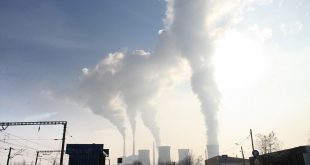
The scientific and the general communities are seeking ways of permanently capturing carbon dioxide produced in power generation, with this being a challenge towards developing Clean Coal Technology. Geo-sequestration, the entombing of carbon dioxide in the earth, is looked upon as one of the most promising solutions. Forcing carbon dioxide into depleting oilfields has the potential to lock away very large amounts of carbon dioxide. The process can also be used as a tool in Enhanced Oil Recovery (EOR). This article looks at the synergies and pitfalls of producing carbon dioxide through coal fired power generation and EOR.


More: continued here

Permalink • Print • Comment
Ultimate Biodiesel Guide


June 18, 2007

Carbon Tax Versus Cap-and-Trade Approaches to Global Warming - Part 2


As you may recall from Part 1 of this article, in the cap-and-trade system many companies might get away with carbon emissions that are below the "certified limits". And that's a crucial point since cap-and-trade policy might bog down in implementation nightmares. Who is going to determine the "caps" on an industry by industry, and company by company basis? Wouldn't that require a new immense federal bureaucracy of its own?


More: continued here

Permalink • Print • Comment

September 16, 2008

Carbon Offsets - Going Green


At Going Green this week a serious discussion centered on the topic of carbon offsets and carbon trading. The fact is that the magnitude of the potential transfer of wealth is going to be unprecedented in the history of civilization.

Where these funds going? Where should they go? Restructure the urban environment, rebuild forests, or to incentivize global trade?

One panel member said they would like to see these funds going to urban poor populations to fund an increase in facilities and resources for the community. Another panel member would send the money straight to investing in renewables, to increase the scalability of projects that is not currently possible with government funding.

This is a first world solution to carbon reduction so how does carbon trading in any way solve global carbon pollution such as in Asia and China? One panel member suggests creating a global market for carbon offsets instead of just a first world implementation.

These are difficult issues to get a grasp on because there are so many different interests and views on where you take the benefits and how they are allocated. Can the first world policy makers and collectors of credits be trusted to help the third world? What do you think? Comment on Carbon Trading.

Resources on speakers: Bob McCooey - NASDAQ Josh Margolis Cantor CO2e John Gimigliano KPMG Elise Zoli Goodwin Procter

Energy Tags: ,

Permalink • Print • Comment

June 18, 2007

Carbon Tax Versus Cap-and-Trade Approaches to Global Warming - Part 1


After making a strong case for Europe to adopt the cap-and-trade strategy back in 1997, the United States took two important steps in the other direction since then.One such development is the recent proliferation of coal-fired power plants built all over the Mid West. Within the next ten years we can expect to see dozens of coal-plants at the 1,500 MW range spewing out about a million tons of sulphur a year into the atmosphere.


More: continued here

Permalink • Print • Comment

November 6, 2007

Natural Gas, the Clean Fossil Fuel


Of the fossil fuels, natural gas is the cleanest source of energy to use for many of our every day needs and activities. It plays an important part in reducing pollution so that a clean and healthy environment can be maintained. Because of its almost perfect combustion process, very few byproducts are emitted into the atmosphere as pollutants. The environmentally friendly attributes of natural gas reduce air pollution.

Composed primarily of methane, the main products of the combustion of natural gas are carbon dioxide and water vapor which are the same compounds we exhale when we breathe. Unlike other fossil fuels, the combustion of natural gas releases very small amounts of sulfur dioxide and nitrogen oxides, virtually no ash or particulate matter, and low levels of carbon dioxide, carbon monoxide, and other reactive hydrocarbons.

Transportation vehicles such as automobiles, trucks, and buses contribute greatly to the air pollution in the United States. This kind of air pollution makes for low visibility, smog, and various greenhouse gas emissions. According to the Department of Energy (DOE), more than 80 percent of air pollution in cities is produced by transportation vehicles. Natural gas can be used to cut down on these high levels of pollution from gasoline and diesel powered cars, trucks, and buses.

According to the EPA, vehicles operating on compressed natural gas have reductions in carbon monoxide emissions of up to 97 percent and reductions in carbon dioxide emissions of 25 percent. Nitrogen oxide emissions, and other non-methane hydrocarbon emissions could all be reduced drastically. Because of the relatively simple makeup of natural gas, there are fewer toxic and carcinogenic emissions from vehicles running on natural gas.


More: continued here

Energy Tags:

Permalink • Print • Comment