Solar Hot Water Bible: Do-It-Yourselfers & Contractors - Learn from the solar water heaters industry leader

Solar Panels

October 16, 2006

Push for "plug in cars" - Hybrids

If you're new here at Alternative Energy HQ, you may want to subscribe to our RSS feed for all the latest updates on energy news. Thanks for visiting!


Recently at an National Alternative Fuel Vehicle Odyssey Day event in Michigan a professor from UC Davis spoke out about the need for the American public to stand up and demand not just Hybrid cars from the American auto makers but a "plug in" version of those cars. He says it is time to tell the car makers that if they build these cars we will buy them.

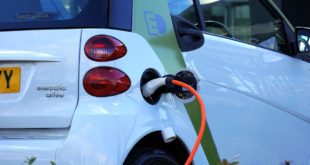
A plug in version of a hybrid would allow the owner to charge the battery over night and then run only on the battery power if the owner wanted to. This would further increase the mileage you could get on a battery power and increase gas mileage. This is not some sort of technology for 50 years form now but rather a goal that is doable right now in our country.

Andrew A. Frank, a professor from UC-Davis, was one of the keynote speakers at the National Alternative Fuel Vehicle Odyssey Day hosted at the downtown campus of Kalamazoo Valley Community College. As part of the event, several alternative-energy vehicles were displayed outside. Hybrid vehicles that can be plugged in are not simply a solution to be worked on in 50 years, but they can and should be in use now, said Frank, who said he had eight such vehicles he's built in his own garage.

Of course to get the auto makers to come around there would need to be considerable voices expressing this desire for clean and eco friendly cars. Is it time to get away from oil and the middle east and begin to take control of our own energy production and needs through green technologies? I would vote yes…..

Read more about hybrid car development ideas

hybrid car

Permalink • Print • Comment
Ultimate Biodiesel Guide


July 14, 2008

Solar Energy.when Will it be Affordable to the Average Homeowner?


solar energy
Paul Calhoun asked:


Introduction: Global warming impact to our quality and cost of living is large and very catastrophic. Homeowners are well aware of the increasing energy costs to heat, cool and illuminate their homes. The increasing costs of oil and other fossil fuels are daily headlines. The insatiable demand for energy to fuel world growth guarantees that the cost of these limited fuels will continue to increase. Political/economic forces will determine the rate of increase for fossil fuels. In addition, the increasing cost of global warming using fossil fuels is slowly being recognized. The world is slowly beginning to understand the urgent need for renewable energy sources. However, each of these alternative energy sources brings major advantages and disadvantages. An example is wind generated energy. Wind energy is available to the whole world and generates electricity competitively with fossil fuels. The technology is understood and easy to apply. But, there are big objections to a windmill in "my back yard". Also, the number of birds and bats that will be crushed with wind power generation is not a warming thought. Wind technology will be a component of our energy solution. However, because of the above concerns, we need other major solutions to meet our demand for energy sources. This search leads us to solar energy. The amount of sun energy striking our world in one day is sufficient to supply our energy demands for a year. We will not run out of this source in the foreseeable future. The major barrier to harnessing solar energy has been cost and convenience. For example, drying clothes in a dryer is easier than hanging clothes on an outside line, thus convenience precluded efforts to find more energy efficiency. We can convert solar energy to electricity but with a major capital cost. Greater acceptance and use of solar energy will lead to lower cost. Solar Energy: Energy from solar energy can be divided into two major categories: Passive Solar Energy: This technology ranges from clothes drying in the sun to solar heating for hot water and many other passive techniques. All are important for our present and future quality of life. The technology is well understood and can be implemented as economics and space conditions allow. Active Solar Energy: One of the active solar energy technologies is converting solar energy directly into electricity. It is called photovoltaic cell or PV. This is a device that converts light into electricity using the photoelectric effect. The first working solar cells were constructed by Charles Fritts in 1883. These prototype cells were made of selenium and achieved efficiencies around one percent. The silicon solar cell was created in 1954. The solar cell has benefited from the development of silicon semiconductors. Physics of Active Solar Energy: The physics of photon to electricity conversion is well understood by physicists. The basic model is of a photon from the sun which strikes the cell material and excites electrons that emit electricity. This model is simple compared to the complexity of modern day semiconductors. The major variables of PV electrical generation are cell material and impurities in the cell material. Manufacturing Technology for Active Solar Energy: Primarily single crystal, high purity silicon has been used to generate photon to electricity conversion. The manufacturing techniques for single crystal silicon and limited quantities of pure silicon impose a high cost for PV devices. Shortages of refined silicon have been hampering production worldwide since late 2004. This shortage persists to this date and has slowed PV growth. New materials are starting to come forward which should lower the PV materials hurdle. Efficiency growth of Active Solar Energy: Since the silicon PV invention in 1954, cheaper fossil fuel prices largely removed solar power from the public consciousness. Annual growth of electrical generation by PV ranged from 10 to 20% percent throughout the 1980's and 1990's. Worldwide installation of PV reached 1000 megawatts in 1999. Manufacturing costs for PV arrays has been dropping 3 to 5% over the recent years. This cost drop began to expand the use of PV electricity generation. Total peak power of installed PV was around 6000 megawatts at the end of 2006. Installed PV is projected to increase to over 9,000 megawatts in 2007. The average lowest retail cost of large photovoltaic arrays has declined from $7.50 to $4.00 per watt between 1990 and 2005. PV materials have also been improving in recent years. The most recent materials approach is to process discrete cells on silicon wafers cut from multi crystalline ribbons which form thin films. This approach is the least expensive of known technologies. This group of technologies includes amorphous silicon cells deposited on stainless-steel ribbon, cadmium telluride (CdTe) cells deposited on glass, and copper indium gallium dielenide (CIGS) alloy cells deposited on either glass or stainless steel substrates. The efficiencies of these new materials are currently at 20%. Many researchers are working to improve the efficiencies. An added advantage of the new thin films is that they are flexible and are currently being used in roofing materials. Current Trends in Generating Active Solar Energy: Commercial businesses like Google, IBM, BJ's Wholesale, Estee Lauder, Kohls, Target, Tiffany & Co., Wal-Mart are installing PV solar energy. From "big box" discount giants to high end commercial businesses PV solar energy is finding acceptance in 2007. The most recent retail-outfitter to become part of this trend is Macy's, which announced earlier this month that it will install solar powered systems on 26 stores throughout California. These leading companies are turning to solar power because it makes good business sense and supports their environmental initiative. Creative financial arrangements allow these companies to afford the upfront capital costs and payback their loans with energy savings. So what does all this mean to the average home owner? PV Cost per Kilowatt (kWh): In the California market, where state incentives and net metering are in place, PV electricity prices are dipping below 11¢/kWh, on par with some utility-delivered power. Moreover, according to the U.S. PV Industry Roadmap, solar electricity will continue this trend and become competitive by 2010 for most domestic markets. The outlook is very positive for PV generation of electricity. Once the capital investment is made, the cost of PV electricity is equivalent to fossil fuels and will continue to decrease. Cost of PV Installation: The cost of installation is the major barrier that has to be overcome for widespread PV acceptance. Around 59% of world solar product sales installed in the last five years were applications that are tied to the electricity grid. Solar energy prices in these applications are 5-20 times more expensive than the cheapest source of conventional electricity generation. This premium is well beyond the reach of the average home owner. Fortunately, there are financial models coming forward to enable the consumer to finance PV solar installation and pay for this installation with the electrical savings. In order to make these financial models successful, federal and state incentives are needed and the installation should be connected to the electrical grid. These connections allow the home owner to sell back electricity when excessive amounts are available and to receive electricity when solar conditions do not allow sufficient electricity. Only fifty percent of our states have modernized to allow on-grid PV solar energy. Berkeley, California is leading the way to enable it citizens to save electrical cost and meet environmental needs. Here is how their plan works. A property owner hires a city-approved solar installer, who determines the best solar system for the property, depending on energy use. Most residential solar panel systems in the city cost from $15,000 to $20,000. The city will pay the contractor for the system and its installation, minus any applicable state and federal rebates, and would add an assessment to the property owner's tax bill to pay for the system. The extra tax would include administrative fees and interest, which would be lower than what the property owner could obtain on their own, because the city would secure low-interest bonds and loans. The tax would stay with the property even if the owner sold, although the owner would have to leave the solar panels. The property owner would save money on monthly Pacific Gas & Electric bills because electricity generated by the solar panels would partly replace electricity delivered by the utility. After the assessment expired, the solar panels, of a simple technology that requires little or no maintenance, would continue to partly replace PG&E electricity. The Berkeley plan is a map for the rest of the world to allow us affordable electricity and meet our responsibilities to the environment. I have a BS and MS in Metallurgical Engineering. Thirty six years spent in the development of semiconductors. Business experience in start up business plan. Currently, an oyster farmer and interested in helping the environment by deploying solar energy. Please visit my Web Site http://www.charlestonenvironmentalhelp.com AddThis Social Bookmark Button

Electric Cars Video Channel

Energy Tags: ,

Permalink • Print • Comment

August 1, 2008

Trouble In Mass. For ZAP EV Owners


This from Wired Mag:

You might want to think twice about buying a car from troubled ZAP. If you can actually manage to get a product from them, and if it actually lives up to its advertising, there’s still a chance you might not even be able to register it legally where you live.

According to the Quincy, Massachusetts' Patriot Ledger, ZAP Xebra owners in Massachusetts received letters from the Registry of Motor Vehicles informing them that their diminutive electric vehicles were neither motorcycle nor car, leaving them in RMV limbo. Of course, this means the owners who already paid sales tax and registry fees ended up having their plates revoked, unable to operate their Xebras on public roads in the Bay State.

Like in the days of the archaic blue laws, Massachusetts once again has lived up to its reputation as the regulatory equivalent of Dean Pritchard. Only Kentucky still bars low-speed electrics from public roads, and their governor is considering issuing an executive order to legalize them.

“We’ve invested money, spent time and now something that is better for the environment is sitting in the garage. It drives me crazy,” Xebra owner Kathy Doyle told the Ledger. The plug may not be pulled forever, though, as bipartisan legislation has already been filed to put the cars back on the road — similar to recent legislation in Ohio. Current owners may see their cars depreciate, though, because the state legislature only has a few days before its formal session ends.

The Registry says that the cars should not have been registered because they do not meet federal safety standards. Anyone who has ever driven in Massachusetts knows that safety standards are of the utmost importance, but ZAP users contend they only use their cars on short, low-speed trips around town (and with a real-world range of 25 miles at 30 mph, they may not have a choice).

At least the commonwealth is being consistent. If you shipped an Alfa Spider stateside and can’t register it because it hasn’t passed U.S. safety checks, why should you be able to drive around in a Xebra that’s slightly more resilient than the cardboard box (stamped “Made in China”) it was mailed in? Still, there’s something hypocritical about Massachusetts embarking on a quest to turn the bluest of states into the greenest of states, yet barring one of the few all-electric cars currently in production due to a bureaucratic hurdle.

zap cars

Energy Tags: ,

Permalink • Print • Comment

September 6, 2007

Solar Energy Information For The Home Owner


Throughout generations from the dawn of mankind the sun has been given a status of a father. A father so generous that he doesn't hold back anything when it comes to giving his children anything and everything he's got. A father, who has guided and shown the path to future and helped in the time of need; Today we ask our father again for help and he continues to share himself with us if that makes it easier for us to live in this earth.

The [tag-tec]solar energy[/tag-tec] is the primary reason for life on earth and the primary reason for our survival. The solar energy we obtain from the sun helps our body produce vitamin D which is a very vital substance. Plants use this solar energy for photosynthesis to manufacture food. Now day’s new methods of harnessing this energy have come up. Hence it is of utmost importance for us to have all the solar energy information we can possibly gather to be in sync with this ever changing world. The solar energy information is often obtained in bits and pieces from newspapers, magazines ,etc. because to put that all under one roof is like trying to fit a 500 pound man into a can of tuna. But what’s important to know about this form of energy are its basic uses in everyday life. Hang on a bit more and you’ll find more uses for it than just for tanning.

The solar energy information that the sun generates a lot of heat is well known to everyone. This heat generally gets dissipated in the atmosphere but used wisely can be concentrated to produce enough heat to boil water and cook food. Flat plate collectors, parabolic dishes etc. are used for such purposes.

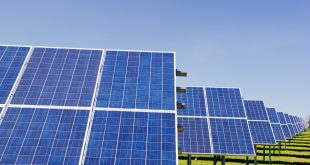
The solar energy information passed on from generations to generations has shown that even in those days this energy was put to use. The solar energy information which is also gaining support is of the energy from the sun being used to produce electricity. Arrays of photovoltaic cells are installed on top of roofs or on the ground to convert the incident solar energy into electricity. They are usually made of silicon but these days semiconductors are also being used. Different generators and invertors and batteries are used to store the electricity generated and wiring is done so as to connect it to the utility grids for consumption of the electricity.

The extra electricity is stored and during days of rain or fog when the incident solar energy isn’t producing enough electricity this extra electricity is used. Thus it cheapens the electricity and the efficiency and output remains same. Thus conventional sources can be put to rest when we have the technology which will make it possible to solely rely on the sun for electricity. Also heat generated by the sun can be used to heat houses in cold areas.

This energy is also pollution free so it won’t harm the atmosphere nor affect the geography and biology in any way. This solar energy information is essential for everyone to be aware of as we decide our own future. We wish for a pollution free comfortable future and knowing all the solar energy information around and thus becoming a concerned citizen is the only way to progress. Let us all lend a helping hand to make our earth a better place to live in for all of us where we have enough to share with everyone.

Chad Hartman is a solar power supporter and a staff writer for Go-Solar.org. To learn more about solar energy and how you can benefit from it, please visit our site at: http://Go-Solar.org

Energy Tags: ,

Permalink • Print • Comment

August 16, 2008

A Practical Electric Car


electric car
Gator asked:


We all know that hybrid cars still need gasoline to be completely dependable. Electric cars on the other hand, suffer from short range and require significant amounts of time to recharge their batteries. So what's the answer? It's really quite simple, a "modulized" electric car. Picture yourself driving across the country in an electric car. After 200 miles staring at pavement, your battery gauge is nearing the recharge mark. It is time to pull off the interstate and find a fuel station. Fortunately, like most exit ramps, a gas station is right in the area. You pull in the driveway and roll right past the gas pumps. Instead, you continue up to an empty spot on a large rack where hundreds of identical depleted car batteries are sitting. You push a button on the dash and three seconds later your battery is disconnected and unloaded from your car. It automatically locks into the rack and begins recharging. The small auxiliary battery in your car is now powering the entire vehicle. You back out and then drive to a fully charged battery in the next rack. The batteries are constructed in a "V-shaped" fashion. You misjudge the drive-up alignment by over three feet, but the battery still slides into your engine compartment and locks safely into place. Once again you are fully charged and ready to role. The entire evolution takes half the time needed to pump a tank of gasoline. You wave to the guy who pulled off the interstate directly in front of you while he continues fueling his SUV. You will be miles down the road before he gets back on the highway. How can the above scenario become reality? What if each new electric vehicle automatically came with two full size batteries? One is always in the car and a second in a charging rack anywhere in the country. If all the batteries were standardized to fit every type of vehicle, we could simply interchange them as needed with any other charged battery out there. Fuel stations could have racks upon racks of batteries being charged as they are swapped out. If we had 200 million cars on the road, there would be 400 million batteries to keep them moving. We could pay a nominal recharge fee to the fuel stations each time we took one. Currently most of our electrical energy comes from burning coal. Fortunately the US happens to have enormous quantities under its soil. Power plants are currently using this resource along with cleaner burning technologies. It would not be practical to expect a "coal-burning car" to utilize coal cleanly, but a large power plant could. Converting this black energy to run electric vehicles would certainly help improve the environment and get us completely off imported oil. We could also install solar panels all over the exterior of these electric cars to help use a little of that, "green" free energy from the sun. Every little bit helps and it would have an immediate positive impact on our wallets. Just think, when your car is sitting in the driveway all day, it's actually gaining fuel. Obviously the logistics surrounding the batteries will need to be worked out. For example, it may be necessary to create a rule where a car owner cannot pick up a charged battery unless a depleted one is dropped off first, thereby keeping the stockpile of batteries up. Since the overwhelming majority of vehicles in this country are actually sitting stationary at any given time, the small percentage currently on the road will have an ample number of charged batteries for immediate use. Another issue may be in keeping batteries strategically placed around the country. We could give the oil companies something to do by moving them where needed. The real trick behind all of this isn't a car that practically changes the battery for you. Most auto engineers can probably design one in a matter of days. The trick is making a car that's as convenient for us as gas-burning vehicles are today. It's a statistical fact that we as consumers like things easy, so let's keep that in mind while building the next generation of vehicles. All right big three, I've given you the idea, now run with it before those countries on the far side of the planet scoop you for the second century in a row!

Alternative Energy Video Channel

Energy Tags: ,

Permalink • Print • Comment