Solar Hot Water Bible: Do-It-Yourselfers & Contractors - Learn from the solar water heaters industry leader

Solar Panels

April 5, 2007

Is Nuclear Power back on the table in California?

If you're new here at Alternative Energy HQ, you may want to subscribe to our RSS feed for all the latest updates on energy news. Thanks for visiting!


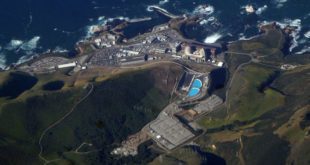
California was one of the first states to enter the [tag-tec]nuclear power[/tag-tec] industry for energy production some 40 years ago. It was also one of the first to have huge debate over the nuclear option which resulted in the shutdowns of several plants and a moratorium of nuclear power plant development in the state.

Now there are signs that nuclear power as an option for power generation in this age of high priced foreign oil and instability of the energy marketplace may be back on the table for discussion.

A bill that is under discussion by the California State legislature would lift that moratorium on new nuclear power plants in California. This would give hopes ot investors lining up to build a [tag-ice]nuclear power plant[/tag-ice] in the central valley of California. The central valley is of course undergoing tremendous population growth in recent years and thus the need for more energy production.

The bill is being carried by Assemblyman Chuck DeVore (R)-Irvine who says that lifting the moratorium on nuclear plants before the federal government has a permanent storage option for spent fuel rods is necessary to meet the state's demand for power.

Critics however abound in California for this type of proposal. Longtime critics of nuclear power point to the many concerns about nuclear power that originally led to this ban on new plants, such as the lack of long term storage options for spent fuel, concerns over seismic safety.

In a July poll by the Public Policy Institute of California, 39 percent of Californians surveyed said they supported the building of additional nuclear power plants, while 52 percent opposed the idea. A year earlier, the results were 33 percent in support and 59 percent opposed. Opinions have shifted even more dramatically among likely voters. Last summer, that group was split down the middle at 46 percent on each side of the issue. In 2005, the result was 37 percent in support and 55 percent opposed. "The notion of global warming has had all kinds of ripple effects and unintended consequences," said Mark Baldassare, the institute's chief executive officer.

SFGate

"The state must build more nuclear plants for cheap, non-carbon-emitting electricity," said John Hutson, the Fresno Nuclear Energy Group's chief executive. "Or the Legislature needs to provide an alternative. But at this point, there isn't one."

Mr. DeVore's bill has gotten the attention of one mayor who wants to build a nuclear power plant in his city.

"The entire Southern California area is really in a precarious position in terms of energy consumption and energy needs," said Terry Caldwell, mayor of Victorville in San Bernardino County. "And it's only going to get worse before it gets better."

Is this not classic knee jerk reaction to a situation. Let's just forget the last twenty years of nuclear power history and just go with pie in the sky projections that safe storage will fall into our laps anytime soon.

Let's be real, this is a ploy by Republicans to exploit the oil situation in order to get something their constituents want despite the risk to the general population.

21st Century Complete Guide to Nuclear Fusion, Fusion Energy and Power Plant Reactor Research, with Encyclopedic Coverage of Facilities and Labs Tmi 25 Years Later: The Three Mile Island Nuclear Power Plant Accident And Its Impact

Energy Tags: ,

Permalink • Print • 1 Comment
Ultimate Biodiesel Guide


April 18, 2007

Attempt to Undue Nuclear Power Plant Moritorium Dies In CA Legislature


We reported a few weeks back about a bill being sponsored in CA that would among other things attempt to undue a three decade ban on the construction of new [tag-tec]nuclear power[/tag-tec] plants in the state of California. Well once it reached the legislative committee in Sacramento for discussion it was quickly shot down by the committee chairwoman Loni Hancock.

"You've spoken for five minutes … and I'm wondering if you can wrap up," said Assemblywoman Loni Hancock, D-Berkeley.

The vote was 6-3 against the bill as committee members voted along party lines. So it was basically dead in the water before the discussion even began. It seems funny now that a few weeks ago the media were covering this thing as though there were some sort of groundswell of public opinion that would lead to reconsidering the building of nuke plants in California.

Here is some of the coverage from the Chronicle:

It was clear that the legislation would get a chilly reception in the Assembly Natural Resources Committee when the chairwoman abruptly interrupted a presentation by the bill's author, Assemblyman Chuck DeVore, R-Irvine (Orange County), and asked him to finish his opening remarks. As his main argument for the bill, AB719, DeVore called nuclear power the answer to meeting the state's growing demand for electricity without exacerbating the problem of global warming. His measure sought to repeal a 1976 moratorium on building new [tag-ice]nuclear [/tag-ice]reactors in California until the federal Department of Energy builds a permanent storage facility for nuclear waste. The federal agency has chosen a site in Nevada, but the effort has been stalled by technical, legal and political challenges. AB719's opponents — largely environmental and anti-nuclear groups — on Monday argued that nuclear waste is harmful to the environment, there is no permanent solution for storing spent fuel rods, and nuclear power plants could become targets of terrorism. "Nuclear technology is the most dangerous technology on earth," said Dan Hirsch, president of the Committee to Bridge the Gap, a California-based anti-nuclear watchdog group.

So what does the bill's sponsor Chuck Devore (R-Irvine) have to say? He was not surprised but is not giving up either.

"We're going to keep bringing this back," he said. "California's energy needs are not going to go away."

Energy Tags:

Permalink • Print

July 12, 2007

Green Effort to Impact Sunshine State


Florida Supports Solar Energy Deductions for Homes and Businesses

The sunshine state wants to encourage solar energy development. Check it out.


More: solar energy - continued here

Permalink • Print • Comment

January 24, 2007

2007 State Of the Union Address - Bush on Energy


State of the Union 2007: Climate Change & Energy Policy
Bush and the State of the Union.

Center for American Progress Senior Fellow Dr Joseph Romm, author of the new book, "Hell & High Water: Global Warming" offers a few tips on what to listen for in the President's upcoming State of the Union address (which is rumored to have major announcements on climate change and energy.) Romm cautions it's important to listen closely to the rhetoric.

For more on climate change and energy please see http://www.americanprogress

And check out Joe's new blog on the topic at www.CLIMATEPROGRESS.org

Permalink • Print • Comment

October 31, 2006

California's Prop 87 Pits Oil Industry against alternative energy


What do you believe on Prop 87? Here are some of the latest quotes on it from various sides of the issue. You read them and then tell me what you think. Alternative energy or big oil?

Prop. 87 Gets An F Grade By Marian Bergeson Past President California School Boards Association For many parents, the last couple of weeks have meant the beginning of a new school year - taking kids to the bus stop, packing lunches and buying school supplies. For educators it has meant getting back to the classroom to set them up, planning lessons and meeting a new group of students. Those of us worried about the future of our schools should be concerned about one particular ballot question - Proposition 87 - which not only will impose an oil tax, but would hurt education too. According to California's independent Legislative Analyst, Prop. 87 would decrease state and local tax revenues available for schools and other vital services. In addition, the initiative skirts preexisting education funding requirements contained in the state Constitution, passed nearly two decades ago through Proposition 98.
Editorial: Yes on Prop. 87October 31, 2006 By Editorial Board The Editorial Board urges readers to vote yes on Prop 87. The measure, if passed, would impose a tax on oil production in California. The revenues generated by this tax will be used to fund the development of alternative energy technologies, thus decreasing our dependence on oil, accelerating the adoption of cleaner technologies and improving the environment.
Arguments Against Prop 87 (Oil Severance Tax) Crumble Under Analysis–Even That of a Conservative Economics Professor By Frank D. Russo "Slicker than Oil: The Debate Over California’s Proposition 87" appeared last week on the Applia Econ Blog; News for Econ Students. It is written by Paul Romer, a Stanford professor of economics. He is a Senior Fellow of the Hoover Institution, a fairly conservative think tank named after Herbert Hoover. All the more important for his conclusions. His analysis of Proposition 87 shows that it will not increase gas prices (using what he calls an "introductory macroeconomics course" level analysis) and lays to rest the arguments of the oil industry. While he remains neutral with regard to 87, he does say that opponents are totally off base in the main arguments they are making. This is a little of what he has to say: The market for oil is global, and the price of oil is set by global supply and global demand. California produces less than 1% of all the oil produced in the world, so changes of a few percent in its output would be far too small to have a noticeable effect on global supply and demand. Taken together, all the producers in California are in the same position as a single firm in a competitive industry. … Understandably, these producers have raised a lot of funds to support a campaign to oppose the imposition of this new tax. The tax would raise up to $4 billion before it expires, so for oil producers as a group, it makes sense to spend millions of dollars to defeat the tax. What is interesting about the campaign ads that they support is their repeated claim that the tax will raise the price of gasoline. No doubt, their campaign consultants have found that raising this irrelevant issue is the most effective way to get people to vote against this proposition . The article is very short and has only one graph. It is clearly worth a perusal of at least a few minutes to be able to analyze some of the policy issues in this debate. This isn’t the only claim of the oil companies that is showing to be false. They have a record $90 million in their war chest to spend on ads that don't hold up to economic or factual analysis. Take a look at the argument that Proposition 87 will decrease California oil production, which is dealt with in Professor Romer's article. There is now an additional fact in the way of this argument to buttress what the good professor had to say. Chevron basically confirmed that Prop 87 will not reduce California oil production yesterday, in announcing its $5 billion third quarter profits. Chevron's CFO said "we could see at current prices and current production levels a penalty on Chevron in the order of $200 million." Implicit in this admission by Chevron CFO Steven Krowe is that Chevron expects to continue at least the current level of oil production in California after Proposition 87 passes. This is in stark contrast to the oil company ads that claim oil production will decrease in California as a result of Prop. 87. "Today's campaign finance filings showed how much the oil companies have spent on buying endorsements for their sham coalition. Chevron today showed how false No on 87's economic arguments are. The No on 87 campaign was created by and is bankrolled by the oil companies to keep us dependent on the oil they sell. Their coalition and arguments are lies," said Beth Willon, the Yes on 87 Press Secretary. "The oil company puppeteers pulling the No on 87 campaign's strings have finally come out from behind the curtain and exposed the farce that their campaign is."
Prop. 87: Higher Gas Prices, Imported Oil and $4 Billion Open Check Opinion — Jaime Rojas Jr. Would a $4 billion tax on oil produced in California be good for the people of California or bad? That’s the question we’ll decide next month, when we vote on Proposition 87. Proposition 87 does try to take on a serious issue, developing more alternative energy sources – and you won’t find many of us who disagree with that. But the supporters of Proposition 87 chose a lemon of a vehicle to try and reach that goal. Proposition 87 will result in higher gas prices, increased dependence on imported oil, potential budget cuts to local services like public safety. Education leaders say schools will suffer under Proposition 87. “Proposition 87 is double-trouble for our schools. It will reduce state and local revenues to our schools right away, and because it bypasses the constitutional guarantee protecting school funding, it could rob education of $1.9 billion over the next ten years,” said Jose Luis Solache, vice president of the Board of Education of the Lynwood Unified School District in Los Angeles County. Proposition 87 will mean higher gas prices, and make us more dependent on imported oil. Proposition 87 is not a tax on oil company profits or oil companies in general. It’s a tax on oil production in California. Production Goes Down That will mean oil production in California goes down. And for the foreseeable future at least, to make up for that loss, we’ll have to import more oil from overseas. It costs more to get that oil here, and if the oil costs more, the gasoline made from that oil would also cost all of us more of our hard-earned money at the pump. Proposition 87 has no guarantee that we’ll see a dime’s worth of progress on alternative energy for our $4 billion. All that money will be turned over to a new state agency to be run by political appointees (who will be named only after the election), and that agency will only be required to do one thing – spend that $4 billion.

» Link to this article

I personally think that if the oil industry is putting millions of dollars into defeating this measure then it must be worth voting for in the end. What do you think?

Permalink • Print • Comment