Solar Power


 Powered by Max Banner Ads 

June 1, 2011

DOE Announces $27 Million to Reduce Costs of Solar Energy Projects, Streamline Permitting and Installations

Share

WASHINGTON, DC – As part of the Obama Administration’s SunShot Initiative to make solar energy cost-competitive with fossil fuels within the decade, U.S. Department of Energy Secretary Steven Chu today announced the availability of more than $27 million in new funding that will reduce the non-hardware costs of solar energy projects, a critical element in bringing down the overall costs of installed solar energy systems.

The funding will support a $12.5 million challenge to encourage cities and counties to compete to streamline and digitize permitting processes, as well as $15 million that will be made available to advance innovations in information technology systems, local zoning and building codes and regulations, and more. These process improvements and innovations will help increase U.S. competitiveness in the global solar industry and will play an important role in achieving President Obama’s goal of doubling America’s electricity from clean energy sources.

“These investments under the SunShot program can help to transform the solar energy industry by addressing significant challenges to solar energy deployment, including permitting and installation,” said Secretary Chu. “Innovations in IT and local business processes, such as online permit applications, can deliver significant savings for solar energy systems and will help America to compete globally in this growing market.”

Both funding opportunities focus on reducing “non-hardware balance of system” costs, which generally refer to the costs of installing solar systems not associated with the solar panels, mounting hardware, electronics, etc. These “soft costs,” including the capital required to pay for siting, permitting, and installation, as well as the cost of connecting the systems to the grid, can represent up to 40 percent of the total cost of the solar energy system.

A major obstacle for homeowners and developers looking to invest in solar energy is navigating the differing and expensive administrative processes of various towns, cities, and counties across the nation and securing financing for their projects. These projects will help standardize some of the processes, cut upfront fees and paperwork, and reduce the overall costs associated with permitting and installation, making it easier and cheaper for homeowners, businesses and their local communities to deploy solar energy.

Rooftop Solar Challenge – up to $12.5 million

Under the Rooftop Solar Challenge local and regional government teams can compete for funds to help eliminate administrative barriers to residential and small commercial photovoltaic (PV) solar installations and improve the availability of financing for solar projects. This Challenge incentivizes local governments to develop innovative solutions in four key areas:

* Standardizing permitting processes;
* Updating planning and zoning codes;
* Improving interconnection and net metering standards; and
* Increasing access to financing.

Every jurisdiction in each winning team must adopt the same processes, which will help address the challenge of different communities having different sets of rules and regulations. The winners will also remove siting restrictions from local codes and land use policies and will increase access to financing options for homeowners by promoting innovative financing mechanisms like solar leasing and group purchasing. More on DOE Announces $27 Million to Reduce Costs of Solar Energy Projects, Streamline Permitting and Installations


Filed under Press Releases, Solar Power by

Permalink Print Comment

Solar Capacity Expansion

Share

Chinese Manufacturers’ Capacity Expansion Plans still in Progress despite Continued Decrease in Solar Energy Market Price

According to the latest survey by EnergyTrend, the market demand is yet to pick up, and the inventory in stock still remains at a high level. As a result, the polysilicon price has significantly dropped. EnergyTrend’s survey shows that the spot price of polysilicon has fallen to $50/kg at the lowest but such a low price is not widely accepted. Moreover, the average price of solar cell has reached below $0.9/Watt, and downstream manufacturers continued to cut price. Manufacturers indicated that the Intersolar Europe 2011 is going to be held in Munich, Germany next week, so the solar energy market takes a conservative attitude toward the current price quotation. However, EnergyTrend believes that if the outlook for 2H11 continue to remain gloomy, price decrease will continue.

Source: EnergyTrend

According to EnergyTrend’s survey, the polysilicon price has come to 50/kg at the lowest, and the average polysilicon price has rapidly decreased by 2.34%, to $57.5. Although Intersolar Europe is going to start soon and a conservative attitude has remained in the market, it is believed that the closing price might decrease to under $50/kg in the short run. In addition, Si wafer manufacturers are also under price pressure. The average price of multi-Si wafer and mono-Si wafer has respectively fallen by 4.83% and 3.93%, to $2.303/piece and $2.687/piece. Furthermore, the solar cell price has decreased to $0.8/Watt at the lowest, and the average price has dropped by 6.43%, to $0.89/Watt. Manufacturers indicated that the price trend shows a continued decrease. EnergyTrend indicates that solar cell manufacturers have felt much pressure in the decreasing price, so the disagreements between buyers and sellers will remain for now. In addition, since market demand has not picked up, the average price of module has continued to decrease by 0.51%, to $1.35/Watt, primarily because manufacturers are aggressive to lower their inventory.

EnergyTrend believes that reducing inventory is still the key factor for the PV market demand recovery. According to EnergyTrend’s latest survey, although the speed of inventory clearance is still slow, manufacturers expect sufficient recovery will occur in the second half of the year. On the other hand, even high inventory level remained, Chinese manufacturers are still optimistic about their capacity expansion plans. Based on recent announcements made by big names, Chinese manufacturers aggressively increase their capacities, in the polysilicon, Si-wafer, solar cell, and module fields. For instance, Top-tier PV manufacturers, like GCL and Trina Solar do not fear the current market downtrend, and still follow their original plan to increase their capacities. This particular market development resembles memory industry a few years ago. However, will this similar development enable Chinese manufacturers to dominate the solar energy industry in the future? EnergyTrend believes that since the PV market largely depends on government policies, the procedure is not easy to be duplicated and the result is not easy to be achieved, either.


Filed under Solar Power by

Permalink Print 1 Comment

May 14, 2011

Making Use of Easily Accessible Sources to Access Premium Quality Solar Panel Kits for the Residence

Share

Solar Panel Kits

solar power for homesThere are various types of solar panel kits available today. Many people are currently turning to alternative forms of energy for their residences and businesses that use solar powered energy has also grown to be considerably more mainstream.

The technology has been progressing with great alacrity, with photovoltaic solar cells becoming quite a bit more compact, yet more potent as compared with just a short time ago. With an increasing amount of marketplace demand, the prices for these particular elements has additionally decreased considerably, making them increasingly more obtainable.

Today you are no longer restricted to obtaining only the individual elements, but comprehensive solar panel kits as well, from a variety of online sources. You never even need to pay the retail price. Many websites make available directions teaching you how to make your very own solar panels, in addition to complete power systems.

Even individuals who aren’t that hands-on oriented, but can nevertheless follow straightforward directions, can get their home transformed to solar technology in a relatively short time frame. In addition to comprehensive kits that you just construct, there are many Diy websites on the market that offer plans to construct these systems from scratch.

Perhaps the most essential thing you have to know concerning these internet websites is the fact that you want a resource that’s going to give you comprehensive specifics. Not just regarding how to develop these systems, but also where you get the equipment quickly and cheaply.

A number of these are available online at several various websites, through online auction houses, and many of the supplies are available at your local hardware store. A very good website will in addition help you to determine how many individual panels you’re going to need to operate your own home, and provide you with other helpful tips and details.

A few systems will in addition, help you construct windmills as well, simply because often homeowner’s learn that integrating both of these power producers together with each other can make a far better are you are around electrical power platform.

Regardless if you are developing a platform from scratch, or implementing solar panel kits, it really is essential to know that you’re on a path that will enable you to get get rid of high energy bills. Not only will you save money on your electric bills, you are furthermore making an effort to preserve our planet, and protecting its natural resources.

Solar energy is probably the most efficient alternative energy resources and may be used in a range of ways. Additionally, in numerous situations solar panel kits are eligible for significant tax rebates as well.


Filed under Solar Power by

Permalink Print Comment

May 11, 2011

Find Top Notch Solar Panel Kits for the Residence

Share

There are numerous forms of solar panel kits available these days. Many people are now making use of alternative forms of power for their residences and companies that use solar energy has likewise grown to be considerably more popular.

The industry itself has been improving very, very quickly, with photovoltaic solar cells becoming substantially smaller, yet more potent when compared with just a few years ago. With more and more demand, the prices for these particular parts has additionally dropped significantly, making them a lot more obtainable.

Nowadays you’re no longer limited to finding merely the individual parts, but comprehensive solar panel kits also, from a number of Internet resources. You never even have to pay the retail price. Many sites provide you with instruction manuals regarding how to create your very own panels, along with complete power platforms.

Even people that are not all that mechanically inclined, but can nevertheless carry out simple instruction manuals, can get their residence changed over to solar power within a relatively short time frame. In addition to comprehensive systems that you can construct, there are numerous do-it-yourself sites in existence that provide plans to create these systems completely from scratch.

Maybe the most essential thing you have to know in relation to websites like these is the fact that you need a resource that’s going to provide you with comprehensive information and facts. Not simply on how to develop these systems, but also where you get the components affordably.

Some of these can be bought on the web through discount sites, via online auction houses, and some materials can be located at your nearby home improvement center. A very good internet site will even help you see how many panels you are going to need to have to supply electricity for your private home, and give you additional helpful tips and details.

Several plans will in addition, help you construct wind turbines also, simply because often times homeowner’s discover that combining both of these electricity producers with each other can certainly produce a superior are you are around electric power platform.

Whether you’re developing a platform on your own, or using solar panel kits, it’s crucial that you be aware that you’re on a path that will enable you to get off the power grid. Not only are you going to save cash on your electric bills, you’re likewise helping to protect planet earth, and protecting its resources.

Solar technology is one of the most reliable renewable power assets and can be utilized in a wide variety of ways. Additionally, in numerous instances solar panel kits receive substantial tax rebates also.


Filed under Solar Power by

Permalink Print Comment

April 29, 2011

Solar Power Without Solar Cells

Share

A hidden magnetic effect of light could make it possible

ANN ARBOR, Mich.—A dramatic and surprising magnetic effect of light discovered by University of Michigan researchers could lead to solar power without traditional semiconductor-based solar cells.

The researchers found a way to make an “optical battery,” said Stephen Rand, a professor in the departments of Electrical Engineering and Computer Science, Physics and Applied Physics.

In the process, they overturned a century-old tenet of physics.

“You could stare at the equations of motion all day and you will not see this possibility. We’ve all been taught that this doesn’t happen,” said Rand, an author of a paper on the work published in the Journal of Applied Physics. “It’s a very odd interaction. That’s why it’s been overlooked for more than 100 years.”

Light has electric and magnetic components. Until now, scientists thought the effects of the magnetic field were so weak that they could be ignored. What Rand and his colleagues found is that at the right intensity, when light is traveling through a material that does not conduct electricity, the light field can generate magnetic effects that are 100 million times stronger than previously expected. Under these circumstances, the magnetic effects develop strength equivalent to a strong electric effect.

“This could lead to a new kind of solar cell without semiconductors and without absorption to produce charge separation,” Rand said. “In solar cells, the light goes into a material, gets absorbed and creates heat. Here, we expect to have a very low heat load. Instead of the light being absorbed, energy is stored in the magnetic moment. Intense magnetization can be induced by intense light and then it is ultimately capable of providing a capacitive power source.”

What makes this possible is a previously undetected brand of “optical rectification,” says William Fisher, a doctoral student in applied physics. In traditional optical rectification, light’s electric field causes a charge separation, or a pulling apart of the positive and negative charges in a material. This sets up a voltage, similar to that in a battery. This electric effect had previously been detected only in crystalline materials that possessed a certain symmetry. More on Solar Power Without Solar Cells


Filed under Solar Power by

Permalink Print 1 Comment

April 20, 2011

Floating Solar Technology


NEXT GENERATION FLOATING SOLAR HAS ARRIVED

SPG Solar Floatovoltaics® Goes Beyond Renewable Energy, Delivering A Solution for Water Conservation

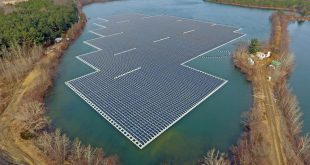
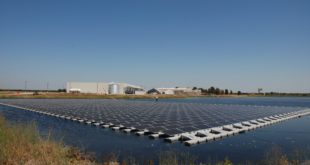
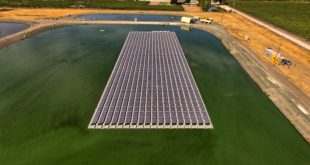
floating solar panelsNovato, CA—April 20, 2011—SPG Solar Inc.®, the company that introduced the world’s first operational floating solar array in 2007, today announced the availability of it’s next generation in floating solar technology. Redesigned and engineered to be cost competitive, SPG Solar Floatovoltaics™ makes it possible for commercial, industrial and government users with little available rooftop or land space to float solar on water, providing triple benefits: energy savings, water savings and environmental benefits. Using proven and cost effective floating technology, fresh water irrigation ponds, lakes, or reservoirs become revenue-generating, power producing platforms.

“Floatovoltaics has changed the way solar power is now considered, making it an option where never before possible,” said SPG Solar CEO and President Chris Robine.” “Now, customers around the world can install a floating system that is priced competitively to ground based, single –axis tracking solar systems.”

When available open space is limited, Floatovoltaics provides a water-based solution. Where water is at a premium, the system offers significant conservation benefits:

• Reduces water evaporation up to 70%,
• Improves water quality by providing coverage from the sun that minimizes algae growth and reduces the need for harsh water treatment chemicals, and
• Provides shade below the panels, lowering the water temperature and improving power output from the solar panels.

The Floatovoltaics power generating system works the same way as in all other solar photovoltaic (PV) installations. It is quality engineered for a system lifetime of 20+ years, features no moving parts and requires limited maintenance.

Floatovoltaics technology is anticipated to be particularly valuable for agribusinesses, water agencies, wastewater treatment facilities, and utilities; among other applications.


Filed under Press Releases, Solar Power by

Permalink Print Comment

April 13, 2011

Using Solar Energy For Pool Heating


Solar Energy Pools: Keep energy consumption down and pool costs will drop.

As we all know, swimming pools require a lot of energy to run and maintain. Pool supplies alone can get costly, and with energy costs going up, it is helpful to find ways to reduce the amount of energy pools use. Solar thermal energy is a great resource to cushion these costs by lowering the energy consumption of a pool.

Passive Solar Pool Heaters

Solar heaters, solar blankets, and solar rings are a few mainstream ways to heat your pool with the power of the sun for both above-ground and in-ground swimming pools. All of these passive solar heating options are easy to implement and affordable.

Some solar heaters are individual solar coil pool heaters that sit next to a pool and collect energy from the sun’s rays, and other solar heaters are complete solar systems that use bigger solar panels to collect energy. Solar pool heaters can heat pool water by 10 -15 degrees and only need around 4 – 6 hours of sunlight to capture enough energy. This energy is then transferred into the pool through coils and the pool pump helps to circulate the heated the water.

Which solar pool heater is best for my pool?

Determining what kind of solar pool heater is best will depend on the size of your pool. Just one large individual solar coil heater could be all a pool needs or multiple individual solar coil pool heaters can be combined to provide additional heat to pool water. These individual solar coil heaters are best for above ground and tight spaced pools, and come in small and large dome sizes: a good example of these are the SolarPro solar coil pool heaters.

Complete solar systems are configured for your pool size. An in-ground swimming pool will require 2 to 4 solar panel collectors that are roughly 4 feet by 20 feet long, and an above ground pool will require 1 to 3 of these panels; the surrounding space around the pool needs to be able to accommodate this. However, these solar systems are the most effective way to heat a pool and can be comparable in price to traditional gas heaters.

In addition, passive solar pool heaters last longer than traditional heaters and cost nothing to operate, saving you a lot of money in the long run.

solar pool coverSolar Pool Covers and Blankets

Having a solar pool cover or blanket, as they are commonly referred to, are great for collecting and trapping heat from the sun, and warming pool water. Solar covers are used in between swims and should not be confused with pool covers. Pool covers are used for long periods of time to shield your pool, like when on vacation or closing a pool for the winter.

Solar covers and blankets look like big sheets of bubble wrap and act as great passive solar heaters. This design offers small pockets of air that warm up and transfer heat to the water. Clear solar covers are best because the sun’s rays can easily penetrate the plastic and not reflect off it. A solar blanket can raise pool temperature by 15 degrees, and holds the heat in overnight and between swims.

Solar covers help save money not only on heating costs but on maintenance and pool chemicals as well. solar pool cover cuThey stop debris from blowing into a pool and prevent chlorine and other chemicals from evaporating, keeping pool water cleaner for longer periods of time.

A couple things to remember about solar blankets and covers: they need to be stored out of direct sunlight when not in use, and children and pets should be closely supervised. It is easy to fall into a pool and become trapped in a cover or blanket.

solar pool heaterSolar Rings

Solar rings are a solar thermal energy technology that collect energy from the sun and transfer it as heat to the pool water. Solar pool rings act just like solar covers and blankets but have less safety risks. They are big individual discs, about 4 feet in diameter, that float on the water and like the solar covers, are easily placed and removed by one person. Solar rings should also be stored out of direct sunlight to prevent over heating and deterioration.

Go Solar and Save

Enjoy your swimming pool without the guilt of spending too many BTUs. These affordable solar products are easy options to help reduce household energy consumption and keep pool maintenance costs down to a minimum. Switch over to solar heaters and solar pool products for this upcoming summer season and see how much you can save.

About the Author

I’m a writer and content developer for Doheny’s Water Warehouse. I grew up around water on the coast of South Carolina and spent most of my summers at my grandma’s in Florida. As a kid, she had the largest pool I had ever seen and my brothers and I would fight over who would test the pool water and put the chemicals in. Swimming the summers away at my grandma’s house ingrained a passion for swimming and pool care. I am now interested in green energy solutions and energy efficient ways to maintain swimming pools and hot tubs.

Doheny’s Water Warehouse is your home for all types of pool supplies including pool chemicals, pool equipment, pool cleaners and more! We offer free shipping nationwide and stock a variety of major brands such as Hayward, Clear-Tek, Jandy, and others.


Filed under Solar Power by

Permalink Print Comment

Now 3D Solar Cells? It’s True


Solar3D Successfully Completes Design of a Key Element of Its High Efficiency Solar Cell
Breakthrough Solar Cell’s Light Collectors will Drastically Reduce Reflection and Direct Light into 3-Dimensional Photovoltaic Structure

Santa Barbara, CA – Solar3D, Inc., the developer of a breakthrough 3-dimensional solar cell technology to maximize the conversion of sunlight into electricity, today announced that it has completed the design of the Light Collector section, a critical part of its novel solar cell.

Inspired by light management techniques used in fiber optic devices, the company’s innovative solar cell technology utilizes a 3-dimensional design to trap sunlight inside micro-photovoltaic structures where photons bounce around until they are converted into electrons. Solar3D’s management believes that this breakthrough solar cell design will dramatically change the economics of solar energy.

“Our innovation solar cell design has two main sections: a Light Collector section coupled with a Micro-Photovoltaic section. The completion of the Light Collector design is the key to expediting the entire project,” commented Jim Nelson, President and CEO of Solar3D. “The structure of every other element of the cell is dictated by the Light Collector and flows from its design. While the design element is complete now, we expect minor modifications to further fabricate a prototype.”

With the completion of the Light Collector design, the company’s research and development team believes that they can soon calculate the increase in efficiency that the overall 3-dimensional solar cell can achieve.

“The Light Collector was the first giant step. We will now be able to know how much of the light will come through to the absorbing structure,” continued Nelson “With that understanding, we will soon know what the increase in efficiency will be with our new cell relative to current technology.”

The company’s management believes that with the achievement of this milestone, Solar3D is ahead of its schedule to complete a working prototype by year-end.


Filed under Press Releases, Solar Power by

Permalink Print Comment

April 12, 2011

Large New Solar Project In Sacramento CA


State, Local Officials Dedicate Largest Private Solar Project in City; 3 Megawatt Facility Will Help Power Depot Park Business Complex

solar power installation

courtesy Depot Park

Sacramento – State, city and public utility officials joined today to inaugurate one of the Sacramento region’s largest private solar power installations – a 3-megawatt (DC) project that will supply electricity to Depot Park, the 3-million square-foot commercial and industrial complex in South Sacramento.

“I launched ‘Greenwise Sacramento’ because I believe this area has the opportunity to be the greenest region in the country and a hub for investment in clean technology,” said Sacramento Mayor Kevin Johnson. “Today’s dedication demonstrates that good environmental policy can be good economic policy. The scale of this project shows that while Sacramento has the sunshine to create renewable energy, we also have the collaboration and the imagination to think big and turn a Brownfield site into a renewable energy showcase. Congratulations to all those involved!”

The 12,600-panel array will produce enough power to meet approximately 40% of the annual electricity needs at Depot Park, the former Sacramento Army Depot. The installation is one of the largest ground mounted-tracking solar projects in California and the only one located at a Superfund Site within a redeveloped military facility.

California solar projects not only provide an efficient and affordable source of energy, they provide jobs to high skilled Californians,” said Joel Ayala, Director of the Governor’s Office of Economic Development. “The investment that Chint and Astronergy have made in California is an historic achievement and our hope is that we can develop further opportunities, both here in Sacramento and across the state.”

“SMUD considers this investment in clean energy a down payment on a low-carbon future.” said Renee Taylor, SMUD Board President. “Projects such as these align with SMUD’s vision to promote responsible and sustainable economic development and renewable energy. SMUD has been a solar leader for more than two decades.”

The Depot Park Solar Project will save more than 3,000 tons of greenhouse gas emissions annually, equivalent to:
• Removing 696 vehicles from the road
• Powering 728 average homes in California
• Avoiding the need to burn 6,335 barrels of oil a year

“This project reflects our commitment to attracting clean technology industries and to lowering the carbon footprint of our own operations,” said Dick Fischer, president of U.S. National Leasing, owner and manager of Depot Park. “It serves as a shining example of both alternative energy ingenuity and green energy remediation of a previously contaminated Brownfield site. It promotes both the state’s climate change initiatives and the city’s effort to attract green industry businesses to Sacramento.”

The project’s success was assisted by development partners East West Bank; Chint Astroenergy, a China-based energy equipment manufacturer; SPG Solar, designed and installed the solar energy system; the California Governor’s Office of Economic Development, and the City of Sacramento and its Greenwise Initiative.

“We applaud U.S. National Leasing and Depot Park for investing in their future and the local community. This sizeable solar power system is maximizing land space that cannot be used for other applications by converting a Brownfield into a Brightfield and has created nearly 100 green jobs in the community,” said Chris Robine, president and CEO of SPG Solar.

“East West Bank is always in the forefront for advancing environmental sustainability. We have financed quite a few solar projects in California recently which helped improve energy efficiency and benefited the communities. We are pleased to partner with the public-private partnership team to bring the Depot Park solar project live,” said Don Danh, senior vice president and manager of emerging markets at East West Bank.

The Depot Park solar installation operates as a “peak shaving” efficiency project, leveling surges in electricity demand during peak usage times and reducing the Park’s overall demand for electricity from SMUD. Reducing this peak electricity demand during the hottest times of the year provides many benefits to the SMUD electricity grid, including reduced demand for power generated from fossil fuels and reduced investment in new sources of generation.


Filed under Solar Install, Solar Power by

Permalink Print 1 Comment

April 11, 2011

US DOE Funds Huge Solar Project in CA


DOE Finalizes $1.6 Billion Loan Guarantee for BrightSource Energy Inc.

California Complex Expected to Create Approximately 1,000 Jobs and Avoid Over 640,000 Tons of Carbon Pollution Annually

solar power facilityWashington D.C. — Announced this afternoon via Twitter.com/energy, the U.S. Department of Energy finalized $1.6 billion in loan guarantees to support the Ivanpah Solar Energy Generating System, three related utility-scale concentrated solar power plants. The Recovery Act funded project, sponsored by BrightSource Energy, Inc., will be located on federally-owned land in the Mojave Desert in southeastern California, near the Nevada border, and will be one of the world’s largest concentrated solar power complexes. BrightSource estimates the project will create approximately 1,000 construction jobs and 86 operations and maintenance jobs.

“Today’s announcement is creating over 1,000 jobs in California while laying the foundation for thousands more clean energy jobs across the country in the future,” said Secretary Chu. “Through the loan program we are supporting some of the largest, most innovative clean energy projects in the world, and those investments are helping us to out-compete and out-innovate our global competitors to win the future.”

“With this $1.6 billion loan guarantee, BrightSource Energy will complete construction of a solar energy facility that will create more than 1,000 California jobs and provide clean power to 85,000 homes. This is the Energy Department’s first solar generation loan in California and I hope it will be followed by many more. I believe we must support and nurture the solar industry, and the only way the vast majority of these projects will become reality is through the federal loan guarantee program,” said Senator Dianne Feinstein.

“This loan guarantee will help create clean-energy jobs, increase our energy independence, protect our children from dangerous pollution and strengthen California’s clean energy economy,” Senator Barbara Boxer said. “This innovative solar energy project will provide a much-needed economic boost for San Bernardino County, creating more than 1,000 jobs.”

The three-plant Ivanpah Solar Complex will generate approximately 392 gross megawatts (MW) of electricity using the company’s innovative, proprietary concentrating solar power (CSP) technology. Once operational, the project will produce nearly one million megawatt hours of electricity per year, enough to power over 85,000 homes, and will avoid over 640,000 tons of carbon dioxide annually, equivalent to taking over 120,000 cars off the road.

The project includes solar fields containing over 173,000 dual-mirror heliostats. Brightsource’s proprietary technology controls the mirrors to follow the sun, capturing a greater percentage of solar energy than other solar thermal technologies. Electricity from the project will be sold under long-term power purchase agreements with Pacific Gas & Electric and Southern California Edison Company (SCE). The project will be interconnected to the electricity grid via an upgraded SCE transmission line.

The Department of Energy, through the Loan Programs Office, has issued loan guarantees or offered conditional commitments for loan guarantees totaling over $18 billion to support 20 clean energy projects across 14 states. The program’s nine generation projects will produce nearly 23 million megawatt-hours, enough to power over two million homes. Additional DOE-supported projects include the world’s largest wind farm, two geothermal projects and the nation’s first new nuclear power plant in three decades. For more information, please visit http://www.lpo.energy.gov.


Filed under Press Releases, Solar Power by

Permalink Print 1 Comment

April 7, 2011

Solar Power Conference


40th ASES National Solar Conference to Help Thousands Learn about and Benefit from Fast-Growing, Renewable-Energy Economy

Total size of the U.S. solar market grew 67 percent from $3.6 billion in 2009 to $6 billion in 2010.*

(Boulder, Colo., 04/07/2011) – As the nation struggles with concerns about nuclear energy, fossil fuel dependency and a sluggish economy, thousands of renewable energy professionals and interested consumers will gather at the 40th annual ASES National Solar Conference (SOLAR 2011) May 17–21 in Raleigh, N.C. Organized by the American Solar Energy Society (ASES, www.ases.org), the event will bring together leading experts to discuss advances in technology and mass deployment of renewable energy and efficiency, with benefits for national security and jobs-creation. North Carolina alone has added more than 100 solar companies and 1,500 solar jobs since passing a renewable portfolio standard in 2007, according to ASES chapter the North Carolina Sustainable Energy Association.

Being held at the Raleigh Convention Center, the ASES National Solar Conference is the industry’s most comprehensive educational event for everyone interested in our nation’s rapidly expanding clean-energy economy. The conference will attract a wide audience, including installers, manufacturers, architects, builders, media, academics, government officials, policy makers, scientists, researchers, engineers, investors, energy utilities and consumers interested in clean energy to learn about the latest renewable energy technology, products, trends, installation techniques, policies, energy efficiency and high-performance building methods.

“There’s never been a more critical moment for solar professionals to convene to exchange expertise and developments to help our nation quickly realize the economic and environmental benefits of renewable energy and energy efficiency,” explained Shaun McGrath, the newly appointed executive director of ASES. “SOLAR 2011 will connect, train and empower businesses that already are leading, or will soon lead, our clean-energy economy.”

SOLAR 2011 is the longest-running educational event in the U.S. for solar energy professionals. It was developed by and for solar- and renewable-energy experts working in technology, buildings, policy, professional education, workforce development and consumer education. More than 5,000 attendees are expected.

In partnership with National Solar Trainers (NST, www.nationalsolartrainers.com) — a leading provider of unbiased solar education — ASES’ SOLAR AND YOU! training will provide installers and other interested participants exceptional skill development in advanced topics in solar technology, business management, market trends, residential and commercial installation, and more during early-conference training sessions May 17 and 18. As a first, participants can earn in a single conference all 18 continuing education credits needed for recertification by the North American Board of Certified Energy Practitioners.

“Public Day” is Saturday, May 21, and will feature presentations in the three main areas: “Green Careers,” “Greening Your Home or Business,” and “Understanding Renewable Energy Technology, Policies and Incentives.” Also happening as part of SOLAR 2011 is the 36th National Passive Solar Conference; the Sixth Renewable Energy Policy, Advocacy and Marketing Conference; and a renewable energy products and services trade show.

“Attending the National Solar Conference during the last few years has been the most important activity my business and I have pursued,” explained Darryl Thayer, a renewable energy contractor and consultant from Minneapolis, Minn. “ASES has provided us with great training, networking opportunities, and the ability to see the latest solar technologies and components available. If you’re in this business and don’t attend, you’re really missing out.”

Special, pre-full-conference registration pricing is being offered as follows: until April 17: $739; April 18 through May 16: $839; on-site: $939. Free registration for qualified media.

http://www.nationalsolarconference.org/solar2011/public/Content.aspx?ID=74&sortMenu=110000

SOLAR 2011 will feature high-level government and industry officials leading the green economy, including SunPower’s Richard Swanson, Architecture 2030’s Edward Mazria, and Plug-In America’s Dan Davids. A complete list available is available here.

KEY SOLAR FACTS:

• Utility PV installations more than tripled in 2010 to reach 242 MW, up from 70 MW in 2009.*

• 52,600 PV systems were connected in 2010, bringing the cumulative number of grid-connected PV systems in the U.S. to 152,516.*

• The grid-connected PV market more than doubled in 2010 to 878 megawatt (MW) installed. Prior to 2010, the U.S. PV market had grown at an average annual rate of 69 percent over the previous 10 years, rising from just 3.9 MW in 2000 to 435 MW in 2009.*

• U.S. manufacturing of PV components increased substantially year-over-year for wafers (97% growth), cells (81% growth), and modules (62% growth).*

• “Within the decade, solar power is expected to be competitive with nuclear power without subsidies.” (“Solar and Nuclear Costs – The Historic Crossover,” July 2010.)

• Complete guide of solar rebates offered, by state: www.dsireusa.org


Filed under Press Releases, Solar Power by

Permalink Print Comment

April 5, 2011

Solar Alternative Energy Resources


New Solar Energy Book. High converting site. We pay affiliates 75% on all sales

Check it out!

This post was made using the Auto Blogging Software from WebMagnates.org This line will not appear when posts are made after activating the software to full version.


Filed under Solar Power by

Permalink Print Comment

April 4, 2011

Solar Power Design Manual


Save thousands by teaching yourself all about Solar Power. Comprehensive manual by industry expert guides you through the process. Includes all resources necessary – spreadsheets, insolation charts, worked examples.

Check it out!

This post was made using the Auto Blogging Software from WebMagnates.org This line will not appear when posts are made after activating the software to full version.


Filed under Solar Power by

Permalink Print Comment

NEW SOLAR FINANCING SOLUTION FOR RESIDENTIAL INSTALLERS


CENTROSOLAR AMERICA LAUNCHES CENTROLEASE(TM)

~Top Centrosolar Installers In Select States Offered OEM Leasing Program For Their Residential Customers ~

Scottsdale, AZ— April 4, 2011— With a rapidly growing customer and installer network across the country, Centrosolar America, the U.S. subsidiary of CENTROSOLAR Group AG in Munich Germany, announces the launch of the new CentroLeaseTM residential leasing program, developed in collaboration with BrightGrid, a leading renewable energy finance company. Available first to installers in select states including Arizona, California and New Jersey, CentroLease is a leasing program designed to support the installation of Centrosolar’s proprietary, German-engineered ‘solar-in-a-box’ system – the CentroPack®, which comes standard with best-in-class components, an industry-leading warranty, and a national service and logistics support network maintained by Centrosolar across the United States.

“Our financing platforms are customized to meet specific business needs and processes and are a great fit for Centrosolar, because they work seamlessly with their installer network,” said BrightGrid CEO Stephen Crawford. “Installers get to offer a complete solution, with an easy financing option, for all residential solar projects.”

“Our residential solar installers are rapidly scaling up their businesses and face an increasing demand from their end-customers — the homeowner — for financing their solar projects,” said Centrosolar America Chief Sales Officer Steve Daniel. “Most homeowners are now choosing the lease option, over an upfront cash investment as a way to lower their energy costs right away with no money down.”

With solar representing a major investment for most homeowners, leasing options have traditionally been available only through private financing or from installing firms that are product-agnostic. With the CentroLease program homeowners now have an OEM leasing option backed by a leading global solar manufacturer. “Solar is a high-value purchase – like a car,” added Daniel, “And homeowners are more inclined to choose a financing option like the CentroLease program where the performance of their rooftop solution is backed by the OEM directly”.

The CentroLease program is a multi-year lease-financing product that includes:
• On-line tools that generate a customized lease proposal for homeowners
• Straightforward application and convenience associated with point-of-sale financing
• Training and support for installers during the sales process
• Standard CentroPack product platform including long-term monitoring solution
• On-time delivery to installers from Centrosolar’s nationwide distribution network

“The CentroLease program adds tremendous value to what our Gold-level installers can now offer. It’s a seamless extension of their existing sales and marketing capabilities and doesn’t require significant change in how they already do business,” added Louis Lalonde, Director of Business Development at Centrosolar America.


Filed under Press Releases, Solar Power by

Permalink Print Comment

March 31, 2011

Spray On Solar Panels Being Developed


Getting a charge out of solar “paint”

Have you seen those big, bulky, breakable photovoltaic cells that now collect the sun’s rays? Well, what if solar energy could be harnessed using tiny collectors that could be spray painted on a roof, a wall or even a window?

The science of converting sunlight into electrical energy is more than a century old, but the reality of doing it efficiently and affordably is ongoing.

“Not only does it involve fundamental science in terms of physics and chemistry, and in some cases biology, but there are major engineering challenges as well,” notes Brian Korgel, a nanomaterials chemist at the University of Texas at Austin.

More


Filed under Solar Power by

Permalink Print Comment

March 30, 2011

Monitor Solar System Output For Homeowners


REAL-TIME SOLAR ENERGY MONITORING SYSTEM FOR HOMEOWNERS GOES ONLINE

~Centrosolar America Announces CentroData™ Bringing Commercial Grade Data Monitoring to Residential Consumers to Better Track Energy Savings~

Scottsdale, AZ – March 29, 2011— Today, Centrosolar America announces its upgraded CentroData solar monitoring system with user-friendly programs now making it easier than ever before for homeowners to track their photovoltaic solar system’s energy output.

Centrosolar’s CentroData is a hardware and software application that generates real-time reporting on PV system performance. Installed near the PV system power inverter unit, and connected to a wall inside or outside of the home, the system continuously monitors the solar system’s performance, while sending real-time data wirelessly. Previously able to send data only to an internet-connected device, CentroData has now been updated to a commercial grade energy meter and web-enabled portal that is designed to collect, store, and upload a wide range of energy data.

“The revenue grade CentroData energy meter requires no calibration and enables solar installers and homeowners to monitor their solar system 10 times more accurately than before, enabling them to measure return on their solar investment and energy savings in new ways,” said Centrosolar America Director of Operations Joe Cunningham.”

With CentroView™, CentroData’s web-based portal program, homeowners can access their individual system solar performance data from the convenience of any computer, anywhere and at any time. By going to CentroView.net and using their login and password, they can view their data on-line in a computer-friendly dashboard screen format. Users can also create customized charts that track data ranging from the system’s daily output of solar generated electricity to the amount produced monthly, seasonally or over a full year. The equivalent dollar amounts of energy savings provided by the system as well as a measurement of the lessened impact on the environment made possible over the lifetime of the installation can also be tracked.

This summer, CentroData will offer homeowners the opportunity to view their solar system’s performance at their fingertips with a newly created mobile device App that, with a push of a button, allows the user to track real-time how many watts of energy the system is generating, that day’s output and usage, the annual savings realized, and much more.

The CentroData system automatically provides the output data needed to simplify the task of reporting the data required for solar renewable energy tax credits and project financers. The system generates real-time system diagnostics, as well, and sends alerts when the PV array performance drops below a target performance threshold, whether caused by excessive debris, unplanned shade, or adverse weather conditions.

For more information, please visit http://www.centrosolaramerica.com/


Filed under Press Releases, Solar Power by

Permalink Print Comment

Company Working To Develop Solar Energy Windows

Share

New Energy Enters into Cooperative Research & Development Agreement with
U.S. Department of Energy’s National Renewable Energy Laboratory

Columbia, MD – March 29, 2011 – New Energy Technologies, Inc. (OTCQB: NENE, NENED – temporary), is pleased to announce that as part of its efforts to advance the commercial development of SolarWindow(TM), capable of generating electricity on see-thru glass, the Company has entered into a Cooperative Research and Development Agreement (CRADA) with The U.S. Department of Energy’s National Renewable Energy Laboratory (NREL) in Golden, Colorado. NREL is one of the world’s most respected and advanced solar-photovoltaic research institutions.

“The addition of NREL’s world-class solar research group to our ongoing efforts at the University of South Florida marks a significant step forward for our Company and our SolarWindow(TM) technology,” explained Mr. John A. Conklin, President & CEO of New Energy Technologies, Inc.

“The goals of this CRADA move us definitively towards product development, important to the commercialization of SolarWindow(TM).”

Under terms of the CRADA, NREL researchers will make use of the Company’s exclusive intellectual property and NREL’s background intellectual property in order to work towards specific product development goals, including efforts to:

* Further bolster SolarWindow(TM) efficiency and transparency;
· Boost electrical power (current and voltage) output;
· Optimize the application of the active layer coatings which make it possible for SolarWindow(TM) to generate electricity on glass surfaces;
· Increase the size of the active layer in SolarWindow(TM), key to increasing the size of the final commercial product; and
· Develop improved electricity-generating coatings by enhancing performance, processing, reliability, and durability.

“We’re always eager to help industry advance renewable energy breakthroughs towards commercial products. I welcome the opportunity to work with New Energy Technologies on the development of its SolarWindow(TM) technology,” stated Ryne Raffaelle, director of NREL’s National Center for Photovoltaics.

There are nearly 5 million commercial buildings in America, according to the Energy Information Administration, and more than 80 million single detached homes. New Energy’s SolarWindow(TM) technology is under development for commercial application in such buildings.


New Energy Technologies, Inc
.
New Energy Technologies, Inc., together with its wholly owned subsidiaries, is a developer of next generation alternative and renewable energy technologies. Among the Company’s technologies under development are:

* MotionPower(TM) roadway systems for generating electricity by capturing the kinetic energy produced by moving vehicles – a patent-pending technology, the subject of nine patent applications in the United States and two international patent filings. An estimated 250 million registered vehicles drive more than six billion miles on America’s roadways, every day; and

* SolarWindow(TM) technologies which enable see-thru windows to generate electricity by ‘spraying’ their glass surfaces with New Energy’s electricity-generating coatings. These solar coatings are less than 1/10th the thickness of ‘thin’ films and make use of the world’s smallest functional solar cells, shown to successfully produce electricity in a published peer-reviewed study in the Journal of Renewable and Sustainable Energy of the American Institute of Physics.

Through established relationships with universities, research institutions, and commercial partners, we strive to identify technologies and business opportunities on the leading edge of renewable energy innovation. Unique to our business model is the use of established research infrastructure owned by the various institutions we deal with, saving us significant capital which would otherwise be required for such costs as land and building acquisition, equipment and capital equipment purchases, and other start up expenses. As a result, we are able to benefit from leading edge research while employing significantly less capital than conventional organizations. For additional information, visit: www.newenergytechnologiesinc.com.


Filed under Press Releases, Solar Power by

Permalink Print Comment

March 29, 2011

What Impartial Help Is There For Householders Wishing To Have Solar Energy Panels Installed?

Share

solar power for homesFor homeowners who want to go down the eco friendly way with Solar Energy Panels, they might want some assistance so ensure that this is the best means for their building. In the current financial downturn, some Solar Energy Panels enterprises might want to get customers by any means they can, one possibility could be client reviews on their web site. Many might well be real but any unprofessional Solar Energy Panels enterprises might change these or perhaps not add or even remove harmful reviews.

There are some valuable places a home user can look for Unbiased information, such as the Energy Trust for example, where the pros and cons of the many eco friendly energy directions are explained. On the Solar Energy Panels enterprises side, if the householder knows of one that they can be sure about then it might be a good start to try for a free survey, which should identify any difficult areas before taking the next step. The home user will need to find out about the Solar Energy Prices that might be charged, and any information on grants that might be available. If the Solar Energy Prices are a issue then maybe the home user might need to find out about loans, but they must be careful to investigate interest conditions.

Once the home user has found the information, and is happy that Solar Energy Panels will be right on their building, but don’t have an identified Solar Energy Panels business, they might need to get in touch with the Solar Trade Association, which can find them a suitably qualified Solar Energy Panels business in their area that will charge fair Solar Energy Prices. Having made this last step, they might then decide to proceed with the contract at the agreed Solar Energy Prices and look forward to producing in the region of 40% of their domestic electricity and being able to claim payment for any electricity they deliver and also for any that they export to the National Grid. These payments are via the Feed-in Tariff, which has been set up by the government to encourage the use of eco friendly energy solutions, including Solar Energy Panels.


Filed under Solar Power by

Permalink Print Comment

March 25, 2011

Solar Energy Update


Europe Continues to Dominate Solar Market in 2011

solar energy systemEl Segundo, Calif., March 25, 2011—Despite brewing trouble for the solar industry in the region, Europe in 2011 will continue to account for the lion’s share of photovoltaic (PV) installations in the world, claiming 68.6 percent of the global total, according to the latest IHS iSuppli research.

Comprising nine of the world’s 15 major solar markets, European PV installations this year will amount to 14.3 gigawatts (GW), more than two-thirds of the global level of about 20.9 GW. Europe will be home to the world’s two largest solar markets—Germany, with an estimated 7.1 GW; and Italy, with 4.1 GW—as well as seven other important PV territories including, in descending order, France, Belgium, the United Kingdom, the Czech Republic, Spain, Greece and Bulgaria, as shown in the attached table.

In comparison, the United States—the third largest solar market worldwide—is projected to see 2.1 GW of PV installations in 2011, IHS iSuppli research indicates.

Notwithstanding Europe’s majority hold on global solar installations, its 68.6 share of market in 2011 will be a step down from 80.0 percent last year, when European installations reached 13.8 GW. Growth for the region also will decelerate this year, declining to 4.3 percent, down from a notable 146 percent expansion in 2010. In particular, bad news and uncertainty from specific European markets will serve to dampen overall PV prospects in 2011 for the continent.


The good news vs. the bad

While Europe is continuing its dominance, the region faces challenges in one of its key countries: Italy.

“Italy had been expected to be the star performer of the European market in 2011,” said Henning Wicht, senior director and principal analyst for PV systems at IHS. “However, on March 3, the Italian government changed its solar policies, implementing changes in its tariffs that make the PV market in the country less attractive to investors starting in June. While the Italian government is expected to fundamentally continue to support PV, installations in the country will decelerate in 2011 compared to earlier expectations—although they won’t stall.”

Installations in Italy in 2011 will amount to 4.1 GW, up 14.6 percent from 3.6GW in 2010.

Compared to Italy, the PV market situation is weak in Germany. Investors are still hesitating and awaiting lower system prices. System prices must reach 2.0 to 2.2 euros per watt to spur installations of large systems.

Slow demand in Germany already caused inventory at wholesalers to increase, a phenomenon that is now slowing down orders.

Although Germany is currently at the forefront of the global PV trade, the market here is expected to peak before four years are out, Wicht added. By 2015, German solar installations will stand at 5 GW, less than the country’s 2010 level.

In addition to the uncertainty facing the German PV sector, measures are under way to reduce the business proposition for solar investors in Spain, France and the Czech Republic, IHS iSuppli analysis shows.

In the case of Spain, the government is set to reduce the funding of existing solar power parks by approximately 30 percent. In early March, France implemented a new scheme supporting new installations of 500 megawatts (MW) per year. In addition, earlier accorded projects will be built. Estimates for France call for 1.3 GW to be installed in 2011. And in the Czech Republic, where state support for ground-mounted plants will end in March, PV installations for the year will contract severely, falling to 350 MW from 1.3 GW in 2010.

Looking ahead, the highest-growth PV markets in Europe will be Belgium, Bulgaria, Spain and the United Kingdom. By 2015, however, the United States will become the world’s single largest solar market, overtaking Germany, which will drop to second place after years of being at the pinnacle.

Learn more about the latest developments in the PV industry with the IHS report entitled: PV Installations, Systems, and Inverters: What is Ahead for 2011?


Filed under Press Releases, Solar Power by

Permalink Print Comment

March 23, 2011

Comparing Solar Energy Panels And Wind Turbines, Which Might Be Best Solution For A Home Owner To Install As An Environmentally Supportive Initiative?


solar panels for homesWhile the family market is being served with environmentally friendly energy solutions, in particular Solar Energy Panels and wind turbines, these two solutions have advantages and disadvantages that can influence suitability for the home owner. The Solar Energy Panels work by converting daylight into electricity and the more daylight there is, the more electricity is generated. Wind turbines must be rotated by the power of wind on the blades that spins a dynamo and so creates electricity, the more powerful the wind the more electricity is generated. It is not just the Solar Energy Prices or the wind turbine prices, but, the different way that Solar Energy Panels and wind turbines deliver electricity. Solar Energy Panels can still deliver electricity on dull days, but wind turbines need a wind speed approximately 5 m/s to turn. How frequently have we seen large wind turbines, visible from the road, standing idle? Both Solar Energy Panels and wind turbines are influenced by the effects of adjacent buildings and trees because of the shading effect on Solar Energy Panels and disturbing the air flow to wind turbines. It may be that wind turbines are more influenced by disturbances in the air flow from buildings and trees, maybe because of turbulence, whereas if it is just trees, then maybe Solar Energy Panels, installed onto the house roof, may in truth be able to pick up sunlight directly.

On the cost side, Solar Energy Prices seem to be approximately ?12,000 for a set up suitable for a normal house, and for wind turbines, the cost is approximately the ?14,000 mark. There may be other process involved, for example if the roof is not strong enough to take the weight of the Solar Energy Panels, then the home owner may find that the Solar Energy Prices rise rather to allow for strengthening the roof. By the same token for wind turbines; they need to be installed either to a column fixed to the ground or to the roof, so that the turbine blades can get a free flow of wind. There may also be servicing costs involved for wind turbines from the point of view of the moving parts, whereas Solar Energy Panels need to be kept clean, which may be achieved by rain fall.


Filed under Solar Power by

Permalink Print Comment

 Powered by Max Banner Ads