Hydrogen Fuel


 Powered by Max Banner Ads 

April 6, 2011

Converting Water to Gas Is Possible


For years, countries around the world have to depend on oil in order to operate their vehicles. With news that the oil fields in the middle east will soon be depleted which has driven the sale of oil prices, others are now thinking about the future and more are converting water to gas as an alternative solution.

One product that can make this happen is called WaterCarPro. By downloading the ebook from their site and buying the materials from the local hardware store, you will be able to enjoy huge savings which all translates to hundreds of dollars a month.

The e-book you get has detailed instructions which will guide you through the installation process. Everything is return in English so it is easy to understand and you can work on it in your own garage without having to call a mechanic or bringing the vehicle to a shop.

For people who have doubts about the system, you will be happy to know that this has been tested by a professional engineer to ensure that this is safe for the public. If you are still skeptical, the company challenges you to look online and read various reviews about their product.

The setup makes it possible to convert water into gas called HHO or hydroxy that improves the vehicle’s fuel economy.

The price for the ebook is $47 while the materials from the hardware store may range from $150 to $200. This doesn’t mean that your vehicle will run totally on water because it still needs to be supplemented with gas or diesel.

When you buy the system, you get free product updates from the manufacturer. For those who buy in the month of August, you get the two downloadable ebooks that aside from teaching you how to assemble the system will also tell you various ways to save money at the pump and tips which you should know when you are buying a car.

Aside from saving money by using this system, you will also be able to get tax incentives from the IRS. This can be $1,000 for an ordinary car and much more if you are driving an SUV or a truck when it is time for you to file your tax return.

You can still avail of your vehicle warranty because you can remove the system before bringing it to the shop and then put it back when it has been returned to you.

When you buy the ebook, there is no limit to the number of vehicles you can install this system. This means you can install the system to your other cars or even help a neighbor set it up in theirs.

If you are not happy with the product, you can get a full refund together with an additional $10. Just remember to include your return receipt number if you choose to pay using credit card and not through a PayPal account.

Converting water to gas is growing because it has also been used in other industries and it is only a matter of time that automobile makers will switch to this medium. After all, water is a renewable energy which is cleaner for the environment in a time when we are faced with climate change as a result of global warming.

This post was made using the Auto Blogging Software from WebMagnates.org This line will not appear when posts are made after activating the software to full version.


Filed under Hydrogen Fuel by

Permalink Print Comment

How to Make The Most Out of Water to Gas


Now that is has been said and has already been done, there is currently the technology to fuel cars with water and here are some tips how to make the most out of water for gas.

Isn’t it good to know that cars can now run with water added to the current conventional fuelling process to help motorists save money on gas.

Running cars with water indeed has some very great advantages and it can actually save money.

Here are some basic and welcome developments with this technology.

First, it can practically cut gas bills in half every month, resulting to huge savings.

Another advantage is the effect on the environment, since using water to gas greatly reduces, if not eliminates, dangerous and polluting gas emissions released into the air during the fuel combustion process.

Since water is used, which is a stable and natural substance, water by-products make the air cleaner and safer for everyone to breathe, plus, also helps stop global warming.

But if many think that these are enough reasons to shift to this alternative process, there’s more.


Gasoline is currently the fuel of choice for cars and other vehicles, however, running it purely on gas causes carbon deposits to build up over time from unburned fuel.

Here’s a simple analogy, gasoline as fuel is like a piece of wood. After using the wood for fuel, the by product are ashes, which is primarily carbon. So is the process with internal fuel combustion in engines, where the end products are unburned gas and carbon emissions.

But by substituting water to gas, not only will it clean out the engine and remove these deposits, the engine becomes cleaner each time the car is driven, making it run much smoother and cleaner day by day.

Not only will one be able to notice a difference in the engine immediately since it runs smoothly, another noticeable change is that the engine stays cooler when water is used for fuel, since water is a natural cooling element.

The water will keep engines from overheating, resulting in fewer engine breakdowns and engine heat stress.


Another benefit to the engine is that using water to gas will make the engine run quieter and reduce knocking sounds caused by internal combustion, thus resulting to less vibration and provide less strain on the transmission process.

This will also result to smoother gear shifts and cleaner pistons and valves, resulting to wider torque range and faster acceleration.

In the end, these positive changes to the engine results in fewer operating costs and less repairs.


This is a picture perfect description of what benefits one can reap with using water to gas, however, there could be the worry about the cost of a water fuel conversion kit can have.

With the current fuel saving devices and water for gas kits in the market, this technology has allowed motorists to save on fuel, install the kits in their engines with no negative effects or damage parts of the car, unless it is installed incorrectly or inappropriately.

Most of these water to gas kits can be removed at any time without damaging the car or make any difference, except that it has become a cleaner engine.

So why not try water to gas? In the long run, it’s much cheaper and environmentally-friendly.

This post was made using the Auto Blogging Software from WebMagnates.org This line will not appear when posts are made after activating the software to full version.


Filed under Hydrogen Fuel by

Permalink Print Comment

April 3, 2011

Benefits of Converting Water to Gas


Why you should convert water to gas? The most obvious reason is to save money because the price of oil in the world market is beyond our control. If gas is now a little over $4 per gallon, estimates show that this could reach $7 by the year 2010.

One way that the automotive industry is trying to shift away from this is by building hybrid vehicles. The Japanese first introduced this in the US market more than 10 years ago and it is only recently that US makers are trying to do the same thing.

But what are the other benefits of converting water to gas? Since water is clean, you don’t emit carbon monoxide into the air unlike gas or diesel fuels. You can feel proud that you are doing your share to keep the environment clean.

You get tax breaks from the government because this technology allows you to get refunds when you file your income tax.

As a car owner, you will still be able to use the warranty of your vehicle because the systems currently available do not void it in any way.

Just how much savings are we talking about? It depends on the type of vehicle you have and how often you have to be on the road. A ball park figure is 40-80% at the end of each month which translates to more than $1000 per year because you don’t have to fill up the tank every week.

The cost of installing such a system in your vehicle is very affordable. An instruction manual which you can find online will cost you less than $300 while the materials itself are under $250. Putting everything together will take you less than half a day and you don’t have to bring your vehicle to a shop.

Most of the products that allow you to convert water to gas turns ordinary water into HHO or hydroxy which happens to be more potent that gasoline. This increases the mpg or miles per gallon of your vehicle so you can go farther with just a tank of gas and a quart of tap water.

The biggest benefit is that it is safe. It will not cause any damage to your vehicle because it is merely an accessory that enhances the performance of your car’s engine.

Huge savings and environment friendly are the two benefits of converting water to gas technology. This of course is just the beginning because there are no 100% water powered cars yet in the market but you can sure that there are people already working on it so this can finally hit the streets.

Is converting water to gas something new? The answer is no because it has been around for 90 years. Auto makers never really explored it unlike the other industries which have used employed this.

Converting water to gas allows you to use water and gas to run your car. You just have to switch from one to the other similar to the hybrid cars that use gas and electricity since there is a rechargeable battery inside the vehicle.

Thousands of people have enjoyed the benefits of converting water to gas. You can do the same by buying a system and getting a return in your invest in less than 2 months.

This post was made using the Auto Blogging Software from WebMagnates.org This line will not appear when posts are made after activating the software to full version.


Filed under Hydrogen Fuel by

Permalink Print Comment

Convert Water to Gas Can Be Done


With soaring gas prices, one thing we have tried to do in the past is exchange our SUV’s to smaller vehicles given that it does not consume that much gas. Since this is not enough, some have decided to take the next step forward by inventing a system that can convert water to gas.

This product is called “Run Your Car On Water” and it will only cost you $297. With it, you get download to the instruction manual that will help you each step of the way. The materials you need are easy to find since these are all available at your local hardware store so you can assemble it yourself without having to bring your vehicle to the shop.

The system works by using the electricity of your car’s battery to separate water into a gas called HHO or hydroxy which is 2 part hydrogen and one part oxygen. The end result is being able to run your car with less gas consumption.

The system has been tested on gas or diesel powered cars, vans, trucks and SUV’s which also produce cleaner emissions. If you happen to have a hybrid vehicle, don’t try it yet because no tests have been done yet to prove if it works.

Do you need gallons of water to make this work? The answer is no because just about 1 quart is enough to provide over 1800 gallons of HHO which means it will be months before it is time to add water again.

The company that is offering this system claims to be the cheapest in the market. You get more mileage out of your car and if you do the math, the cost in buying it will be recovered in 1 to 2 months.

If you are not happy with the product after 2 months, you can talk with someone from their company to assist in maximizing the use of this product. If you are still not satisfied, you can get a full refund.

Converting water to gas is nothing new because other technologies have already used it. A lot of experts say that since oil is a non-renewable resource, it is only a matter of time before automobile manufacturers decide to come up with their own version that will give “Run Your Car On Water” a run for their money.

Since the cost of goods also goes up and down because of the law of supply and demand, if you want to get a good deal, you should get it now while it is affordable now rather than paying for this at two or maybe three times its value now. If you wait, this product is sometimes offered on sale at $50 off.

You don’t need to use bottled water since tap water will do. The process of conversion is safe so you don’t have to worry because it burns steadily and not in large volumes which is known to be highly flammable.

“Run Your Car On Water” is easy to install and remove. If you are worried that this will void your auto manufacturer’s warranty, don’t because it will not change anything in the vehicle since it is only an accessory which is designed to improve fuel efficiency by simply converting water to gas.

This post was made using the Auto Blogging Software from WebMagnates.org This line will not appear when posts are made after activating the software to full version.


Filed under Hydrogen Fuel by

Permalink Print Comment

February 25, 2011

What a Miracle! Changing Water to Gas


Using water as gas supplement for vehicles is an emerging technology. People using this kind of system is claiming that they were able to improve their gas mileage almost up to 60%, making them able to save hundreds of dollars within a year on gas alone.

More and more people are getting intrigued by this technology. The main companies selling this system, would include in their package different parts to install on your car to be able to use water on your engine. They would include hydrogen generators or electrolyzers and other car parts. But is this really possible? Can water really be changed into a fuel supplement for gasoline that would enable your vehicle to run smoother?

With the water to gas technology, HHO, also called hydroxy or Brown’s gas is used to supplement its fuel. It doesn’t mean that you would have to put a water hose into your gas tank and use it as fuel. HHO is also called oxyhydrogen and contains a mixture of hydrogen (H2) and oxygen (O2). Chemist William Nicholson was the first person to decompose or separate water into its component gasses back in 1800s.

Oxyhydrogen will burn up when brought to its kindling point. Kindling point will be the lowest temperature wherein a substance will spontaneously ignite without the need for a spark or flame. When ignited, oxyhydrogen will convert into water vapour and then will release its energy.

This concept was applied on lights. Oxyhydrogen lamps, like the limelight, is using an oxyhydrogen flame to heat a piece of lime to give light. Another product is the oxyhydrogen torch. This torch is an oxy-gas torch. It burns hydrogen with oxygen. This equipment is used for cutting and welding metals, glass and thermoplastics. The flame begins a short distance from the tip of the torch; if the distance is great enough the torch tip can remain cool. Oxyhydrogen is also claimed to increase the efficiency in automotive engines. One liter of water is said to creat 1860 gallons of oxhydrogen.

So why use the name Brown’s gas for oxyhydrogen? Oxyhydrogen gas produced by a common-ducted electrolyzer has been referred to to as Brown’s Gas. It was named after Yull Brown who received a patent for a series cell common ducted electrolyzer made in 1977 and 1978. Actually, Brown’s gas is not used in his patents, the gas produced has been referred to “ a mixture of oxygen and hydrogen”. Brown’s Gas also claims that it can be used for the following applications although further research may be required:

1.Air conditioning and cooling

2. Atmospheric motors

3. Cleansing of smokestack

4. Coal to Oil conversion

5. Curing

6. Deep-sea life support

7. Destruction of toxic wastes

8. Drying of fruit and legumes

9. Fuel Cell

10. Glazing and Kiln operation

11. Graphite production

12. Heating

13. Hydrogen production

14. Mineral separation

15. Nuclear waste decontamination

16. Ore separation

17. Oxygen production

18. Production of hard materials

19. Production of electricity

20. Pure water production

21. Silica conversion

22. Space life support

23. Underwater welding

24. Vacuum systems

25. Water pumps

26. Welding and brazing

There could numerous ways this water to gas technology can be used. Numerous ways that could make our lifestyle more efficient and less costly. But the road to discovery is a very hard road. It took decades before this technology was made available for us. Hopefully, it would take that long too just to be able to prove and provide other ways to use and benefit from this technology.


>>

This post was made using the Auto Blogging Software from WebMagnates.org This line will not appear when posts are made after activating the software to full version.


Filed under Hydrogen Fuel by

Permalink Print Comment

May 27, 2008

Hydrogen in your tank now? YES


Listen we have all been told it won’t happen or it will be years from now or what have you. But hydrogen can be part of your fuel saving strategy now. Today, this month, this year. No we don’t have massed produced hydrogen fuel cell cars ready to roll off the lots yet. That will take some time.

BUT there is a hydrogen strategy that is in place and works now. Adding hydrogen to your air fuel mixture will give you better fuel economy, will not cost you an arm and a leg and can be gotten right now. You can buy kits or build your own for a very reasonable price. Installation is DIY. Yes do it yourself and find energy savings today.

Have I gone off the deep end? Nope it is true and you should go check it out and see for yourself. SaveFuel is offering an ebook that shows it to you in detail, car kits to implement hydrogen into your cars fuel intake, and video to show you how it all works.

Hydrogen engine performance boosting systems are known as Supplemental Hydrogen generators. A supplemental hydrogen generator is basically a tank that holds distilled water and an electrolyte, such as potassium hydroxide.

The water is charged to induce electrolysis, which separates the hydrogen and oxygen molecules. The hydrogen & oxygen that has been released is then collected and forced into the engine through the air intake system. The added oxygen increases the octane level of the fuel.

Now what if you want to start from scratch and do it all yourself? Water4Gas will show you how to do it, give you instructions on where to buy the parts and basically walk you through your own conversion. Pretty simple stuff for most folks.

Think about this. How much does it cost to run a hydrogen generator?

Stop and think about what happens in an engine that does not use hydrogen. Every fuel molecule that is not burned by your engine is wasted money out of your pocket.

In effect, you have paid for the pollutants that simply get released into the air.

Supplemental hydrogen generators increase your vehicle’s gas mileage between 25% and 50%. Now, consider for a moment that your vehicle has a 20 gallon gas tank and averages around 25 miles per gallon.

At 25%, you would be getting 125 more miles out of each tank of gas you put into your car.

Kind of makes it all a no brainer if you ask me. Install a hydrogen system into your used car and see the benefits from better fuel economy. Throw a defiant wave (you know what I mean) towards industry and big oil by actually doing something good for all of us.


Filed under Hydrogen Fuel by

Permalink Print 4 Comments

May 9, 2008

Hydrogen fuel – some updates to check out


Would you like to listen to the keynote speech by General Motors’ Larry Burns in which he makes a call for a vast expansion of hydrogen stations to fuel the current and future generations of fuel cell vehicles? As a result of recent studies completed with Shell Hydrogen, he stated with confidence that a hydrogen fueling infrastructure is less challenging and less costly than many people think.

Last month, the National Hydrogen Association wrapped up its Annual Conference and Hydrogen Expo, held this year in Sacramento, California.

H2Gen’s Sandy Thomas presented the findings of a comprehensive, life cycle analysis of hybrid, plug-in, ethanol and hydrogen vehicles showing that while all of these fuel and technology pathways should be pursued for near-term benefits.

And finally:

SMUD opens hydrogen vehicle fueling station powered by the sun

Will be used to fuel SMUD hydrogen fuel-cell vehicles as well as others in the region
The Sacramento Municipal Utility District (SMUD) is taking a bold step into the future of
automotive technology. Earlier this month SMUD formally opened a solar-powered hydrogen fueling
station for fuel-cell electric vehicles (FCEV).

The station is part of a joint SMUD, BP, Ford and U.S. Department of Energy project to
demonstrate FCEVs and generation of hydrogen from renewable sources. The station produces hydrogen
onsite using power from the sun produced by a large solar panel array. The hydrogen will be used to fuel
SMUD FCEVs and other hydrogen-powered vehicles in the region. The project is the next step in a
nearly two-decade-long effort by SMUD to improve local air quality by advancing alternative-fuel clean
transportation, as well as cleaner power sources.


Filed under Hydrogen Fuel by

Permalink Print 1 Comment

February 22, 2008

Hydrogen Buses in CA


There is a new website dedicated to Hydrogen Fuel that has come on to the scene. H2 and You

Anyways I would like to clip from one of their stories today about the use of hydrogen fuel in buses in CA. Check it out and learn:

Riding Hydrogen Buses in California
Using public transportation is a good way to reduce pollution caused by personal vehicles. In the San Francisco Bay Area, AC Transit, one of the largest public transport systems in the region, is taking that idea a step further. They’re replacing some transit buses running on diesel with hybrid buses that are powered by electricity from hydrogen fuel cells and batteries.

AC Transit calls this program “Taking the HyRoad,” with “Hy” referring to hydrogen and hybrid technology. Since March 2006, these new buses have transported more than 150,000 people, educating them about hydrogen and fuel cells and eliminating particulates like nitrous oxide and carbon dioxide which standard diesel buses emit. The hydrogen buses are extremely quiet, and get their power from the electricity produced by the on-board hydrogen fuel cell, as well as regenerative breaking from the hybrid propulsion system. The result is a very smooth, quiet, clean ride, especially compared to a bus with an internal combustion engine and transmission.


Filed under Hydrogen Fuel by

Permalink Print Comment

January 17, 2008

Hydrogen On Demand – What Are The Risks?


As the news media likes to discuss daily, there are many risks to hydrogen fuel vehicles. Not the least of which is the cost effective replacement of tanks at refueling stations the world over.

More: continued here


Filed under Hydrogen Fuel by

Permalink Print Comment

May 21, 2007

Do Fuel Cells Really Cause Global Warming?


Research has uncovered a rather interest turn of events into the Global Warming Sage. And apparently complications have arisen along with the temperatures. You see Fuel Cells generate a lot of heat during the conversion process; nearly twice that of regular reciprocating engines.


Solving the Nation’s problems with regards to pollution is a wise thing to do, yet if we merely trade one problem for another we have essentially solved nothing. Are we sure we wish to increase Urban Heat with millions of fuel cell cars running around? Hydrogen is also difficult to store and cooling of compressed hydrogen takes energy too.


Hydrogen collection with current technologies is not really free, as it costs money to collect and separate out. If the hydrogen sits in your fuel tank for three days it could leak as much as 50% and then you would have less fuel because the hydrogen all escaped from seeping out of your fuel tank.


Storage of hydrogen will not be so easy either because it must be kept very cold. These are just some of the issues that research scientists are working through right now and will eventually get it all figured out, but consider it a longer term goal for about 10-20 years or so. Now there have been significant recent advances and materials such as Carbon Nano-Tubes may be the answer to prevent leakage.


Certainly having a Hydrogen Collector machine in your garage to take Hydrogen from the air to use to power your house, car and your Artificially Intelligent robotic garden lawn mower of the future sounds interesting and you can collect your own energy – Free! Of course easier said than done, but yes technologically and scientifically speaking it is indeed possible.


Hydrogen cells for trucks is also somewhat problematic. For the Trucking Industry to see wide spread use of fuel cells we need all the Truck Stops to carry the Hydrogen Fuel, trained mechanics and technicians, limits on finish products liability lawsuits and 100s of thousands of trucks to be built with fuel cells in them. You cannot put the cart before the horse if you plan on moving the Trucking and Transportation Industry into the new age of Fuel Cells.

Hydrogen


Filed under Hydrogen Fuel by

Permalink Print

April 30, 2007

Hydrogen Fueling Station dedicated in Las vegas


LVVWD dedicates hydrogen refueling stationClick Here for more great videos and pictures!


Filed under Hydrogen Fuel by

Permalink Print

March 23, 2007

Hydro Cars – hydrogen fuel


It is said that Hydrogen cars are the way of the future. Today, the world is crippled by its need for oil, and its dependency on the Middle East for those fuels.

Cars that use Hydrogen for fuel use either a fuel cell based technology or an internal combustion engine.

The History of Hydrogen Fuel Celled Cars.

Swiss Christian Friedrich Schönbein developed the principle of the fuel cell and published it in the January 1839 edition of the ‘Philosophical Magazine.’ William Grove is credited with having invented a method, using the information from Schönbeins article, to mix hydrogen and oxygen through the use of an electrolyte in 1839. However, while this did produce some energy, it did not produce enough to be seen as useful.

Fuel cell research by the Germans in the 1920s made the concept of a carbonate cycle and oxide fuel cells to be thought of as being an alternative source of energy.

There is a debate as to where the term ‘fuel cell’ originated. It is said to have come from either Ludwig Mond and Charles Langer, or William Jaques. Mond and Langer attempted to combine the gas from industrial coal with air in 1889. William Jaques who is noted to have been the first to use phosphoric acid in an electrolyte bath as part of the ‘fuel cell’ process.

In 1932, Francis Bacon started to research fuel cells and discovered a less expensive catalyst than the previously used platinum. Bacon discovered that using a corrosive alkaline and nickel electrodes were effective enough to move research forward as it become more economically feasible. Bacon demonstrated the success of his fuel cell research in 1959 with his ‘Bacon Cell.’

Since Bacons work in the 1960s, Fuel cell technology has grown exponentially, as it is seen more and more as the fuel of the future.

For example, men like Stan Meyer, an American inventor, became concerned about the ability of a little country in the Middle East to control the United States and Western economies, and he began to experiment with what he saw to be the worlds most available resource: water (hydrogen). Stans water powered engines are noted as revolutionary, and threaten to topple a vast empire of gasoline and oil based companies.

Today, it is both possible to buy a hydrogen powered car, and to convert your car to hydrogen based fuel, which costs on average between $2,500 and $5,000.

How do Fuel Cells Work?

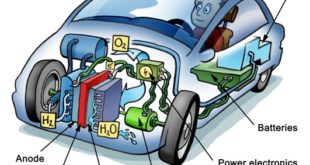
Hydrogen fuel cells are very much like car batteries. They have two electrodes, an anode and a cathode, that are separated by a membrane. Hydrogen from a fuel tank come into the cell and is split by a catalyst on the electrode anode. This action creates a movement of electrons that generate electricity, which is used to power the vehicle. The electrons of the hydrogen ions move through the membrane to the cathode electrodes where they chemically combine with oxygen from a compressor, producing both heat and water.

Fuel cells are said to be more efficient than combustion engines. Fuel cells also are more ecologically sound as they emit only heat and water. Another nice feature of the fuel cell is that it never needs to be changed for the life of the car.

The Future of Hydrogen Cars

Hydrogen is seen as the number one source of fuel in the future. Despite all that has been said for solar and wind power, hydrogen appears to be the answer. Government grants exist in many countries to improve the hydrogen based fuel, and push the auto industry into Hydro car manufacturing mode, and away from fossil fuels. This is pleasing those pushing for cleaner air, as the only known emissions from the car are water and heat.

Unfortunately, there is a large lobbying factor against this concept. Major oil companies and automobile companies are not happy with the concept of moving away from the standard gasoline fuels. It is expected that should there be such a move to hydrogen based fuels, oil companies may go bankrupt and there may be less of a need for cars as the fuel cells are expected to last the life of the car.

The future most likely will go the way of hydrogen based fuel. Watch for it to be the focus of energy within the next 20 years.

Stevo Lim

Vehicleride.com is the place to find all your informations about cars, car reviews, car loans, car safety, future cars, hybrid cars, hydrogen cars, solar cars, sports cars, concept cars and many informations about cars.


Hydrogen Fuel


Filed under Hydrogen Fuel by

Permalink Print

March 5, 2007

Check out this video on wind energy and hydrogen production!


Wind energy with Hydrogen production

Hydrogen Hawaii The Homeowner\'s Guide to Renewable Energy: Achieving Energy Independence through Solar, Wind, Biomass and Hydropower (Mother Earth News Wiser Living)


Filed under Hydrogen Fuel, Wind Power by

Permalink Print Comment

January 26, 2007

North Vancouver B.C. Carwash to be Powered by a Hydrogen Fuel Cell – hydrogen fuel


Canadian Federal Government & Sustainable Development Technology
Canada announce funding contributions to the Integrated Waste Hydrogen
Utilization Project (IWHUP).


North Vancouver, BC (PRWEB) October 14,
2005 — The Honourable David L. Emerson, Minister of Industry, Honourable Don
Bell, Member of Parliament for North Vancouver and Vicky J. Sharpe of
Sustainable Development Technology Canada, today announced a $12.2 million
contribution to support the demonstration of the Integrated Waste Hydrogen
Utilization Project (IWHUP) in the Vancouver area.

IWHUP will
demonstrate innovative clean energy solutions that make use of an existing but
currently untapped source of hydrogen fuel ? hydrogen emitted as the by-product
of a sodium chlorate manufacturing plant in the North Vancouver area. When
utilized in fuel cells and related technologies, hydrogen offers the potential
to significantly reduce emissions of greenhouse gases and other pollutants in
Canada and around the world. By making use of this fuel source right here in
North Vancouver, this project will demonstrate the viability of using hydrogen
captured as a by-product in real-life applications, opening the door to future
opportunities across Canada.

?Protecting our environment calls on
industry, government and individual Canadians to participate and cooperate in a
meaningful way, making changes that have an impact,? said Minister Emerson.


?Projects like this demonstrate a public and private sector commitment
to making the hydrogen economy a reality, and to promoting innovation and
demonstration of the real potential of green energy technologies here in
Canada,? added Don Bell.

?The Government of Canada continues to work with
Canadians to research and develop clean energy solutions and innovative
approaches to energy production,? said the Honourable John McCallum, Minister of
National Revenue and Acting Minister of Natural Resources, on behalf of the
Honourable St?phane Dion, Minister of the Environment. ?By supporting projects
such as the Integrated Waste Hydrogen Utilization Project, we can help build a
solid foundation for moving forward on climate change and ensuring our future
prosperity.?

As part of IWHUP Easywash will make a sizable cash
contribution to the project and be the host for the demonstration of the fuel
cell system fuelled with hydrogen from the project. This phase of IWHUP is in
partnership with Sacr?-Davey Innovations Inc. and Nuvera Fuel Cells. The fuel
cell will provide the majority of the electricity demands for the carwash as
well as heat the building and water used to wash vehicles at Easywash. This is
the first such application of a hydrogen fuel cell in the carwash
industry.

?Our partnership in IWHUP only goes to further Easywash’s
commitment to working toward the Triple Bottom Line; having a positive impact on
our local community socially, environmentally and economically.? said Geoff
Baker, President of Easywash. ?We are proud to be a part of this groundbreaking
project (IWHUP) and look forward to assisting the overall development of a
sustainable hydrogen energy economy in Canada.?

Other participants in
IWHUP include: Clean Energy, Dynetek Industries Ltd., Great West Life Realty
Advisors, Hydrogen Technology & Energy Corporation, Powertech Labs, Questair
Technologies Inc., and TransLink.

For more information about Easywash
please contact:

Easywash Inc.
Geoff Baker – President
Toll Free
Phone/Fax
1-888-ECO-FRIENDLY (326-3743)
target=_blank>www.easywash.ca

Hydrogen Fuel


Filed under Hydrogen Fuel, Press Releases by

Permalink Print 2 Comments

Local Energy Production Makes Sense – hydrogen fuel


With the crisis in oil and natural gas prices, the continued violence in the Middle East, and the environmental concerns brought front and center by hurricanes Katrina and Rita, alternative fuels have managed to become a topic of conversation in the mainstream media. Unfortunately, not all proposals make sense environmentally. The energy crisis has given the nuclear industry a major boost, despite problems with nuclear waste and vulnerability to terrorist threats, and Republicans in Congress are pushing even harder for drilling on the ecologically fragile Alaskan slopes. Meanwhile the oil companies, in an attempt to keep a stranglehold on the production of energy, are the ones getting billions of dollars in support for developing new technologies, including hydrogen fuel cell and ethanol development. Lets face it: If Standard Oil or Exxon could figure out a way to put a meter on the sun, wed have solar energy in abundance tomorrow. Meanwhile, we really need to challenge this notion of having multinational, multi-billion-dollar companies the ones responsible for doling out our energy needs. Bringing energy production back to our shores from the Middle East, Venezuela, and other political hotspots is only the beginning of a solution. We need every region in this country, and every community in each region, to make energy production a priority. In the Midwest, that can mean a combination of wind, solar, and ethanol or biodiesel production. Farmers particularly vulnerable to a rise in fuel to run their farm equipment could have their own small ethanol or biodiesel plants on-site, growing the raw material and then producing the fuel they need to operate their tractors, combines, and other machines. The Southeast could adopt solar technology on a house-by-house basis; just retrofitting every mobile home in the Sun Belt with solar air-conditioning capability could save billions in fuel demands every year. In the Northeast, a combination of solar energy and wind power in the summer and wind and biodiesel use in the winter, with family farms growing much of the raw material for the biodiesel, could cut the regions dependency on heating oil, propane, and natural gas during the coldest months of the year. And all over the country, using sustainable farming and foresting methods to product corn and wood pellet products would provide still another efficient, low-emissions fuel. Even hydrogen technology makes more sense produced on a local basis as part of a comprehensive energy plan. Hydrogen is produced by splitting water molecules into its component hydrogen and oxygen atoms; the hydrogen is then burned, producing more water. Using up massive amounts of water in centralized plants would put a tremendous demand on a localitys water supply, and then would affect the environment in ways not now known as the fuel is burned and the water redistributed around the country. Locally, hydrogen could be produced using solar energy on a building by building basis, and then could be stored and used to fuel cars or for household energy use. The water produced by burning the hydrogen could also conceivably be collected and reused, limiting the demand on the water supply. Thinking locally in terms of energy production and use could serve not only to break our dependence on foreign oil but could eventually free us from relying on corporate entities for our energy needs. That is true energy independence.

Aldene Fredenburg

Aldene Fredenburg is a freelance writer living in southwestern New Hampshire. She has written numerous articles for local and regional newspapers and for a number of Internet websites, including Tips and Topics. She expresses her opinions periodically on her blog, http://beyondagendas.blogspot.com.


Hydrogen Fuel


Filed under Alternative Energy, Hydrogen Fuel by

Permalink Print Comment

December 26, 2006

Can Hydrogen Fuel Cells Really Work As An Alternative Energy Option?


We try to present a balanced view of the emerging alternative energy technologies on our pages. That means taking a critical eye to the science and tech of what is behind those options. I found a good article today that talks about [tag]hydrogen fuel cell[/tag] technology and why the writer does not think it has viability in the near term.

Ed Ring of www.ecoworld.com argues in an Always On post titled “The Hydrogen Hoax” that hydrogen production uses too much energy going in for the resulting output, whether you are using biomass, electricity or god forbid fossil fuels to generate the hyrdogen in the first place.

First of all, hydrogen isn’t a primary fuel. It has to be produced from something else, either from electricity via electrolysis, or refined from fossil fuel, or distilled from biomass. In all these cases, using the source fuel directly would be far more efficient than converting this energy into hydrogen.

There are many proponents of this technology in the mainstream these days but do they have their information down. In California the Govenor has proposed a whole network of hydrogen service stations across the state, well he did awhile ago anyways but not much has been heard from him on that front lately. Maybe reality crept into the equation.

I think there is room for optimism in this are of fuel technology but perhaps it is not our savior in the near term as many environmentalists have proposed.

What do you think?

Hydrogen: Hot Stuff Cool Science--Journey to a World of Hydrogen Energy and Fuel Cells at the Wasserstoff Farm 21st Century Complete Guide to Hydrogen Power Energy and Fuel Cell Cars ¿ FreedomCAR Plans, Automotive Technology for Hydrogen Fuel Cells, Hydrogen Production, Storage, Safety Standards, Energy Department, DOD, and NASA Research (Two CD-ROM Set) Tomorrow\'s Energy: Hydrogen, Fuel Cells, and the Prospects for a Cleaner Planet


Filed under Alternative Energy, Hydrogen Fuel by

Permalink Print 1 Comment

December 19, 2006

Water – The Perfect Fuel


Alternative Energy Series

Ed Howes

As a freshman in high school, I failed chemistry class due to an extreme disinterest in the entire subject. I do recall a demonstration in which the teacher hooked a large one and a half volt battery to a glass and wire electrolyzer that transformed water into separated hydrogen and oxygen. I would later learn that commercial hydrogen and oxygen producers also used this method in an inefficient manner that requires more energy than the fuel produced can generate through combustion.

In the late eighties I would learn that a boy genius in California learned to make hydrogen from water efficiently with a twelve volt battery and standard auto electrical system, during the 1970s. Around 1990, my machinist neighbor built a hydrogen generator that did not work due to defects in the plans the boy genius had drawn up in prison when he was no longer a boy.

My neighbor was not interested in correcting the defect when it was discovered and I was only a bit disappointed. My father was a hobby style inventor and he gave me a good idea for a cheaper and much more effective 12 volt hydrogen generator. I never got around to building it and decided there was no point in separating the oxygen and the hydrogen after splitting the water.

Because the [tag]hydrogen[/tag] and oxygen have opposite electrical charges, they readily recombine as a compound I call hydrox. The man who discovered this gas and fooled with it to make underwater welders and cutting torches, named the gas after himself, so hydrox is also known as Browns gas. Simply put, hydrox is an oxygenated fuel, which means it burns hotter and faster than a non oxygenated fuel. In WWII the Germans used hydrogen peroxide as a liquid rocket fuel. H2O2 is a super oxygenated fuel, highly caustic, corrosive and dangerous to work with. Hydrox, however, is no more corrosive than water. Flat plate electrodes one sixteenth inch apart, made of stainless steel will last a long time if clean water is used. Clean water can be had from relatively inexpensive filters which can be carried on a vehicle. Having a good filter can also help supply one with potable water when clean water no longer flows from the pipes at home.

Big Energy talks only about a hydrogen economy – using expensive technology to manufacture a product that can be made inexpensively by anyone who wants it. The idea of water power is far too democratic to control. The rain falls both on the just and the unjust. If people put water in their fuel tanks and make enough fuel with a few watts of electricity that then makes kilowatts or megawatts of power in a combustion engine, who will buy hydrogen at fueling stations? Most Americans buy water cheaply compared to its value because of its relative abundance. In the U.S. it is usually cheaper to buy than to collect, store or drill for. Dry nations only need water pipelines from neighboring wet nations. Seaside countries can desalinate and filter sea water and pipe where needed. How can the corporate fascists gain control of water? Only by convincing everyone we need their new technology.

Water is to democratic energy access as the internet is to democratic discussion, information distribution and personal activism. This fact will be concealed for as long as possible and a few of us will be wise to the game. Without water we cannot live long. It exists in altered forms with special properties. When we know what there is to know about water, we will be wiser than any who have come before.

Engineers forge ahead building [tag]hydrogen fuel cells[/tag]. These cells apparently generate electricity by recombining hydrogen and oxygen. This means that hydrox will not be suitable as fuel cell fuel. However, simple electrolysis costs little more to collect the two gasses separately and send them to the appropriate ports of the fuel cell. Thus, water can power these fuel cells as easily as combustion engines of many types, including jet and rocket engines. It is also likely from basic chemistry that steam is more easily electrolyzed than liquid water. Temperature rises speed chemical reactions. Steam is quite easy to create with combustion engines, which are the space heaters for the great outdoors.

I often wonder why greenhouse gasses are so readily blamed for global warming, while billions of super space heaters are seldom accused of much contribution. Fuel cells would be a fine solution to all this combustion heat. How many volcanoes would we need to equal the heat of transportation every day? Are we not burning up the planet one day at a time especially for the sake of corporate profit? Why do we so willingly play the game of dont blame me, I just do as Im told?

When water is our fuel, the environment does not suffer crisis when a spill occurs on a highway, an ocean or a storage container ruptures. When water is our fuel, old ships can run aground, break up in a storm and not destroy hundreds of miles of coastline and wildlife environment. When water is our fuel, cars do not burst into flame during rear end collisions. The great betrayers of humanity have known what I am saying for more than a hundred years, and dont want us to have water power. Is it not time for some changes? Shall we choke ourselves and our children for corporate profits? What is our reward?

Hydrogen and hydrox are both gaseous fast burn fuels, just as vaporized alcohol, gasoline and diesel; except even faster burning with much greater power potential, also producing the usual oxides of nitrogen, unless in fact such oxides mostly form in slow burn engines due to the long burn time. In this case we can expect greatly reduced oxides of nitrogen with water fuel, as well. When we make water fuel at home we can operate stoves and heaters and combustion or fuel cell electric generators and make electricity for a few pennies per kilowatt. Do you imagine the electric utilities will be happy they do not need to purchase more generating capacity? Will they want us to supply them at wholesale prices? Could developing countries adopt water power and internet connections to vault ahead to the 21st Century? Is clean, cheap power a huge threat to all the traditional power? Of course it is. That is why the science savior has not provided us with this miracle of the 19th Century. How does it feel to be one or two centuries behind existing technology? Is it not shameful and embarrassing? Humiliating?

The corporate scientists, engineers and [tag]energy[/tag] experts will continue telling us it is impossible to make hydrogen as cheaply as some garage and basement scientists and engineers have been doing for decades. The sad thing is we will just say OK, we believe you. There is no such thing as conspiracy except in the mind of radicals.

Freelance writer published on many websites and newspapers.

justantherview.com edhowes@hotmail.com


Filed under Alternative Energy, Hydrogen Fuel by

Permalink Print 1 Comment

December 5, 2006

Hydrogen Fuel Cell Driven Generator For Indoor Use


November 29, 2006 Livermore, California –
Power Air Corporation , today announced unit cell performance and cost improvements due to advances in the materials and design of its patented fuel cell technology.

“We are very pleased with the increase in both power and lifetime achieved to date by our Engineering team” states Mr. Remy Kozak, President and CEO of Power Air. “The new design and materials will form the basis of the ZAFC Indoor Generator Prototype we will demonstrate at the Fuel Cell Expo 2007 in Tokyo, Japan in early February”.

PWAC FUEL CELL

Unit cells are assembled together to form a stack which delivers the electrical power from the Zinc Air Fuel Cell (ZAFC). The higher single cell voltage output versus current demand means more power output and higher efficiency for the fuel cell stack.

PWAC GENERATION 6
PLUS TEAM

“Our new unit cell design delivers about 5% more power output from a smaller footprint” continued Mr. Andy Turnbull, Director of Engineering at Power Air. “As well as improved performance, the new design lends itself to faster assembly, and therefore reduced cost, of the fuel cell stack.”

Power Air has announced previously its intent to unveil its Indoor Generator Prototype at four separate Fuel Cell Shows early in 2007, including the Hannover Messe in Germany in Mid April, Alternative Energy 2007 in Chicago, USA, and the Hydrogen & Fuel Cell 2007 International Conference and Trade Show in Vancouver, Canada in late April.

The ZAFC based generator to be demonstrated at the tradeshows will be similar in appearance to traditional generators – showing how readily Power Air’s fuel cell stack can be incorporated into commercial applications. In function, however, the Power Air generator will deliver added value, including the ability to provide reliable back-up or occasional use power safely indoors with zero emissions.

Power Air Corp
www.poweraircorp.com


Filed under Alternative Energy, Hydrogen Fuel, Press Releases by

Permalink Print 1 Comment

November 15, 2006

Hydrogen Fuel Cell Car Gets Test Run – Honda


Honda has been getting its new hydrogen fuel cell test car out on the track and letting the press take a spin. On November 14th they ran the car around Laguna Seca racetrack near Monterey, CA. Here is an excerpt from their release on these test runs:

Honda Demonstrates the FCX Concept Vehicle
- Fully functional Next-Generation Fuel Cell makes its driving debut -
Watch The Video

September 25, 2006–Honda Motor Co., Ltd. held a demonstration drive of the next-generation FCX Concept fuel cell vehicle. The FCX Concept features a newly developed compact, high-efficiency Honda FC Stack as well as a low-floor, low-riding, short-nose body. It offers a comfortably large cabin and futuristic styling along with significant improvements in power output and environmental performance. Limited marketing of a totally new fuel cell vehicle based on this concept model is to begin in 2008 in Japan and the U.S.

To meet Honda objectives for significant gains in both environmental and driving performance, the FCX Concept is equipped with a V Flow1 fuel cell platform consisting of a compact, high-efficiency fuel cell stack arranged in an innovative center-tunnel layout. This has allowed designers to create an elegant, low-riding, sedan form that would have been difficult to achieve in a conventional fuel cell vehicle. This new fuel cell stack is 20% smaller and 30% lighter than the current FCX FC Stack, yet its power output is 14kW greater. The drive motor has been positioned coaxially with the gearbox for a more compact design, with output increased by 15kW. Overall, the power plant is about 180kg lighter than that of the current FCX and about 40% smaller in volume. The result is improved energy efficiency and performance along with a more spacious interior.

The new fuel cell vehicle currently under development for release in 2008, will feature the principle technologies of the FCX Concept to achieve a new dimension in environmentally friendly driving pleasure not found with gasoline-engine vehicles.

The test car that ran at Laguna Seca was a dark red futuristic looking sedan. According to the reporters on scene the car, reported to be worth 2 million dollars, ran smoothly, had good accelration for a sedan, was quiet, roomy, and has a low center of gravity.

“This is the first purpose-built fuel cell vehicle to be put on the road in the hands of retail customers,” said Stephen Ellis, fuel cell marketing manager for American Honda Motor Co. “It’s not a car that is remade from some other platform.”

Read the rest of the report on this test drive

Hydrogen Fuel Cell Vehicles Hydrogen Fuel Cell Vehicles


Filed under Alternative Energy, Hydrogen Fuel by

Permalink Print Comment

 Powered by Max Banner Ads