Battery Tech


 Powered by Max Banner Ads 

April 20, 2011

New battery produces electricity where freshwater meets saltwater

Share

Nano Letters

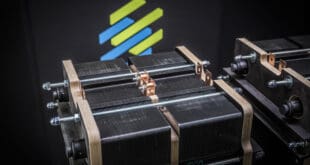
Scientists are reporting development of a new battery that extracts and stores energy produced from the difference in saltiness at the point where freshwater in rivers flows into oceans. A report on the battery, which could supply about 13 percent of the world’s energy needs, appears in ACS’ journal Nano Letters.

Yi Cui and colleagues cite the intensive global scientific effort to develop renewable energy sources to supplement supplies of oil and other traditional fuels like coal, which contribute to global warming. Solar, wind, and geothermal are renewable, sustainable energy sources that have attracted much attention recently. Scientists long have known about the possibility of producing electricity from differences in the salinity, or saltiness, of water. So the new study focused on development of more practical ways of tapping that potential.

The result was a so-called “mixing entropy battery.” Alternating the flow of river water and sea water through the battery produces electricity to charge it. The process also can be reversed to remove salt from ocean water to produce drinking water. The scientists describe the battery a very promising potential addition to the ranks of solar, wind, and other renewable energy, and are working on modifications to make the device a commercial reality.

The authors acknowledge funding from King Abdullah University of Science and Technology and the U.S. Department of Energy.


Filed under Battery Tech by

Permalink Print Comment

March 9, 2011

EV Charging Stations Open In Chicago

Share

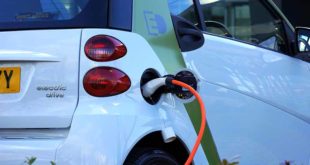
DBT, the No. 1 charging station manufacturer in Europe, opened a new U.S. subsidiary in Chicago this January: DBT USA. With more than 6,000 units installed in more than 20 countries to date, DBT is the world’s leading provider of electric vehicle (EV) charging stations. DBT USA business operations are already underway in Chicago, and U.S. assembly operations are planned to begin later this year.

DBT USA provides turnkey charging infrastructure hardware and software, as well as integration services for every EV charging application, including fleet, public, and in-home. In addition to providing Level I, Level II and Level III DC quick chargers, DBT USA has also secured strategic partnerships to offer a full range of sustainable charging infrastructure. Agreements with AllCell Technologies (www.allcelltech.com) and Sun Phocus Technologies (www.sunphocus.com) allow DBT to offer solar-powered turnkey on-grid and off-grid solutions. Under the agreements, AllCell will provide lithium-ion battery packs protected by AllCell’s revolutionary passive thermal management system, while Sun Phocus will provide solar panels utilizing cutting-edge holographic planar concentrating (HPC) technology.

The integrated offering is a good match for the U.S. market, according to Herve Borgoltz, president of DBT.

“The U.S. electric vehicle market is entering an exciting period of growth, and we are looking forward to helping consumers and businesses make the most of their investments in e-mobility. We are confident that our long history of innovative EV charging combined with our exciting new partnerships will allow us to provide our customers with exceptional value,” Borgoltz says.

With the combination of charging stations, solar-generation, and energy storage, DBT USA’s customers will be able to design customized systems based on vehicle use, budget, location, and sustainability goals. DBT USA customers will be able to choose from three solutions:

1. 100% Renewable: all electricity is solar-generated and stored locally, off-grid
2. Net Zero: solar energy fed into grid matches vehicle electricity use
3. E-mobility Optimization: on-grid without renewable generation

DBT’s 6,000 installed stations are the direct result of the company’s long history of innovation and collaboration. After its founding in 1990, DBT began as a leader in electric equipment design and manufacturing, producing energy supply units and transformers. In the early 1990s, European government electric mobility pilot programs provided a unique opportunity for the company to collaborate with car manufacturers, utilities, municipalities and other fleet owners to design cutting-edge EV charging infrastructure. As a result of that work, DBT developed unparalleled experience, insight and technical expertise in EV charging. Every charging station DBT has ever installed is still in operation, providing a testament to the durability of even the earliest products.
———————————

What do you think? Would you use a charging station for your car? Thinking about getting an electric car for your use? Comment below and let everyone know your thoughts on using electric cars to get off the petroleum addiction.


Filed under Battery Tech, Hybrid, Press Releases by

Permalink Print Comment

March 7, 2011

Future of Alternative Energy May Rely on Battery Costs

Share

There is so much happening in the technology of new energy sources these days but connecti8ng them all together to function is a key element that is being researched these days. This excerpt from research being done in the Northwest is one example. Another is a big wind project slated for development down in Australia has gotten derailed because the plan for interconnecting it the the power grid was deemed flimsy.

Future batteries used by the energy grid to store power from the wind and sun must be reliable, durable and safe, but affordability is really the key to widespread deployment, according to a new report published online March 4 in the journal Chemical Reviews. The report is one of the most comprehensive reviews of electrochemical energy storage to date.

In the report, researchers from the Department of Energy’s Pacific Northwest National Laboratory say that successful electrochemical energy storage, or EES, systems will need to evolve — in some cases, considerably — if they are going to compete financially with the cost of natural gas production. And besides technical improvements, the systems will need to be built to last, using materials that are safe and durable so that batteries could operate more than 15 years and require very little maintenance over their lifetime.

The report provides a comprehensive review of four stationary storage systems — ones considered the most promising candidates for EES: vanadium redox flow, sodium-beta alumina membrane, lithium-ion and lead-carbon batteries. In their study, the PNNL researchers note the potential of each technology but, more importantly, explain what advances must occur with each if they’re ultimately to be deployed.

read more here


Filed under Alternative Energy, Battery Tech by

Permalink Print Comment

February 20, 2010

Outdoor Battery Powered Lights Could Save You Money On Your Power Bill


Outdoor battery powered lighting is truly a terrific way to provide light for the terrace or patio area of your house for a few hours. The outdoor battery lets everyone to enjoy some night life outside around their own home or residence. Check out this fanstastic outdoor battery: black and decker battery. A lot of people plainly just like to sit outside as well as breathe in the evening air as well as check out the stars or even perhaps look out into their yards, while some may desire to spend just a bit more extra time outdoors finishing a game that they had recently started out. And regardless of what the reason is, these outdoor battery powered lighting fixtures are generally remarkably the best things that you can choose out there.

Furthermore, with regards to the outdoor battery powered illumination fixtures, there are a selection of pattern types that you can pick from. Most of these may likely look like outside lanterns or even spot lights. You may also locate some which are used to line the walk ways up to your porch or perhaps patio. These kinds of lights are perfect solutions to significantly keep your electric bill affordable as well as still possess the light that you need.

The batteries which are used in the illumination fixtures are rechargeable and this come in either 3 or 10 watt voltage. The 3 watt voltage can last for approximately 3 hours whilst the 10 watt voltage lasts approximately 6 hours of lighting. These types of lights are relatively affordable as well as surely simple to use. If you wished to get a more secure type of battery lighting, you can opt for solar lights.

These lights have built in batteries that store power from the sun and begin using the stored power to provide light as the sun goes down. These kinds of lights use LED bulbs which usually utilize much less power to burn and last 10 times more compared to typical incandescent bulbs. Much like any kind of outdoor lighting, you’ll find these types of lights in spotlights, path lights as well as pretty accent lighting options.

Regardless of which type of outdoor batter powered lighting you decide upon, you’ll always be able to save money on your electric bill simply by making use of them. Simply because the sun has set on a wonderful day, doesn’t mean that the fun needs to end. Now it is easy to finish the tag football game that went into overtime, or entertain your relatives and buddies with a night out on the deck or patio area.

With the batteries being rechargeable, you’ll be able to generally have light anytime you will need it as long as you bear in mind to recharge them. The internal solar batteries recharge as the sun comes up therefore all you need to do is turn them on. For more information what kind of outdoor batter to buy, go to hpb18 power pack

Obtain realistic knowledge in the sphere of free website traffic – make sure to go through this publication. The time has come when proper information is truly within one click, use this possibility.


Filed under Battery Tech by

Permalink Print Comment

February 6, 2009

Megawatt Storage Farms


Ed Ring

Even if California only ends up with 25% renewable electricity within the next decade or two, there is going to be a staggering amount of investment pouring into wind and solar power, and with intermittent sources of energy, massive storage infrastructure is just as necessary as the generating infrastructure. In our analysis of Prop. 7, California’s Proposition 7, the initiative that calls for 50% renewable energy by 2025, we estimated compliance would require about 500 gigawatt-hours of renewable electricity generating capacity per day. For wind power, based on installation costs of $2.5 million per megawatt ($2.5 billion per gigawatt), and yields of 17.5%, this would require a total investment of nearly $300 billion. The estimated total cost for solar, at today’s prices, was considerably higher than this (bear in mind the cost for solar energy is going to drop faster and further than the cost for wind energy in the coming years). But what about the cost for storage infrastructure?

In a perfect world, parked electric cars will harvest intermittant energy – wind at night, solar during mid-day, and release that energy during the demand peak.

In a perfect world, 2nd and 3rd generation smart metering systems at homes will allow everyone’s car to act as a micro utility, an automated fiduciary, purchasing power when the spot price is low and selling power when the spot price is high.

In a perfect world, cars that store 10-50 kilowatt-hours of electricity will buffer intermittent sources, and storage infrastructure requirements will be reduced. Will electric cars proliferate as fast as intermittent generators? Will they always be parked and collecting power at the right times? Apart from electric cars performing this function, how much storage capacity are we going to need?

In California the demand peak is around 50 gigawatts, and the off-peak minimum can get as low as 20 gigawatts. The time of peak demand is between 5 p.m. and 10 p.m., when appliances are operating along with flat screen TVs and PCs. During this period, when the sun is down and the wind yields aren’t yet at maximum output, at least 25% of California’s daily electricity draw is consumed, about 250 gigawatt-hours. It is reasonable to assume most of the renewable energy used to fulfill this demand will have to come from stored wind, and stored solar. So what would it cost to store 100 gigawatt-hours of energy?

Yesterday we had the opportunity to speak briefly with David MacMillan, CEO of Megawatt Storage Farms, Inc., a company that is developing large scale electricity storage using NAS (sodium-sulphur) batteries. He claims that not including site acquisition and preparation, storage technology using NAS batteries would come to about $350,000 per megawatt-hour. This means the cost to load balance California’s grid, should 50% of her energy come from solar or wind sources, would probably run about $35 billion dollars. This figure doesn’t include transmission upgrades, nor does it include site acquisition and preparation, but it also doesn’t take into account the potential of electric vehicles (or other private decentralized storage solutions) to absorb some of the required storage capacity. Objections to renewable energy in general, and proposition 7 in particular, probably cannot rest on the storage and load balancing challenges, insofar as they only represent about 10% of the required investment.

For more information about utility scale electricity storage technologies, reference our posts Utility Electricity Storage, General Compression, Solar Thermal Storage, and Gridpoint’s Storage+, to name a few. For more information about sodium sulphur batteries, visit the technical specifications page for NAS Batteries on the website of NGK Insulators, Ltd., a major manufacturer of these batteries. For more information on how these batteries work, and where they are being deployed, read About Sodium-Sulfur (NaS) Batteries, on the excellent Fraser Domain Energy Blog (where have you gone?), or the USA Today report New battery packs powerful punch.

Ed Ring is the Editor of EcoWorld, reporting on clean technology and the status of species and ecosystems.


Filed under Battery Tech by

Permalink Print 4 Comments

September 4, 2007

Battery Technology Breakthrough? Could It Be?


A secretive Texas startup company may be on the verge of a major production breakthrough though it is hard to tell since they are not saying much. The car company that wants to build their technology into autos is talking and they are excited. Imagine a battery powered car that you could plug in for five minutes of charging and then go on a 500 mile trip without recharging or filling up with gas! That is what EEStor is hoping to make a reality in the not very distant future through their “technologies for replacement of electrochemical batteries,” which they have gotten a patent from the US recently. Patent #7,033,406 could be the death knell for the combustion engines we have known and driven for the last 100 years.

Don’t bother to Google the company as they are being so quiet about this technology that they do not have a site. They have put out a press release awhile back but aside from that they have not done much talking. Instead automaker Ian Clifford, chief executive of Toronto-based ZENN Motor Co. is doing most of the talking about the potential for this battery breakthrough.

“It’s a paradigm shift,” said Clifford, “The Achilles’ heel to the electric car industry has been energy storage. By all rights, this would make internal combustion engines unnecessary.”
The deal with ZENN Motor and a $3 million investment by the venture capital group Kleiner Perkins Caufield & Byers, which made big-payoff early bets on companies like Google Inc. and Amazon.com Inc., hint that EEStor may be on the edge of a breakthrough technology, a “game changer” as Clifford put it.

Read more on what this is all about

Some are sceptical of the company’s claims but they do have VC fudning from highly respected Kleiner Perkins and those guys would not throw bad money at technology. Trust me they do very due diligence on things before they invest.

Now I wouldn’t mind being in line for one of ZENN Motor’s first cars that feature this technology. How about you?


Filed under Battery Tech by

Permalink Print Comment

Secretive Texas Company Close to Battery Breakthrough


EEStor Announces Two Key Production Milestones: Automated Production Line Proven and Third Party Verification of All Key Production Chemicals Completed

CEDAR PARK, TEXAS– The first EEStor, Inc. automated production line has been proven to meet the requirements for precise chemical delivery, purity control, parameter control and stability.

In addition, EEStor, Inc. has completed the initial milestone of certifying purification, concentration, and stability of all of its key production chemicals notably the attainment of 99.9994% purity of its barium nitrate powder.

The independent 3rd party chemical analysis was completed by Southwest Research Institute, Inc. located in San Antonio, Texas under contract with EEStor, Inc.

With these milestones completed, EEStor, Inc. is now in the process of producing on its automated production line, composition-modified barium titanate powders and is moving toward completing its next major milestone of powder certification.

It is anticipated that the relative permittivity of the current powder will-either meet and/or exceed 18,500, the previous level achieved when EEStor, Inc. produced prototype components using it engineering level processing equipment.

Richard Weir, CEO and President of EEStor, Inc. added: “We are very proud of the key advancements we have made over the past year. In addition to the milestones identified, the Company has also been awarded a critical patent related to our technology and has 12 additional patents pending. We have built a state-of-the-art facility and have exceptional personnel onboard.”

The first commercial application of the EESU is intended to be used in electric vehicles under a technology agreement with ZENN Motors Company. EEStor, Inc. remains on track to begin shipping production 15 kilowatt-hour Electrical Energy Storage Units (EESU) to ZENN Motor Company in 2007 for use in their electric vehicles. The production EESU for ZENN Motor Company will function to specification in operating environments as sever as negative 20 to plus 65 degrees Celsius, will weigh less than 100 pounds, and will have ability to be recharged in a matter of minutes.

ABOUT EEStor, Inc.

Headquartered in Cedar Park, Texas, EEStor, Inc. is dedicated to the design, development, and manufacturing of high-density energy storage devices. Utilizing revolutionary ultra capacitor architecture and environmentally friendly materials the EEStor, Inc. EESU will compete against all existing battery technologies. The EEStor, Inc. EESU IS capable of microsecond recharging and millions of 100% charge/discharge cycles. The technology is affordable and designed for versatile “racked and stacked” configurations. = marketwire


Filed under Battery Tech, Press Releases by

Permalink Print Comment

March 6, 2007

They killed the electric car but now they are back….


The electric car was killed off a few years ago by the big car companies. You can read all about that here.

Just leave it to good old ingenuity and stick to it ness for things to get done in this country. The electric car went away but now due to some hard work and dedication some folks have taken hybrid cars that run on a combo of gas and battery power and applied more battery technology and computer software to create the new plug in cars of today. They get 60-100 miles per gallon!

Toyota Prius owners have taken the already popular and fuel efficient hybrid and and created their own version of the plug-in electric car that has been mourned by those of us who wanted electric cars and had them taken off the market by the big car companies. plug in electric car

In Northern California Prius owners have done it for this reason: five words. Those five words? one hundred miles per gallon. Imagine that if you will. These are not folks waiting years for the imaginary car they promise us will come out some day. No they have gone and done it and are proudly driving around town smoking the rest of us on gas mileage.

Felix Kramer of Redwood City, CA did it. He says,”We took the hybrid car to its logical conclusion.” by adding more batteries and the ability to recharge by plugging into a regular socket in the wall at night, making it a plug-in hybrid car. A normal Prius gets around 50 mpg on the highway, but these modified versions get twice that by replying more on the cleaner, cheaper electricity and battery technology they have added to the mix.

These trend setters tweaked and changed their cars to make a point tha tif they could do it then the car makers can too and should!

They have a group online called the California Cars Initiative. The coversion consists of adding inexpensive lead acid batteries and some innovative software that allows them to fool the car’s computerized controls into using more of the the energy stored in batteries, which ends up giving the cars over 100 mpg in local driving conditions and 50-80 mpg on the highways. The cost of the conversion runs about $5000.

image - cal cars

The Electric Car: Development and Future of Battery, Hybrid and Fuel-Cell Cars (Iee Power & Energy Series, 38)Plug-in Hybrids: The Cars that will Recharge AmericaCommon Sense Not Required: Idiots Designing Cars & Hybrid VehiclesWho Killed the Electric Car?


Filed under Battery Tech, Hybrid by

Permalink Print Comment

Trailer for the movie…..


“Who killed the electric car?”

Who Killed the Electric Car?


Filed under Battery Tech, Hybrid by

Permalink Print Comment

January 18, 2007

Nimh Batteries Last 2 – 3 times Longer Than NiCad And NiMH Batteries. – battery technology


A standard NiMH charger will help prevent overcharging and allow for maximum capacity of charge for Talk time. Now with the NEW NiMH technology, overcharging can almost now be a thing of the past. MAHA C777 Universal Charger available to charge most of your Cellular Phone Batteries. Now there is absolutely no reason to use NiCad batteries any more. NiMH (Nickel Metal Hydride) battery packs practically make them obsolete. No memory effect means you can recharge them at any time. Energy consumption is very little compared to other batteries. It avoids unnecessary waste of power while using this sort of battery. The hardware provides better optimization and higher performance with low energy consumption. No need to wait until they are completely discharged before recharging. These batteries will also last 2 to 3 times longer than the old NiCad types and 30% longer than older generation NiMH batteries. .

These battery packs can be recharged using your current NiCad Charging System; however for optimum performance and protection we recommend an actual NiMH charger. A standard NiMH charger will help prevent overcharging and allow for maximum capacity. Overcharging NiCad batteries has always been a problem, and severely shortens their life-span. Now with the NEW NiMH technology, overcharging can almost now be a thing of the past. . Technology Comparison

Nickel Metal Hydride battery technology is a breakthrough in the Cellular Telephone power source option. These battery packs are manufactured under end-to-end supervision to assure highest quality and customer satisfaction. . Their Advantages are:

- No memory effect, higher capacity, smaller size! 50-100% increase in capacity over NiCad battery pack – Long life, 500-1,000 charge/discharge cycles. – Light weight and Environmental friendly – low-priced


Robert Goldsmith


Robert is a Freelance Writer For Cellularbatts.com. They Specialize In All Kinds of Cell Phone Battery. No Matter What Kind Of Battery You Are Looking For Whether It Be A Samsung Cell Phone Battery, Or A Motorola Cell Phone Battery You Can Find it Here.


Battery Technology


Filed under Battery Tech by

Permalink Print Comment

December 29, 2006

Nimh Batteries Last 2 – 3 times Longer Than NiCad And NiMH Batteries. – battery technology


A standard NiMH charger will help prevent overcharging and allow for maximum capacity of charge for Talk time. Now with the NEW NiMH technology, overcharging can almost now be a thing of the past. MAHA C777 Universal Charger available to charge most of your Cellular Phone Batteries. Now there is absolutely no reason to use NiCad batteries any more. NiMH (Nickel Metal Hydride) battery packs practically make them obsolete. No memory effect means you can recharge them at any time. Energy consumption is very little compared to other batteries. It avoids unnecessary waste of power while using this sort of battery. The hardware provides better optimization and higher performance with low energy consumption. No need to wait until they are completely discharged before recharging. These batteries will also last 2 to 3 times longer than the old NiCad types and 30% longer than older generation NiMH batteries. .

These battery packs can be recharged using your current NiCad Charging System; however for optimum performance and protection we recommend an actual NiMH charger. A standard NiMH charger will help prevent overcharging and allow for maximum capacity. Overcharging NiCad batteries has always been a problem, and severely shortens their life-span. Now with the NEW NiMH technology, overcharging can almost now be a thing of the past. . Technology Comparison

Nickel Metal Hydride battery technology is a breakthrough in the Cellular Telephone power source option. These battery packs are manufactured under end-to-end supervision to assure highest quality and customer satisfaction. . Their Advantages are:

- No memory effect, higher capacity, smaller size! 50-100% increase in capacity over NiCad battery pack – Long life, 500-1,000 charge/discharge cycles. – Light weight and Environmental friendly – low-priced


Robert Goldsmith


Robert is a Freelance Writer For Cellularbatts.com. They Specialize In All Kinds of Cell Phone Battery. No Matter What Kind Of Battery You Are Looking For Whether It Be A Samsung Cell Phone Battery, Or A Motorola Cell Phone Battery You Can Find it Here.


Battery Technology


Filed under Battery Tech by

Permalink Print Comment

November 2, 2006

Bill Clinton stumps for Prop 87 in SF


The Yes on 87 campaign held a rally in SF on this week to promote the alternative energy proposition onthe California ballot this month. Former President Bill Clinton spoke to the crowd about the need for this proposition to pass.

An Inconvenient Truth An Inconvenient Truth


Filed under Alternative Energy, Battery Tech, Bio Diesel, Ethanol, Hybrid, Solar Power, Wind Power by

Permalink Print Comment

October 30, 2006

“Green” Marketers Get Creative In Support of New Climate Change Documentary “The Great Warming”


New York, New York (PRWEB via PRWeb) October 23, 2006 — “The Great Warming“, the new climate change documentary opening nationwide November 3rd in select Regal theaters, is made possible by Swiss Re, the world’s largest reinsurer, while makers of environmentally and ecologically friendly products such as Krystal Planet, Ecover and The Body Shop are lending products and manpower to the promotional and marketing mix of the film to create consumer awareness and help drive ticket sales, it was announced today by the film’s creator and producer, Stonehaven Production’s Karen Coshof.

Karen Coshof: “For the past six years, Swiss Re has sponsored Stonehaven’s climate films. What they’ve brought to the table goes way beyond funding; they’re a true partner and have provided input and expertise. In my opinion, Swiss Re is one of the exceptional global corporations with an ethical and environmentally responsible platform that isn’t just empty talk. Their leadership has paved the way for like-minded companies to get onboard what will help create the next sea-change in America.”

movie poster for great warming

As a company committed to helping enterprises manage risk, Swiss Re seeks to encourage and strive for balance in economic, societal and environmental development.

Krystal Planet is a pioneering environmental company dedicated to eliminating what company founder and CEO Troy Helming calls America’s “Myopic dependence on dirty fossil fuels and foreign energy.” The company is the nation’s leading marketer and distributor of a wide variety of energy saving, efficient products. His company’s ‘Clean Power Revolution’ supports “The Freedom Plan,” an initiative the company’s founder authored, which outlines a plan to convert the U.S. to 100% clean renewable power in 10 years thus saving the nation’s economy $20 trillion by 2025.

“’The Great Warming’ is a powerful example of effective and truthful storytelling, uncluttered by politics or bias. We are proud to sponsor this film and be positioned as the “go-to” company for providing real world solutions for individuals and corporations alike to convert to clean power,” said Troy Helming, Krystal Planet founder and CEO. “Working together, we can return America’s energy policy to the people. Toward that end, our nationwide network of dealers are offering a free, no obligation home energy review to every person who goes to a theater to witness this great film.”

Ecover is a Belgian manufacturer of ecological cleaning products as alternatives to the vast array of chemical-based and caustic household cleaners. All Ecover products degrade, ensuring their safe reversion into the environment. The company has developed into the world’s largest producer of ecological cleaning products.

Ecover strives to provide an alternative solution to conventional cleaning products, using safe ingredients, with no compromise on quality or the environment. With over 25 years experience, Ecover knows inviting just one change into your home can make a great impact.

The Body Shop, a global manufacturer and retailer of naturally inspired, ethically produced beauty and cosmetics products, is committed to being an environmentally responsible retailer. With the belief that companies can help protect the environment and support sustainable development. “The quality of The Great Warming, as a film, it’s content and message of corporate and individual responsibility in helping to reverse the damage to our planet, strikes to the heart of our beliefs and we urge all Americans and citizens of the world to see this movie,” said Simon Cowell, Vice President, Marketing, The Body Shop.

In the months leading up to its national release, The Great Warming (85 minutes) has attracted an unprecedented coalition of leaders in science, religion, business, environmental activism and education. These various groups have bridged historic gaps to join in support of the film, because “they believe in an individual and collective moral responsibility to reverse the growing threats to the environment and human health and well-being,” Coshof said. To that end, the nationwide The Great Warming Call To Action has been signed by leaders from every sector mentioned above.

More than a science lecture or a red alert, The Great Warming is aimed at bringing average citizens up to speed on the issues that are and will continue to affect them. Its overall emphasis offers hope through real-world solutions that, if implemented, can make a difference now and into the future. The film’s effectiveness is already proven, as grassroots screenings in recent weeks have mobilized members of hundreds of churches, schools, town halls and community organizations across the county.

Good books about this issue:

An Inconvenient Truth Unstoppable Global Warming: Every 1500 Years The Weather Makers : How Man Is Changing the Climate and What It Means for Life on Earth


Filed under Battery Tech, Bio Diesel, Ethanol, Hybrid, Solar Power, Wind Power by

Permalink Print Comment

October 24, 2006

Hydrogen fuel cells payoff, a ways down the road?


Source:Chicago Tribune
CHICAGO –Imagine a world in which oil barons are forced to peddle sand because the U.S. no longer buys their oil to make gas. And imagine a world where you can take a deep breath without inhaling waste or having to look north to see whether the former polar ice cap is about to wash you away.

But ending the country’s reliance on foreign oil is going to take more than imagination.

It will take a substitute.

Bob Stempel, chairman and CEO of Energy Conversion Devices Inc., sees that alternative in hydrogen.

Stempel got into alt fuels and battery technology after being ousted as chairman of financially ailing General Motors in 1992.

He still bleeds GM blue, but differs from its approach to hydrogen. GM plans to wait until a fuel cell, which uses hydrogen to produce electricity to power a car, is ready for the mass market. Stempel favors starting with a hydrogen/electric hybrid.

“We want automakers to use hybrids as a transition to hydrogen fuel cells and to introduce hydrogen power to increase consumer awareness. With more awareness comes more demand and with more demand, more companies will be willing to accelerate plans to add hydrogen pumps. Hydrogen stations are the key to this,” Stempel said in an interview.

That’s where Stempel’s Energy Conversion Devices comes in. It adapts any vehicle to hydrogen power. And he wants to persuade GM, Ford and Chrysler to use his conversion in a limited number of vehicles to acclimate the public to hydrogen.

“The more cars they offer that run on hydrogen, the more demand there will be,” Stempel said.

A hydrogen/electric is similar to the gas/electric that’s been on the market for several years. The vehicle starts with battery power, hydrogen or gas takes over to get it up to cruising and, when a boost is needed to pass or climb, the battery pack lends a hand.

But there’s a major difference, as we found in testing a gas/electric Toyota Prius Stempel converted to hydrogen/electric.

The hydrogen/electric Prius isn’t ready for prime time. Not one station in Bloomingdale, where we had the test, pumps hydrogen. Ditto nearby Oak Brook and Schaumburg or elsewhere in the Chicago area.

With the only stations in California, New York or Arizona and with Prius range at 200 miles, it would mean a refill would be about a 1,000 to 2,000 mile flight away.

If airlines refuse to let you on board with a cigarette lighter, chances of carrying on a 5-gallon can of hydrogen are nil.

“There’s a few stations in California, New York and Arizona,” Stempel said. “California is working to develop a hydrogen highway with stations every 50 miles from Sacramento to San Diego.”

Not much help here.

Another problem is that a Prius starts at about $22,000, but the hydrogen conversion swells that to about $40,000.

Spending $40,000 to avoid having to buy gas makes sense only if gas is running about $498 a gallon more than it is now.

Stempel said enlisting automakers to do the conversions reduces that cost substantially, but he wouldn’t provide an estimate.

Once those problems are solved, there’s the matter of the tank that holds the hydrogen gas and associated hardware adding about 500 pounds to the Prius’ weight of 2,890 pounds.

The 1.5-liter, 4-cylinder in Prius develops about 110 horsepower with gasoline. Hydrogen gas doesn’t have as much energy as even liquid hydrogen, which requires more hardware, and develops only about 28 hp in the hybrid. So it requires a turbocharger for the power boost needed to roam the roads.

At the 28 hp without a turbo, you might as well stick a blade under the Prius and cut your lawn.

With what amounts to a 500-pound anchor onboard, you can hear the turbo whine as you build speed. This is basic get-there-and-back transportation. Don’t expect to make spirited lane-to-lane moves with only the fingertips on the wheel because the added weight and underpowered engine rule out pinpoint handling. The added weight also means don’t expect either cushy ride or short-distance stops when approaching the light.

Stempel is looking at ways to cut weight by at least 30 percent to soften ride and make handling less cumbersome.

The test car came with two fuel tanks holding a combined 3 kilograms of hydrogen in powder form, equal to about 3 { gallons of gas, or enough for 200 miles of driving.

The challenge here is to develop two tanks that can deliver 300 miles, a range the Department of Energy says most folks would accept.

Range, of course, depends on how much hydrogen you can store.

Stempel’s system stores the powder version in the pockets and crevices of what is best described as a sponge, which reduces the amount of space needed. When the tank is heated with a small electric motor, the hydrogen becomes a gas to power the car.

The heat creates another problem because you must cool the tank before refilling it so the powder adheres to the sponge.

To fill the tank, open the fuel door and find one coupling to attach the hydrogen pump, and two couplings to attach hoses, one hose to circulate 75 gallons of cool water over the tank, the other to bring the water back into the holding tank. So you need both hydrogen and water tanks at the station.

And to keep the water from freezing in the winter, ethylene glycol _ you know it as anti-freeze _ is added.

It takes about eight minutes to fill up with 3 kilograms of hydrogen while circilating the 75 gallons of water.

“We’d like to get it down to five minutes,” Stempel said. That’s still longer than the less than three minutes to refill with gasoline.

While a kilogram of hydrogen delivers about the same mileage as a gallon of gas, it runs about $5 to $6 per, Stempel said. Higher usage would lower that, but it’s a matter of how quickly and by how much.

Hard to believe many folks who had to choose between food and gas at $3 a gallon are going to welcome $5 to $6 hydrogen.

Stempel realizes a hydrogen hybrid needs lots of fine-tuning: reducing the weight and price and increasing driving range and fuel availability.

He says he’s not pushing hydrogen cars but rather hydrogen systems to get people talking about an alternative fuel to not only replace gasoline, but also to reduce vehicle emissions to water droplets.

The only way to prove hydrogen is the fuel of the future is to solve the problems now so consumers will make the switch.

Cost and availability are major roadblocks.

___

TOYOTA PRIUS HYDROGEN CONVERSION

Wheelbase: 106.3 inches

Length: 175 inches

Engine: 1.5-liter, 130-h.p. 4-cylinder hydrogen engine teamed with and electric motor powered by a nickel-metal-hydride batteries

Transmission: Continuously variable

Fuel economy: 60 mpg city/51 mpg highway

Price as tested: About $40,000

The sticker

$22,000 Base for Prius

Pluses: No gasoline.

No pollution.

Minuses:

Price and weight of conversion.

Price and availability of hydrogen.

Driving range.


Filed under Battery Tech by

Permalink Print Comment

October 10, 2006

Nanotechnology Award for “Smart Batteries”


An East Coast company was honored this month for its innovative work in battery technology on the nanotech level. This looks like it could lead to some very interesting technologies that require miniaturization and long shelf life. Check out the info on the award:

mPhase Technologies was honored in recognition for its innovative work on a nanotechnology based smart battery by Frost & Sullivan at their annual Growth Excellence Awards Banquet and Networking Session held in San Antonio last week.

In selecting mPhase, Frost & Sullivan’s Energy & Power Systems Group Director Sara Bradford said that mPhase’s “pioneering battery design promises to revolutionize the portable reserve power storage market by yielding unprecedented micro and nanoscale devices able to be packaged as an integrated power source in system-on-a-chip configurations, while retaining reserve power for on demand activation potentially for decades. This battery technology could trigger a fundamental paradigm shift in battery and power technology.”

battery tech
mPhase’s “smart” battery design relies on nanostructures to separate electrolytes from the positive and negative electrodes, thereby preventing premature electrochemical reactions until activated and allowing this energy to be held in reserve for exceedingly long periods of time. The storage device is expected to have a longer than average shelf life and set new levels for miniaturization and flexibility.

Under an agreement with Bell Labs, the R&D arm of Lucent Technologies, the companies have created a prototype battery based on a Bell Labs discovery that liquid droplets of electrolyte will stay in a dormant state atop microscopic structures until stimulated to flow, thereby triggering a reaction producing electric current. Future batteries based on this technology have the potential to deliver far longer shelf life and better storage capacity than existing battery technology.
battery details

Read more about the technology


Filed under Battery Tech by

Permalink Print Comment

September 29, 2006

Scientists looking into how to store wind power energy


Engineers and sceintists are looking into new and innovative ways to store the energy produced by wind power over in Ireland. This looks to be a promising area for research. Instead of letting the energy slip away or only be used for current demand (no pun intended) situations they may be able to find a solution that stores large quantities of the power for on demand usage by utility customers.

Here is a quote from the news article:

“A new study is under way to ascertain and quantify the potential economic benefits of coupling vanadium redox batteries with wind farms in Ireland.

Sustainable Energy Ireland (SEI) and Tapbury Management are funding the study, which will be carried out in collaboration with VRB Power Systems. VRB is a Canadian electrochemical energy storage company that patented and brought to market the Vanadium Redox Battery Energy Storage System.”

Check out the full article here

[widget:ad_unit-1248729112]


Filed under Battery Tech, Wind Power by

Permalink Print Comment

 Powered by Max Banner Ads